Sunday, December 28, 2014

Heart Disease and Blood Lipid Panels

Cholesterol is present in the diet and in the blood, and the difference bears repeating: cholesterol in the diet has very little effect on cholesterol in the blood. While cholesterol blood levels are often talked about as "less is more", we would argue that having values too low can be problematic too. For example, based on WHO data, total cholesterol between 200 and 240 is associated with lowest all-cause mortality, but that is just a simple correlation.

Based on an experimental study on a comparable "Westernized" (?) population, the Japan Lipid Intervention Trial found optimal ranges to be:

Total Cholesterol:180-260 (anything above or below has significant p>0.001 increase risk of all-cause mortality)

LDL: 80-200 (anything above or below has significant p>0.01 increase risk of all-cause mortality)

Triglycerides: N/A - no significant relationship.

HDL: anything above 50 has significant p>0.01 decrease risk of all-cause mortality.

Interestingly, LDL values are usually not measured directly, but only calculated using the Friedewald equation, which has been shown to be inaccurate, especially at low triglyceride values. If you really want to drill down on your blood lipids, your doctor should know that the standard total/LDL/HDL panel is outdated and that newer tests are more accurate.... like the NMR LipoProfile test or a VAP test.

These new tests are important, because not all LDL particles seem to cause heart disease. VLDL particles are smaller than average and are more likely to embed in arterial walls, given predisposing conditions like inflammation (C-reactive protein (CRP) is a good marker of inflammation). If your fasting triglycerides are low you probably have normal healthy LDL, but if they are high you may have much more VLDL. If you also have inflammation....watch out!

Saturday, December 20, 2014

Chemical Use and Abuse in Agriculture: What's the Problem?

Peter Lehner's recent blog post on ACOEL was inspiring, but also puzzling, because he mentions three problems with agriculture, but only 2 are real problems.

While I agree with the need for a renewed emphasis on environmental contaminants in farming, the issue of 2,4-D seems out of place in his discussion.  Certainly the role of unregulated chemicals in our food supply needs to be brought up to international standards (*cough* Europe).  And certainly the disastrous role of factory farming in harming the environment and, through the over use of antibiotics, breeding new antibiotic-resistant diseases urgently needs to be addressed.

But 2,4-D and glyphosphate are some of the least toxic herbicides available, having been subjected to more scrutiny than any other compound in agriculture. They have been used for decades in both agricultural and turf and domestic garden applications, and the licensing of genetically engineered (GE) crops resistant to these herbicides really doesn't change anything.  2,4-D is already used as a pre-emergence and post-harvest weed control, and the new GE crop gives farmers the option of using it once or twice during the growing season.

These common weedkillers have been used, are currently being used, and will be used, whether or not our country goes down the GE crop road.  What's more, EPA has used the licensing of Dow's Enlist Duo GE soybeans to significantly increase regulation of herbicide use, with the option to review in 6 years.  It should be pointed out that the outcome of GE crops resistant to 2,4-D will likely be the same as it as for glyphosphate: industry will shoot itself in the foot by overusing single-chemical herbicides to the point that weeds evolve resistance.

While other areas of environmental regulation are woefully lacking (antibiotic overuse and GRAS chemicals), the use of herbicides is well-regulated and not a major risk to human or environmental health. NRDC would be well to focus on the important agricultural issues and let settled issues alone.

Thursday, December 18, 2014

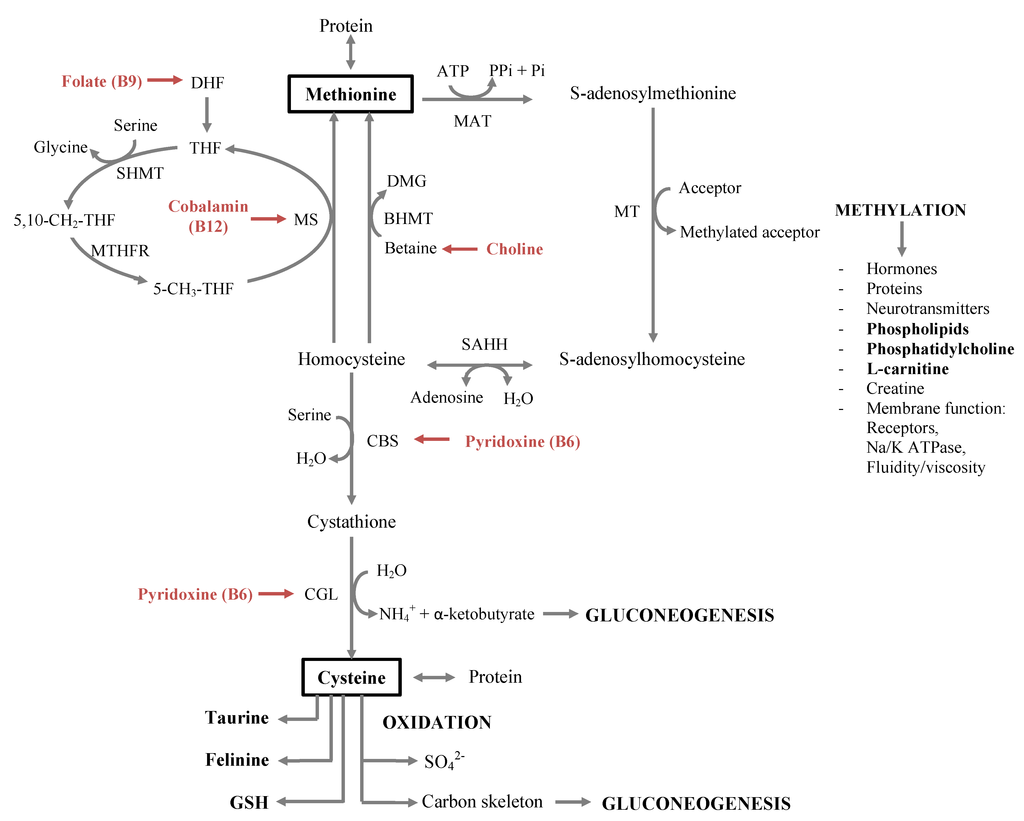
Important Nutrients in the Methionine Cycle

Graphic from the inimitable benbest.com.  GSH is glutathione.
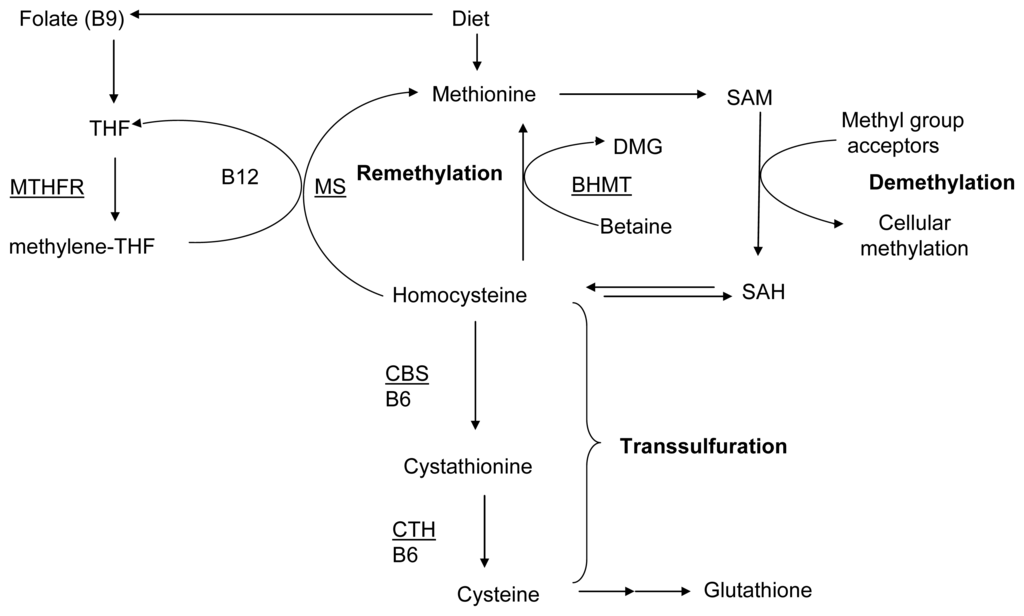
Studies suggest that betaine, along with vitamins B6 and B12 and folic acid, helps reduce higher levels of homocysteine. (This article has lots of citations.)  I think there is now good evidence that the problem with methionine  is really a problem with homocysteine.  Having high levels of homocysteine is related to a higher risk of heart disease and stroke.  Food sources of betaine include beets, broccoli, grains, shellfish, and spinach.  More info on betaine.

Source.


Also note the importance of amino acids like cysteine, glycine, and serine: Cysteine and glycine are converted to glutathione (an important water-soluble antioxidant) with the addition of selenium.  Pea protein and collagen are good sources of glycine, but neither contains much cysteine.  Serine can reduce homocysteine levels, and pea protein is also a good source.


Paleo Diet Reading List

Reading about human origins can be fascinating, and informative.  It has been said that nothing in biology makes sense except in light of evolution, and the same could be applied to diet. I originally wanted to understand the physiological biochemistry of digestion, but several textbooks later I had lots of facts but very little understanding.  While strolling at the zoo, I realized I needed textbooks that described the differences between animal digestion -- a comparative physiology textbook, perhaps.  But again, after reading all of the most popular titles, I had only scattered facts and no theory of the differences between human and animal digestion, or even between carnivore, omnivore, and vegetarian modes of sustenance.

Luckily, two Harvard professors have written books on human evolution with particular emphasis on how dietary changes made us human.  In the process, they provide the best, although somewhat contradictory, source of information on comparative dietary physiology.  Daniel Lieberman's The Story of the Human Body (2013) is a more traditional telling of human evolution, but it is written in an attempt to answer the question of how our paleo bodies have adapted (or not) to modern lifestyles.  Richard Wrangham's Catching Fire: How Cooking Made Us Human (2009), is an extended argument concerning the importance of cooking to human evolution, but he does deal extensively with the comparative behavior and anatomy of humans, proto-humans, chimps, and other primates.  Only at the end of his book does he tackle the problem of modern dietary choices for humans, and then only as a parting shot.  John Hawkes, at the University of Wisconsin, is often mentioned as an authority on human evolution, and I would include his Great Courses lecture (2011) in this triumvirate of human evolutionary tales.

The above works often reference modern accounts of extant hunter-gatherer tribes to understand what life might have been like during the Paleolithic era.  The most notable of these books are Lee's account of the !Kung San, and I would also suggest Weston A. Price's classic Nutrition and Physical Degeneration: A Comparison of Primitive and Modern Diet and their Effects.  A modern synthesis and review of the same subject matter can be found in Lindeberg (2009).

It is interesting to compare the literature on human evolution with the diet book literature making use of ideas in human evolution.  The originator of the "Paleo Diet", Loren Cordain has several books specifying his interpretation of the evidence.  While his 2002 book specifies a diet that seems more restrictive than what I've read in Lieberman and Wrangham, I haven't had a chance to read his 2012 book yet.

1. Lieberman D. The Story of the Human Body: Evolution, Health, and Disease. Knopf Doubleday Publishing Group; 2013.
2. Wrangham R. Catching Fire: How Cooking Made Us Human. Profile Books; 2009.
3. Price W. Nutrition and Physical Degeneration: A Comparison of Primitive and Modern Diets and Their Effects (Hardback). Benediction Classics; 2010.
4. Lindeberg S. Food and Western Disease: Health and Nutrition from an Evolutionary Perspective. Wiley; 2009.
5. Lee RB. The !Kung San: Men, Women and Work in a Foraging Society. Cambridge University Press; 1979.
6. Cordain L, Friel J. The Paleo Diet for Athletes: The Ancient Nutritional Formula for Peak Athletic Performance. Rodale; 2012.
7. Cordain L. The Paleo Diet: Lose Weight and Get Healthy by Eating the Food You Were Designed to Eat. J. Wiley; 2002.

Wednesday, December 17, 2014

Tuesday, December 16, 2014

Paleolithic Nutrition compared to Modern American Diet

From: Lieberman D. The Story of the Human Body: Evolution, Health, and Disease. Knopf Doubleday Publishing Group; 2013.

Sunday, December 14, 2014

New Innate GMO Potatoes and the Consumer

“When will these scientists stop playing God and just let food give us cancer?” 
- The Onion.com's response to new low-acrylamide potato.

A new Genetically Engineered (GE) potato has gained regulatory approval for planting in U.S. Ironies and contradictions abound with Conagra's Innate Potato, which may pose more problems for both producers and consumers than it solves.

The new potatoes harbor low levels of acrylamide-generating amino acids.  Acrylamide is categorized as a probable human carcinogen, and the problem of acrylamide in potatoes was first identified in 2002.  Since then, a large-scale effort to reduce acrylamide in potatoes has examined everything from fertilizer applications, to soil quality and planting date, and has finally resulted in a GE potato.

But this new potato presents a problem to McDonalds, etc.  How to promote a potato that fixes a problem most people didn't know was a problem?  Mother Jones points out the conundrum: "The only potential sales pitch would involve the lower dose of acrylamides. But saying "Our new fries might be less carcinogenic than the ones we've been selling you for 50 years" doesn't have much of a ring to it. "

The GMO debate is often between proponents of growers -- GMO is good for farmers -- and proponents of consumers -- GMOs are unnecessary and maybe bad. Up to now, almost all GMO crops have been designed to benefit growers. But this new potato shifts the dynamic. It offers a positive benefit to consumers. Especially, to health-conscious consumers!  But Mother Jones points out what a problematic product this must be to market, as it appears to be tailed specifically for a group of consumers who are already leery of genetic engineering...

Excess or Insufficient Micronutrients?

Some authors have argued that excess micronutrients, specifically zinc, iron, and copper are a cause of a number of diseases, from atherosclerosis to Alzheimer's. (1) But other writers argue that most Americans are micro nutrient-deficient (very few Americans are macronutrient deficient!). (2)

Micronutrients are critical for human health, but many have relatively narrow ranges associated with optimal health.  Assuming that U.S. dietary guidelines are valid (debatable, but a good starting point), how many people really are receiving inadequate or overabundant micronutrients?

I searched journal articles featuring contemporary data from the U.S. NHANES which surveys a representative sample of the U.S. population.  

Large portions of the population had total usual intakes (food and supplement use) below the estimated average requirement for vitamins A (35%), C (31%), D (74%), and E (67%) as well as calcium (39%) and magnesium (46%). Only 0%, 8%, and 33% of the population had total usual intakes of potassium, choline, and vitamin K above the adequate intake when food and multivitamin use was considered. The percentage of the population with total intakes greater than the tolerable upper intake level (UL) was very low for all nutrients; excess intakes of zinc were the highest (3.5%) across the population of all of the nutrients assessed in NHANES.(3)

Population-based studies indicate that vegetarians have lower mean intakes of vitamin B-12 and zinc and higher intakes of fiber, magnesium, and vitamins A, C, and E than do nonvegetarians. Usual intake data suggest a similar prevalence of inadequacy between vegetarians and nonvegetarians for magnesium and vitamins A, C, and E, with both groups at high risk of inadequate intakes of these nutrients. These same data report that vegetarians have a higher prevalence of inadequacy for iron, vitamin B-12, protein, and zinc than do nonvegetarians. Vegetarians should optimize intakes of vitamin B-12, zinc, and protein; and both vegetarians and nonvegetarians need to increase intakes of calcium, magnesium, fiber, and vitamins A, C, and E. (4)

But these studies only analyze reported food intake, which is notoriously unreliable, even, possibly, in NHANES. Interestingly, NHANES also does actual blood tests, and the results from that research found very few physiologyical (as opposed to dietary) deficiencies.  CDC's National Report on Nutritional Indicators (2012, valid for the period 2003-2006,  only found deficiencies in B6 (11%), Iron (women: 10%), Vitamin D (8%), Vitamin C (6%).   This same report indicates that folate supplementation is responsible for lowering deficiency to less than 1% of the U.S. population.  They also note that many women have iodine levels "bordering on insufficiency".  They did not note any micronutrient excesses. (5)


Sources:

(1) Power Foods for the Brain.  Barnard, Neil.  2013

(2) see, for example, http://chriskresser.com/are-supplements-really-necessary and http://chriskresser.com/why-you-should-think-twice-about-vegetarian-and-vegan-diets

(3) J Am Coll Nutr. 2014;33(2):94-102. doi: 10.1080/07315724.2013.846806.
Multivitamin/mineral supplement contribution to micronutrient intakes in the United States, 2007-2010.
Wallace TC1, McBurney M, Fulgoni VL 3rd. (Affiliation: Council for Responsible Nutrition)

(4) Am J Clin Nutr. 2014 May 28;100(Supplement 1):365S-368S.
Nutritional adequacy of plant-based diets for weight management: observations from the NHANES.
Farmer B.PlantWise Nutrition Consulting LLC

(5) Second National Report on Biochemical Indicators of DIet and Nutrition in the U.S. Population. 2012

“A Safe and Affordable Food Supply”: New GMOs Battle Resistant Superweeds

Stacked-trait GMOs
Herbicide-resistant weeds have more than doubled since 2009 to infest approximately 70 million acres of American farmland –an area larger than the states of Ohio and Illinois combined.  20 years after the introduction of genetically engineered (GE) Roundup Ready corn and soybeans, more tools are needed to maintain productivity.  

 GE crops were hailed as a major advance precisely because they did away with the need for more toxic herbicides like 2,4-D: Robert Fraley, executive vice president and chief technology officer at Monsanto, recently affirmed that "herbicide tolerant crops have been a great enabler. They've enabled farmers to use safer and more environmentally friendly chemicals and replace the products that were previously used...The benefits have been so real and so clear. As I said, it's reduced pesticide use."

However, use of Roundup (glyphosate) steadily increased, even as more and more weeds became resistant.  In 2007, as much as 185 million pounds of glyphosate was used by U.S. farmers, double the amount used six years ago, according to Environmental Protection Agency (EPA) data.

2,4-D and Dicambra are herbicides that are already used to “burn down” the weeds in the autumn, and as pre-emergent herbicides as a prophylactic in the spring, before planting.  But up until now these more-toxic herbicides could not be used during the growing season, as glyphosate can on GE corn and soybeans.  More tools were needed to maintain yields.

Enter Dow's Enlist Duo
Dow recently secured regulatory approval to roll out Enlist Duo in 2015, a stacked-trait GE for corn and soybean cultivars.  Stacked traits have already been used to enhance herbicide-resistant Roundup Ready soybeans with Bt, a natural pesticide.  There are also stacked trait soybeans that contain transgenes to produce oils that are less susceptible to rancidity, and commands a premium price on the market. 

The new GE crops will be resistant to both glyphosate and 2,4-D, allowing farmers to kill glyphosate-resistant weeds during the growing season. 

2,4-D is a plant hormone that kills broadleaf plants (but not grasses like corn, or wheat) by overstimulating growth.  In contrast, glyphosate works by inhibiting a crucial plant enzyme that is not present in animals.  Both are widely used in both residential (lawns and gardening) and commercial (farm) settings. 

Resistance Will Develop
Agronomists predict  that resistance to 2,4-D will develop as rapidly as resistance to glyphosate, because farmers will spur evolution by using the same herbicide on the plants in the same fields, successively selecting for anything with resistance.  USDA and EPA have vowed to better manage the technology, but compliance with integrated pest management strategies is voluntary.

2,4D has been known to drift off fields and kill nearby woodlots, fruit trees, and organic crops, so Dow has changed the chemical to reduce volatility and designed special nozzles to better control application.  EPA is “imposing first-time ever restrictions to manage injury to sensitive crops.  The EPA has put in place restrictions to avoid pesticide drift, including a 30-foot in-field “no spray” buffer zone around the application area, no pesticide application when the wind speed is over 15 miles per hour, and only ground applications (with the special nozzles) are permited. 

Another first for the GE crops is that the EPA is also imposing requirements to reduce potential for developing resistant weeds, such as mandating extensive surveying and reporting to EPA and grower education and remediation plans.  EPA will reevaluate after 6 years, and may impose new restrictions at that point. 

Resistant Superweeds
Some of the most common resistant weeds are: Marestail, Giant Ragweed, Volunteer Corn, Common Ragweed, Lambs quarter,  Agronomists idenitify resistant weeds based on the fact “that most... soybeans are RoundupReady, and that if weeds are still in the soybean field at the end of the season, then there must have been a failure of the system (i.e. spraying herbicides didn’t control them)."


"Experience with the Enlist system indicates that even without a fall herbicide treatment, multiple in season application of 2,4D seem to control marestail well.  Doing so will probably result in the development of resistance to 2,4-D in marestail, though, since this is the type of approach that led to glyphosate resistance – multiple applications of the same herbicide for control of the same weed." -Mark Loux, OSU Extension Herbicide Specialist


Resolution Mine gets Go-Ahead

The Resolution mine has been proposed on land between the small towns of Superior and Globe, Arizona, in an area already famous for its Grand Canyon-esque copper mines.  Unfortunately for the Rio Tinto-owned Resolution mining company, the proposed mine was directly underneath a popular campground on National Forest land.  Fortunately for the company, the U.S. Congress has just passed a spending bill with provision to transfer the land from the National Forest to the company, so it looks like the mine will move ahead.

A placemark shows the location of the Oak Flat Campground, the approximate location of the proposed Resolution Mine.

Watch this surreal video highlighting how Resolution plans to mine the ore deposit more than a mile and half below the ground.

 The video reminds me, somehow, of the giant alien mine in Total Recall: