Showing posts with label natural resources. Show all posts

Tuesday, November 15, 2022

What is Mitigation?

Different people have different definitions of "Mitigation" in the context of natural resource management, endangered species protection, and wetland permitting.


Technical Definitions
Technically, Mitigation (as defined by CEQ and DOI) includes avoidance, minimization, and compensatory mitigation.  

The mitigation hierarchy also adopts an inclusive definition of mitigation that includes a range of mitigation options.  The mitigation hierarchy is a framework that was formalized by IFC in 2012.  While there are many complexities in implementation, at its core the hierarchy offers a conceptually simple range of mitigation strategies, ranging from preventive (avoiding and minimizing) to remediative (restoring and offsetting).  

Mitigation hierarchy framework.(Source:  Exponent)


Popular Usage
However, many professional resources, including the USFWS webpage on Mitigation, simply define Mitigation as "projects or programs that help offset negative impacts to natural resources, such as a stream, wetland, and species-at-risk."  This definition excludes by omission any preventive mitigation.


Clarification
As usual, EPIC has a great resource summarizing the different types of mitigation, as well as synonyms that are often used.  According to EPIC, avoidance and minimization are called "conservation measures".  Only if a project is likely to cause take are compensatory mitigation measures proposed under 7(a)(2) consultation.  Compensatory mitigation, which is usually simply called "mitigation" in popular usage, is also called offset measures.

Table from EPIC report linked above.

In conclusion, mitigation can be a confusing concept, even for professionals.  Government agencies are trying to specify compensatory mitigation when that is the subset of mitigation they mean, but even in official publications they often use the simple term mitigation.  When someone says Mitigation they are usually talking about compensatory mitigation, or offsets.  However, when talking about the mitigation hierarchy, other preventive conservation measures such as avoidance and minimization could also be included.  

Monday, September 12, 2022

Thistle Misidentification

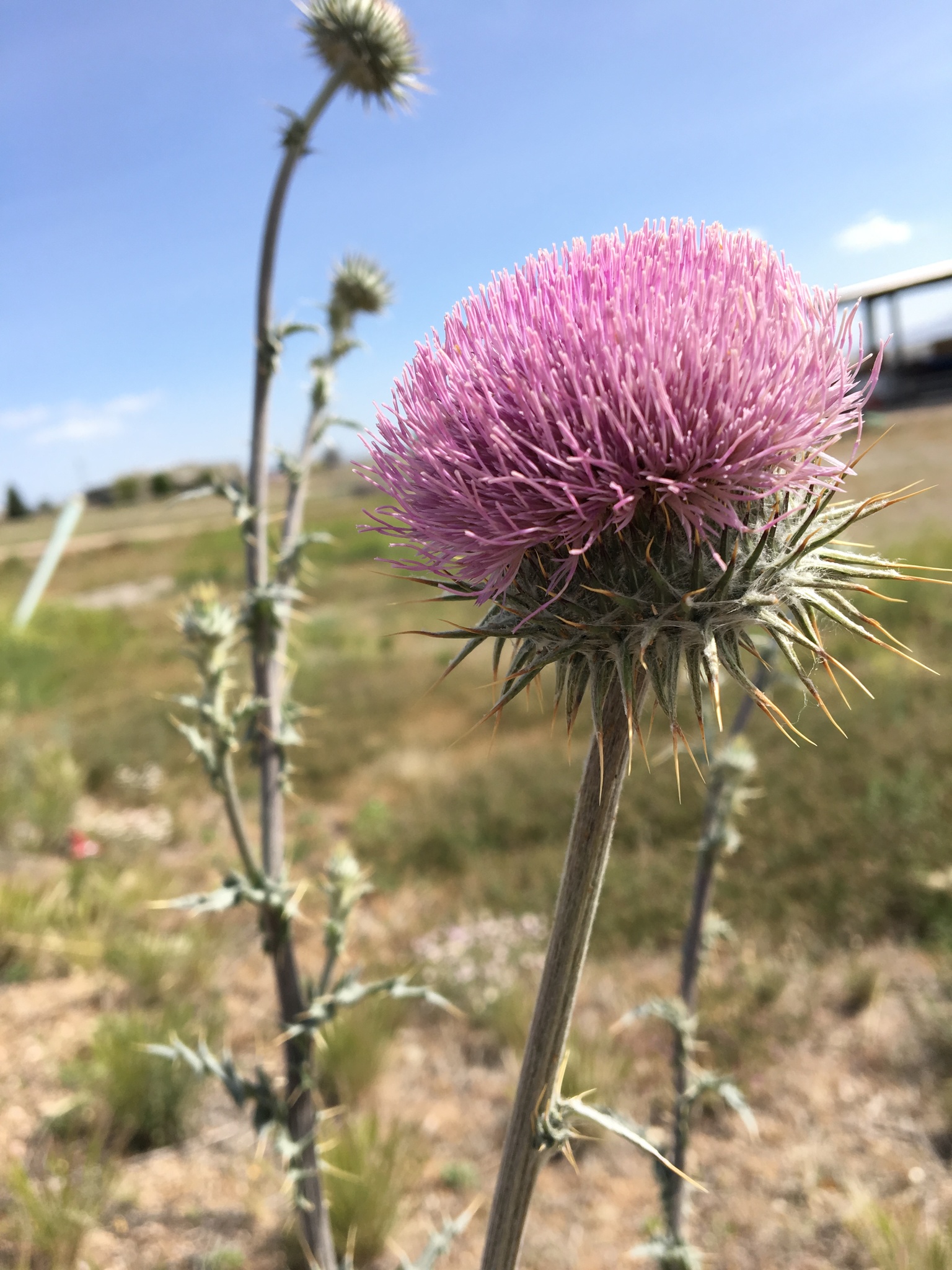
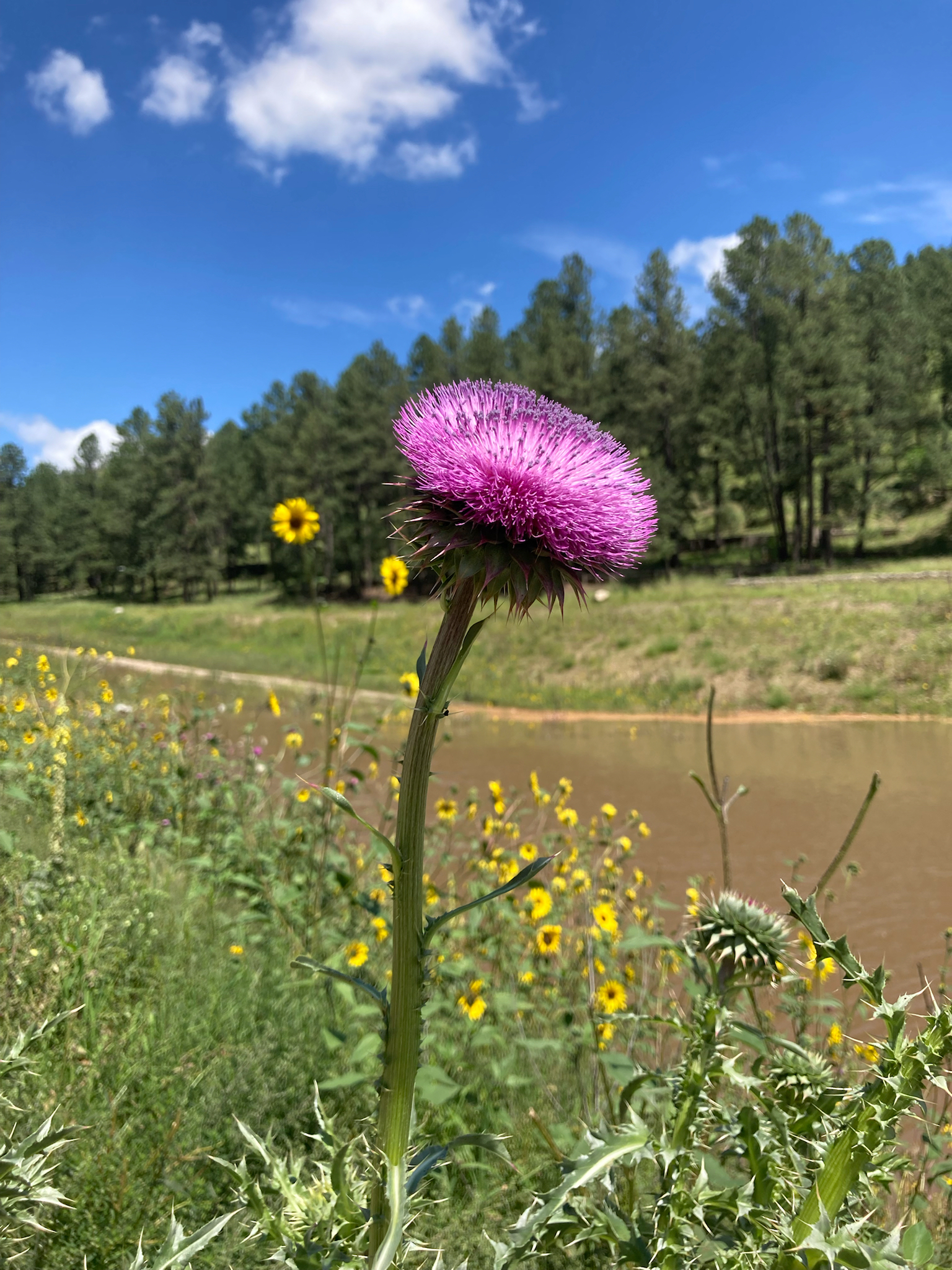
Thistles are amazing flowers, but there are both native and nonnative invasive species in the Western US.  Some people who try to do good by removing nonnative thistles accidentally kill the native species as well. 

NM Thistle, Cirsium neomexicanum. My photo on iNaturalist. Link: https://www.inaturalist.org/observations/15024423

I worked with an AmeriCorps crew in the Sacramento Mountains (Lincoln NF) that had been removing musk thistles.  But I found out they didn’t know how to tell the difference between native and invasive thistles. 

Photo of musk thistle Carduus nutans from iNaturalist user c-guinan. Link: https://www.inaturalist.org/observations/132367683

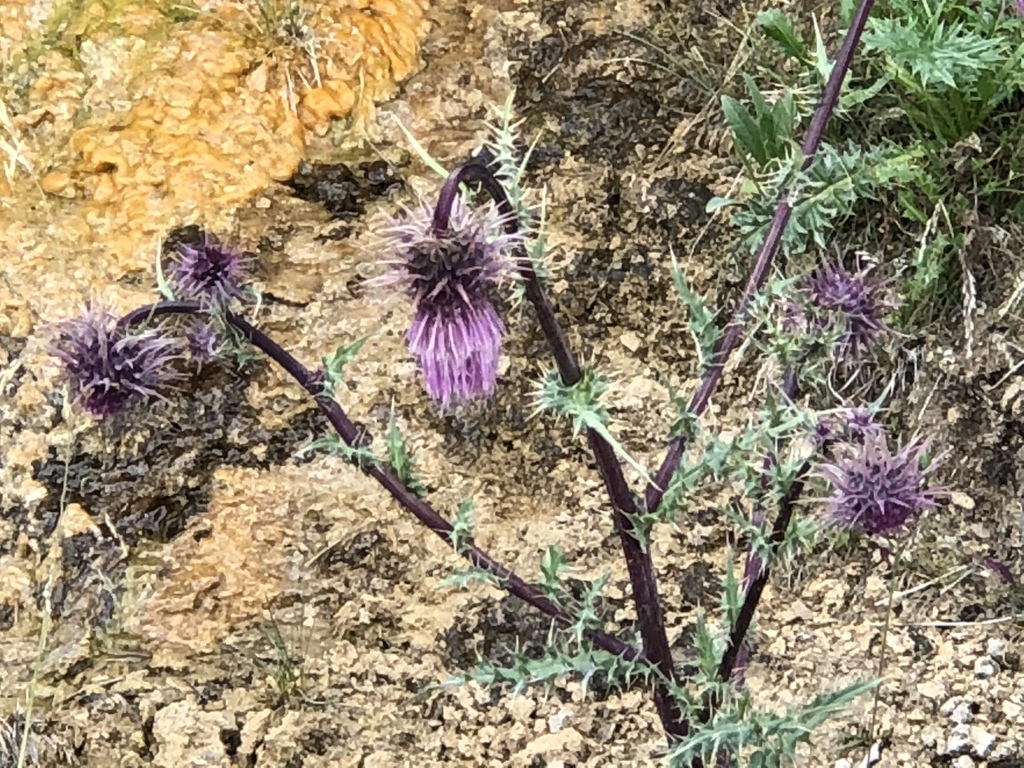
Even worse, they didn’t even know that there is an Endangered species of native thistle in those mountains!  We investigated and it looks like they at least didn’t kill any endangered thistles, but it could have been really bad. 


Photo of Endangered Sacremento Mountains Thistle Cirsium vinaceum from iNaturalist user ck2az.  Link: https://www.inaturalist.org/observations/14433149

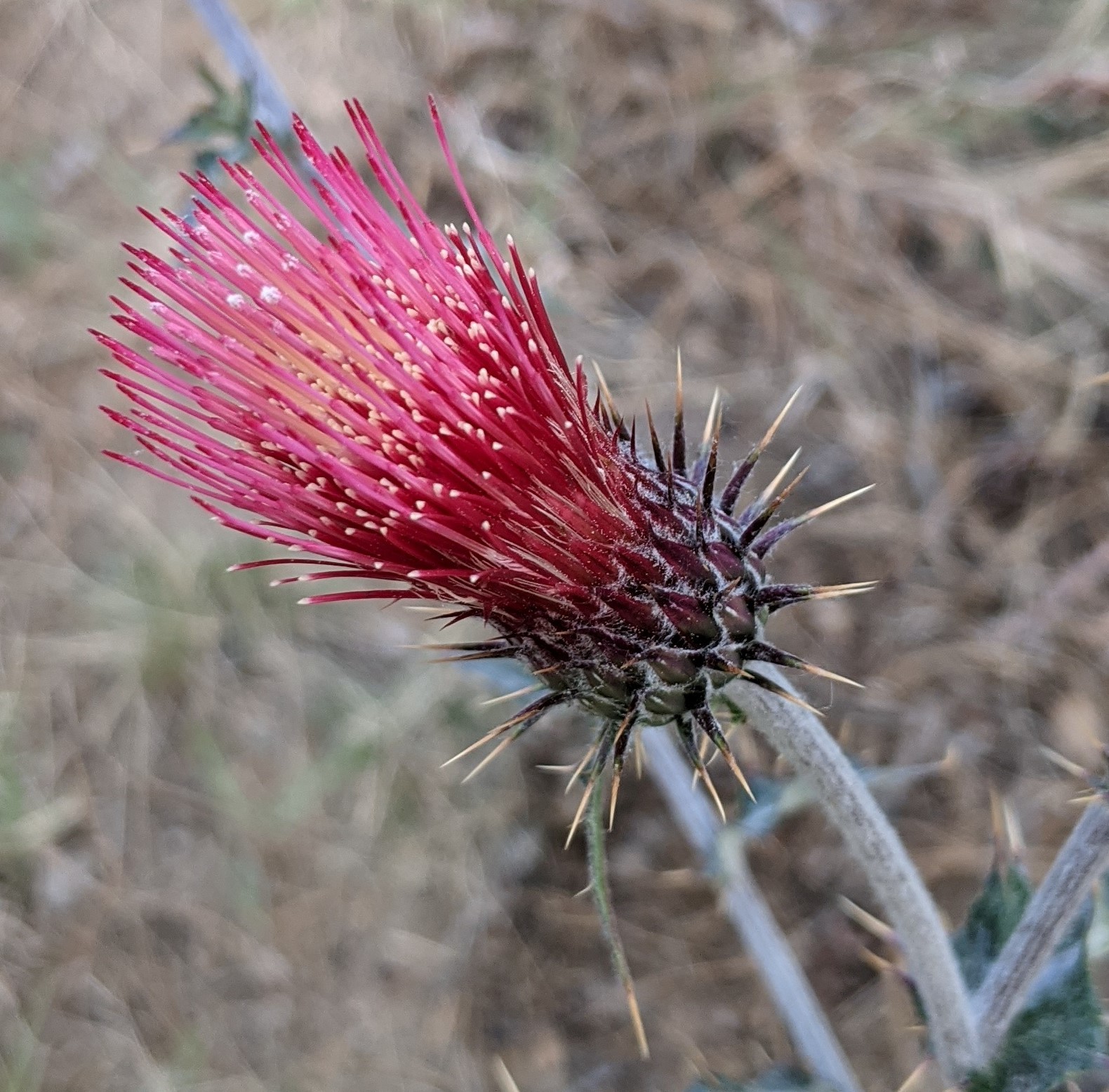
I’m currently trying to find the volunteers on the Prescott national forest who are pulling up all of the Arizona thistle along popular trails.  Its especially troubling to me when people who are trying to do good by removing invasive species end up destroying native species.

Arizona Thistle Cirsium arizonicum.  My photo on iNaturalist.  Link:  https://www.inaturalist.org/observations/87880049

Everyone who’s done natural resource work has stories of project missteps.  I don’t know how to prevent all mishaps, but talking about these misidentifications is a good first step.

The NM Native Plant Society has a great Thistle ID book written by Bob Sivinski.

Wednesday, July 10, 2019

Bark Beetles

The Threat

Records dating back as far as 1750 indicate a consistent record of intermittent outbreaks of aggressive bark beetles in various forest types across the West. Over the past 10-15 years, however, the frequency, severity, and extent of bark beetle outbreaks have increased.

The current bark beetle outbreaks differ from previously recorded infestations because of:
Their intensity — bark beetles are killing trees in larger numbers, at a faster pace, and over longer time periods
Their extent — bark beetle outbreaks are occurring in numerous ecosystems from Alaska to northern Mexico
Their synchroneity — bark beetle outbreaks are occurring concurrently across western North America


The Characters: all beetles in the subfamily Scolytinae

Figure from Bentz, 2005.

Dendroctonus sp (Bark beetles) Outbreaks are usually associated with drought (Page, 1981). The beetle also responds to fire-damaged trees, but not those killed by fire.

Ips sp. (Pine engraver beetles): Species within the genus Ips, such as the piñon ips and
Arizona fivespined ips, also can kill their hosts, although typically they are not considered major disturbance agents. In recent years, however, elevated population levels of a number of Ips species have coincided with drought, resulting in large areas of mortality, particularly in piñon and ponderosa pine forests of the southwestern U.S.

The above beetles are distinguished from Ambrosia beetles as they only attack and consume live trees, whereas Ambrosia beetles can bore into heartwood even after a tree is dead and dry.

Ambrosia beetles (several species): Classed as wood borer beetles that attack weakened, dying, and
recently cut or killed trees. They can attack freshly cut lumber and lumber in decks before it is dried, and they can cause pinhole defects and dark staining in the outer wood. Galleries are formed in the sapwood or heartwood and damage the wood. Because ambrosia beetles tunnel into the wood, they are considered wood borers rather than bark beetles.


Management Considerations

When live trees are blown down, their phloem can remain suitable for bark beetle development up to a year later.  Stressed pine trees emit volatile compounds (terpenes). Bark beetles have evolved to detect these compounds and use them to identify suitable host trees. 

Bark beetles are also attracted to freshly cut wood.  Freshly processed chips emit the same volatile compounds (terpenes) as susceptible host trees. These chips will attract bark beetles during their active periods. The bark beetles cannot utilize the chips as a food source, but the attracted bark beetles may then colonize suitable host trees adjacent to the chips piles.

Fresh dead and down material (slash) can be a refuge for bark beetles, allowing them to breed, and possibly colonize nearby healthy trees. Lop and scatter can let slash dry out, killing any beetles in the bark and preventing new beetles from feeding on it.

Wood that has been debarked is not suitable for colonization by bark beetles. Only freshly cut, logs or slabs that have not been debarked are at risk of colonization.

Dead trees that do not have bark beetles in them and that do not pose a safety hazard can be left in the forest to be used by wildlife.  Dead trees do not necessarily pose more of a fire hazard than live trees.

Figure from Bentz, 2005.


Additional Resources

Diana L. Six, Ryan Bracewell, Bark Beetles, 2015


Sunday, January 01, 2017

Natural Resource Management Stories


Conservation - Collaboration Success Story: Nature Conservancy and Nutrient Stewardship Council in Western Lake Eire Watershed.  Accreditation of fertilizer merchants (term?) to educate farmers in the 4Rs:   Right amount, right time, right place, right ....  These are complicated decisions; fertilizer reps and farmers understand better all of the details of each decision, while scientists and Nature Conservancy have ideas about solutions.  By working together (also motivated by Ohio Law) they are innovating solutions, like using liquid fertilizer to furrow-apply salt-free fertilizer directly on seeds of side-dressing or foliar applications


Monarch voluntary conservation agreements.  Monarch butterfly has been in steep decline and the iconic insect is the subject of a successful citizen science campaign to document migration patterns and encourage milkweed host plant cultivation.  Now Monarch is being considered for listing as endangered species. Voluntary conservation agreements and memorandum of understanding between the USFWS and private companies and individuals are being encouraged as a way to avoid ESA listing.

The recent decision to de-list the lesser prairie chicken was based on the existence of a voluntary conservation agreement whose possible beneficial effects on the species were not considered by USFWS.
Now power companies and Midwestern farmers seem to think a voluntary conservation agreement is a good insurance policy against a possible listing decision.  If the monarch is listed, the government could require landowners across the country to be pollinator friendly.  Monarchs need us to manage for milkweeds.


Don't mess with Iowa.  Agricultural misperceptions of the 2015 proposed Clean Water Act rule led to lawsuits that forced the EPA and Army Corps to halt the implementation of the rule.  Coal states were able to obtain a supreme court ruling halting implementation of the 2015 CO2 rule for the "Clean Air Act".  And now Iowa (and other midwestern farmers) are against the EPA's proposed strengthened standards for atrazine, a popular herbicide.  Midwestern farmers argue that lowering the allowed concentration of the popular herbicide would impair their ability to grow food for the country.  Farmers also point out that the proposed standards might lead to more water pollution, not less, due to the reliance of no-till farmers on broad-spectrum "burn down" herbicides to clear the fields for planting.  Without these herbicides, farmers would be forced to go back to tilling their land in order to mechanically disrupt existing weeds.  

Tuesday, November 17, 2015

NEPA Impacts Now Require Mitigation

President Obama has recently issued an important new Memorandum directing Federal agencies to employ mitigation banks to offset impacts to natural resources.

The directive re-emphasizes that agencies should seek to avoid any negative environmental impacts first, then minimize impacts, and finally, only seek compensatory offsets for harm that still occurs if necessary.  Within the limits of existing law, agencies should set ‘no net loss’ and ‘net benefit’ goals that apply to more natural resources.   (CEQ Blog Post)

The following analysis of the impacts of this memorandum are from the law office of Holland and Hart:

"We have entered a new regime in federal natural resource management, one that brings to mind Aldo Leopold’s observation that “Conservation . . . is a positive exercise of skill and insight, not merely a negative exercise of abstinence or caution.” In time, we will have a better sense of what the new regime will mean in practical terms. For now, the natural resource community will want to focus on the various agencies’ efforts to implement the directives. Across the federal government, for months to come, new rules and policies will be under development with implications for an enormous range of decisions affecting natural resources “that are important, scarce, or sensitive, or wherever doing so is consistent with agency mission and established natural resource objectives.”

These directives deserve considerable attention from those active in the natural resource law and policy arenas. There are new rules of the road for resource agency decisions subject to NEPA review, and they may significantly influence implementation of ESA and other resource protection laws. Federal resource planning efforts will likely change to include substantial consideration of “net gain/no net loss” benchmarks. Most fundamentally, the new directives seem likely to change the transactional environment facing developers seeking federal approvals for: infrastructure projects; energy, water, and mineral development; or other activities potentially impacting federal natural resources.

Agencies’ permitting and compliance decisions involve significant elements of subjectivity and uncertainty. The permitting process is often defined by bargaining over the allocation of risk between an agency wary of potentially unforeseen resource impacts and a developer or resource user wary of potentially unforeseen costs or delays. The Presidential and DOI directives can be seen as ratifying and calling for even greater effort by resource agencies to minimize or eliminate the risk of unforeseen impacts on natural resources. In effect, the agencies are being told to bargain harder, demand greater assurances, and accept little or no risk of adverse impacts when rendering decisions potentially affecting natural resources.

The directives raise the bar, but are not entirely one-sided. They encourage agencies to promote conservation banking, stewardship contracts, and other financial-incentive-based tools that generate “credits” that developers can use to offset adverse impacts of proposed projects. The internal logic of the directives appears to be that the new, higher standards for resource mitigation—net gain, or at least no net loss—are realistically achievable because any project’s unavoidable adverse impacts can be offset with conservation credits.

The agencies’ mandate to bargain harder will create difficulties for almost all resource users. To begin with, baseline resource information often lacks the empirical certainty that would make it obvious how to get to a net gain or no net loss. And what is a “net gain”? How big must that be? More challenging, the directives call for “durability” in mitigation, meaning that the quantitative and qualitative relationship of impact to compensation should endure so long as the impact continues. But natural resources change over time. Even resources that once seemed static are now recognized to be mobile as temperature, precipitation, fire, and other variables change across the landscape. The new directives will particularly frustrate those resource users who are not inclined to anticipate nor internalize within their project planning and business judgments the agencies’ resource management goals. Whatever the agencies were bargaining for yesterday, they’ll soon be bargaining for more.

There is something encouraging here for those resource users who approach the regulatory environment with a transactional mindset. The directives’ embrace of compensatory mitigation means that, once the directives have had time to be incorporated into agency procedures, there should be a predictable regulatory “solution” for a project potentially posing the risk of adverse resource impacts. In theory, the ultimate decision about whether - and on what terms - to approve a permit or other authorization should be somewhat less vulnerable to an agency official’s reluctance to countenance unavoidable adverse resource impacts. This is particularly so if the agencies do, in fact, embrace the use of mitigation banks and other credit-generating tools.

The other potential winners from the directives will be private investors in mitigation banks and similar financial structures that produce resource “credits” to exchange for impacts. 

Wednesday, September 16, 2015

Roadsides Provide Critical Habitat for Pollinators


"Over the past 18 months, support for pollinators has undergone a seismic shift, led by President Obama, who called for a national Pollinator Task Force in the spring of 2014. Less than a year later, in a book-length "Strategy to Protect the Health of Honey Bees and Other Pollinators," the federal government set ambitious goals that include the restoration or enhancement of 7 million acres of land for pollinator habitat over the next five years. Roadsides will comprise a significant portion of that acreage..."
Read the rest of the article.

Wednesday, June 10, 2015

Threatened and Endangered Species of the Williamette Valley Prairie Savannas

There are 6 listed species endemic to the ecoregion.

Fender's Blue butterfly (E) (Icaricia icarioides fenderi)
Willamette daisy (E) (Erigeron decumbens var. decumbens)
Bradshaw's desert-parsley (E) (Lomatium bradshawii)
Kincaid's Lupine (T) (Lupinus sulphureus ssp. kincaidii)
Nelson's checker-mallow (T) (Sidalcea nelsoniana)
Golden Paintbrush (T) (Castilleja levisecta) - extirpated from Williamette valley

Several other nonlisted species are also considered sensitive:

Taylor’s (whulge) checkerspot butterfly, Euphydryas editha taylori
Pale larkspur, Delphinium leucophaeum
Willamette Valley larkspur, Delphinium oreganum
Peacock larkspur, Delphinium pavonaceum
Shaggy horkelia, Horkelia congesta ssp. congesta
White-topped aster, Sericocarpus rigidus
Hitchcock’s blue-eyed grass, Sisyrinchium hitchcockii

There are two major rare habitats in the Williamette valley responsible for the listed and sensitive species: upland prairies and wet prairies. Prairies are dependent on disturbance to prevent succession, and many have been either plowed under or allowed to develop into forests or shrublands.  A recovery plan extends throughout the Williamette valley, and south of Roseburg to the Douglas county line to include a third disjunct habitat in the Umpqua valley.  

The plant composition of upland prairies is dominated by bunchgrasses, including Festuca idahoensis, Danthonia californica, Elymus glaucus, Achnatherum lemmonii, and Koeleria macrantha.  The spaces between the bunchgrasses are typically covered by mosses, fruticose lichens, or native forbs. Showy, slow-growing perennial forbs include Eriophyllum lanatum, Potentilla gracilis, Fragaria virginiana, Sidalcea malviflora, and Symphotrichum (=Aster) hallii, and the bulbs Calochortus tolmiei and Dichelostemma congestum. Some fast-growing annual forbs, including various species of tarweed (Madia spp.) and Clarkia, are also prominent members   The main threat are vegetatively spreading non native grasses included Agrostis, Festuca, as well as Rubus (blackberry).

Wet praries are dominated by herbs. Deschampsia cespitosa (tufted hairgrass),and tufted microhabitats. Non-native Agrostis and Cirsiums are threat.

Saturday, December 20, 2014

Chemical Use and Abuse in Agriculture: What's the Problem?

Peter Lehner's recent blog post on ACOEL was inspiring, but also puzzling, because he mentions three problems with agriculture, but only 2 are real problems.

While I agree with the need for a renewed emphasis on environmental contaminants in farming, the issue of 2,4-D seems out of place in his discussion.  Certainly the role of unregulated chemicals in our food supply needs to be brought up to international standards (*cough* Europe).  And certainly the disastrous role of factory farming in harming the environment and, through the over use of antibiotics, breeding new antibiotic-resistant diseases urgently needs to be addressed.

But 2,4-D and glyphosphate are some of the least toxic herbicides available, having been subjected to more scrutiny than any other compound in agriculture. They have been used for decades in both agricultural and turf and domestic garden applications, and the licensing of genetically engineered (GE) crops resistant to these herbicides really doesn't change anything.  2,4-D is already used as a pre-emergence and post-harvest weed control, and the new GE crop gives farmers the option of using it once or twice during the growing season.

These common weedkillers have been used, are currently being used, and will be used, whether or not our country goes down the GE crop road.  What's more, EPA has used the licensing of Dow's Enlist Duo GE soybeans to significantly increase regulation of herbicide use, with the option to review in 6 years.  It should be pointed out that the outcome of GE crops resistant to 2,4-D will likely be the same as it as for glyphosphate: industry will shoot itself in the foot by overusing single-chemical herbicides to the point that weeds evolve resistance.

While other areas of environmental regulation are woefully lacking (antibiotic overuse and GRAS chemicals), the use of herbicides is well-regulated and not a major risk to human or environmental health. NRDC would be well to focus on the important agricultural issues and let settled issues alone.

Wednesday, November 19, 2014

Threatened and Endangered Species around Albuquerque, New Mexico

Threatened and Endangered Species from Bernalillo County, New Mexico:
Birds
Mexican spotted owl (Strix occidentalis lucida) USFWS T State S The owl inhabits canyon and forest habitats across a range that extends from southern Utah and Colorado, through Arizona, New Mexico, and west Texas, to the mountains of central Mexico. They require mature, old-growth forests of white pine (Pinus strobus), Douglas-fir (Pseudotsuga menziesii), and ponderosa pine (Pinus ponderosa); steep slopes and canyons with rocky cliffs for their habitat.
Southwestern willow flycatcher (Empidonax traillii extimus) USFWS E
State E The southwestern willow flycatcher breeds in relatively dense riparian tree and shrub communities associated with rivers, swamps, and other wetlands including lakes and reservoirs. Historically the southwestern willow flycatcher nested in native vegetation including willows (Salix sp.), seepwillow (Baccharis salicifolia), boxelder (Acer negundo), buttonbush (Cephalanthusoccidentalis), and cottonwood (Populus sp.). Following modern changes to riparian communities, this subspecies still nests in native vegetation, but also uses thickets dominated by non-native tamarisk (Tamarix sp.) and Russian olive (Elaeagnus angustifolia), or in mixed native non-native stands

Yellow-billed Cuckoo (Coccyzuz americanus) USFWS T
State S Status applies only to western population beyond the Pecos River Drainage; breeds in riparian habitat and associated drainages; springs, developed wells, and earthen ponds supporting mesic vegetation; deciduous woodlands with cottonwoods and willows; dense understory foliage is important for nest site selection; nests in willow, mesquite, cottonwood, and hackberry; forages in similar riparian woodlands;

Fishes
Rio Grande Silvery minnow (Hybognathus amarus) USFWS E
State E The Rio Grande silvery minnow extirpated; historically Rio Grande and Pecos River systems and canals; reintroduced in Big Bend area; pools and backwaters of medium to large streams with low or moderate gradient in mud, sand, or gravel bottom; ingests mud and bottom ooze for algae and other organic matter; probably spawns on silt substrates of quiet coves.

Mammals
New Mexico meadow jumping mouse (Zapus hudsonius luteus) USFWS E
State E
The New Mexico meadow jumping mouse (jumping mouse) is endemic to New Mexico, Arizona, and a small area of southern Colorado (Hafner et al. 1981, pp. 501-502; Jones 1999, p. 1). The jumping mouse appears to only utilize two riparian community types: 1) persistent emergent herbaceous wetlands (i.e., beaked sedge and reed canarygrass alliances); and 2) scrub-shrub wetlands (i.e., riparian areas along perennial streams that are composed of willows and alders) (Frey 2005, p. 53).


Other Special-Status Species in Bernalillo County, New Mexico:

Invertebrates
Obsolete Viceroy Butterfly (Limenitis archippus obsoleta)                       USFWS SOC
Slate Millipede (Comanchelus chihuanus)                                               USFWS SOC

Birds
Burrowing owl (Athene cunicularia) USFWS SOC Associated with prairie dog (Cynomys sp.) towns in dry, open, short-grass, treeless plains.

Common black-hawk (Buteogallus anthracinus)
State NM T
Southwestern U.S. is the northern extent of this species’ range. Occurs in New Mexico almost exclusively during the breeding season and in migration. Breeding populations known chiefly from the Gila River Valley in the southwestern portion of the state and from along the Mimbres River and the Rio Hondo watershed. Strongly tied to cottonwood gallery forests. In Texas breeds in or near the Trans-Pecos Region, with breeding documented in particular in the Davis Mountains and possible breeding along the Rio Grande. In New Mexico, uncommon summer resident, generally, restricted to the mountainous riparian habitats of the San Francisco, Gila, and Mimbres river drainages. 

Neotropic Cormorant (Phalacrocorax brasilianus)
State NM T
The Neotropic Cormant reaches its northern distribution in southern New Mexico. It feeds in lakes and wetlands.

Bald eagle (Haliaeetus leucocephalus alascanus)
State NM T
Occurs in New Mexico year-round. Breeding is restricted to a few areas mainly in the northern part of the state along or near lakes. In migration and during winter months the species is found chiefly along or near rivers and streams and in grasslands associated with large prairie dog colonies. Typically perches in trees.

Northern aplomado falcon (Falco femoralis septentrionalis)
USFWS E
State E
Associated with semi-desert grasslands with scattered yuccas, mesquite, and cactus.The species has also been reintroduced on the Armendaris Ranch in Socorro and Sierra Counties and on lands administered by the BLM, White Sands Missile Range, and the SLO beginning in 2006.

Peregrine falcon (Falco peregrinus)
State T
A year-round resident and local breeder throughout NM, nests in tall cliff eyries; also, migrant across state from more northern breeding areas in US and Canada, winters along coast and farther south; occupies wide range of habitats during migration, including urban, concentrations along coast and barrier islands; low-altitude migrant, stopovers at leading landscape edges such as lake shores, coastlines, and barrier islands.

Arctic peregrine falcon (Falco peregrinus tundrius)
State NM T
Winters along coast and farther south; occupies wide range of habitats during migration, including urban, concentrations along coast and barrier islands; low-altitude migrant, stopovers at leading landscape edges such as lake shores, coastlines, and barrier islands.

Southwestern Willow flycatcher (Empidonax trailli extimus)
USFWS E
State NM E
The flycatcher is a summer breeder within its range in the United States. It is gone to wintering areas in Central America by the end of September. For nesting, requires dense riparian habitats (cottonwood/willow and tamarisk vegetation) with microclimatic conditions dictated by the local surroundings

Northern goshawk (Accipiter gentilis)
State NM S
Breeds in coniferous forests; winters in farmlands, woodland edges, and open country. Breeds from Alaska east through Mackenzie and northern Quebec to Newfoundland, and south to New Mexico, Great Lakes, and New England; also southward to northern Appalachians. Winters south to Virginia and Southwest.
Unlikely to occur in project area due to lack of coniferous forest habitat.

Broad-billed hummingbird
State NM T
Reaches extreme northern range in desert canyons of southern New Mexico with dense mesquite thickets.
Unlikely to occur due to lack of canyon habitat.

White-eared hummingbird (Hylocharis leucotis)
State NM T
Irregular summer visitor to extreme southeastern Arizona; rare in New Mexico and Texas. Found in Mountain woodlands.

Brown Pelican (Pelecanus occidentalis)
State NM E
Generally found in warm marine waters, rarely occurring inland.  Only individuals seen in New Mexico, near water. May be storm-driven birds that moved inland during duress.

Baird's sparrow (Ammodramus bairdii)
State NM T
A winter resident in New Mexico and Texas. Generally prefers dense, extensive grasslands with few shrubs. Avoids heavily grazed areas.

Bell’s Vireo
State NM T
A small insectivorus bird, prefers dense vegetation of scrubby woodlands, old fields, or mesquite brushlands.

Gray Vireo (Vireo vicinio)
State NM T
Species strongly associated with piñon-juniper and scrub oak habitats. Distributed mainly across the western two-thirds of the state. Prefers gently sloped canyons, rock outcrops, ridge tops, and moderate scrub cover. 

Mammals

Spotted Bat (Euderma maculatum)
State T
Found in open habitats, Ponderosa Pine forests, and marshlands. Suitable roosting sites limits distribution to areas within flying distance of cliffs and stony outcrops. (Adams, 2003)

Pale Townsend’s Big-eared Bat (Corynorhinus townsendii)
State S
Habitat includes montane forests and arid habitats with limited desert scrub vegetation.  Roosting sites include caves, cliffs, and rock ledges but have been found in abandoned mines and other man-made structures. (Adams, 2003)

E = Endangered. Any species considered by the USFWS as being in danger of extinction throughout all or a significant portion of its range. The ESA specifically prohibits the take of a species listed as endangered. Take is defined by the ESA as to harass, harm, pursue, hunt, shoot, wound, kill, trap, capture, or collect, or to engage in any such conduct.
T = Threatened. Any species that is likely to become an endangered species within the foreseeable future throughout all or a significant portion of its range. The ESA specifically prohibits the take (see definition above) of a species listed as threatened. 

Monday, September 15, 2014

Environmental Benefits Assessments for USDA Conservation Reserve Program

The USDA uses an  Environmental Benefits Index (EBI) to rank Conservation Reserve Program land applications by prioritizing soil conservation, water quality, and wildlife habitat.  Six factors are considered:
  1. Wildlife habitat benefits resulting from covers on contract acreage 
  2. Water quality benefits from reduced erosion, runoff and leaching 
  3. On-farm benefits from reduced erosion 
  4. Benefits that will likely endure beyond the contract period 
  5. Air quality benefits from reduced wind erosion
  6. Cost
1.  Wildlife habitat is determined by looking at planting composition (introduced or native), number and composition of species (more species, and more functional groups such as legumes, shrubs, trees, forbs, and grasses have higher value), and landscape context (strips, blocks or mixtures that form corridors or gaps).  Points are also available for providing pollinator habitat and for enhancing wildlife in areas high-priority areas.

2.  Water quality benefits are determined by whether or not the property is in a designated surface water quality impairment zone, the type of soil, potential soil erosion, and distance to major waterbodies.

3.  Not discussed.

4.  Enduring benefits are determined subjectively based on the probability that conservation will continue beyond the CRP contract.  For example, trees would be expected to live longer than the 10-year CRP contract.

5.  Air quality benefits are determined by calculating potential wind erosion (based on average wind speed and soil texture), whether the property is in a air quality nonattainment area, and the potential to sequester carbon in the soil by planting trees, shrubs, or grass.

For more information, see the CRP Farm Science Administration website at USDA.gov.


....USDA also periodically reviews the effectiveness of their programs using the Conservation Effects Assessment Project.  Data and papers can be found here.


Monday, May 24, 2010

The Environment and Natural Resources

read more...

A number of attempts have been made to conceptualize humanity's use of the planet: are we using too much? Calculations based on how much land is needed to produce the food, fuel, housing, transportation, and consumer products for the average American are used to show that it would take five planets to sustainably produce what Americans consume every year. These measurements, codified as the Ecological Footprint (seen above for the entire Earth), are based on the renewable productivity of standardized land uses such as agriculture, forest, and grassland.

Ecological Footprint versus Ecological Health
However, the size of the Ecological Footprint does not take into account most forms of pollution (heavy metals, estrogen mimics, etc) and in general does a poor job of accounting for the differing health of ecosystems. Indeed, according to the Ecological Footprint, non-renewable high-intensity resource use may "use" less land than renewable low-intensity resource use. The problem with this landscape landuse metric is that its focus on "biocapacity" can be at odds with biodiversity and ecosystem health, which the Ecological Footprint does not measure.

Much of this analysis is taken directly from Lenzen, M., C. Borgstrom Hansson and S. Bond (2007) On the bioproductivity and land disturbance metrics of the Ecological Footprint. Ecological Economics 61, 6-10.