Showing posts with label herbicide. Show all posts

Tuesday, July 11, 2023

Xeriscaping or Zero-scaping?

 Xeriscaping is a low-water user landscaping practice in the desert Southwest.  Typically gravel or rock is used as the major groundcover, with desert-adapted plants interspersed.  Herbicides are generally used to control unsightly weeds in the gravel areas. 

Zero-scaping is when landowners skip all of the landscaping and just use herbicides to maintain dirt lots.  Unsurprisingly, the result is often phenomenally ugly.  However, this technique is extremely popular.  Why?

Herbicide-maintained zero-scaping.  The property is listed on one of the popular home-rental websites, so it has to look "presentable"!


Property line contrast.  The owner on the right has elected to let their grass grow tall, creating habitat for wildflowers and pollinators.  They usually mow it once or twice a year.

Close-up of herbicide area.  Not what I would call "presentable".


Another property owner trying to make their yard look nice.  The lush growth on the right shows what they are fighting against.

Some zero-scaping is counter-productive.  Here coir logs were used to try to control erosion.  The slope may even have been seeded.  But the over-zealous (or under-caring) landscaping company tasked with controlling weeds on the property has been very thorough in killing everything.  The result is continuing erosion into the waterway.


Monday, September 12, 2022

Thistle Misidentification

Thistles are amazing flowers, but there are both native and nonnative invasive species in the Western US.  Some people who try to do good by removing nonnative thistles accidentally kill the native species as well. 

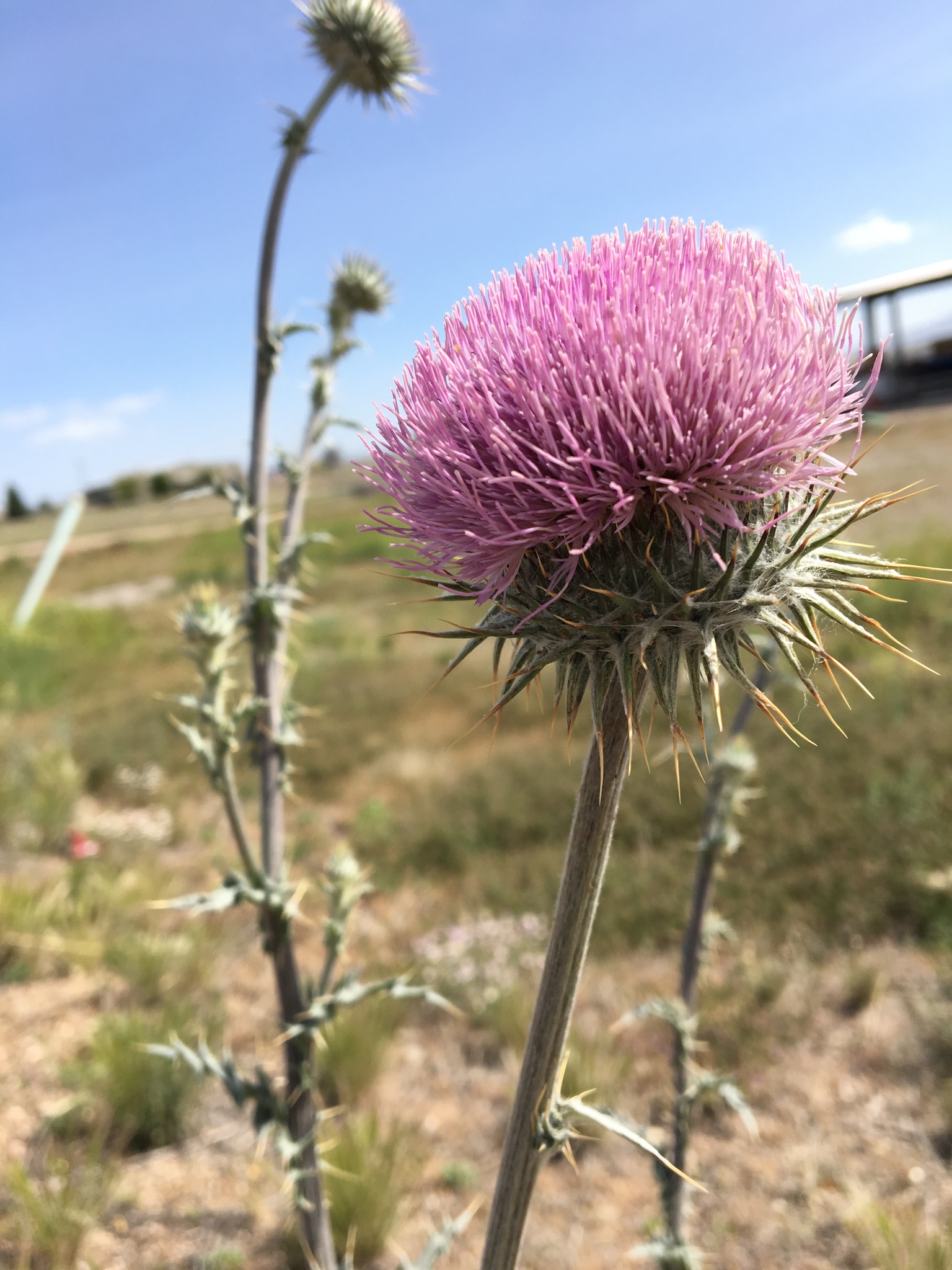
NM Thistle, Cirsium neomexicanum. My photo on iNaturalist. Link: https://www.inaturalist.org/observations/15024423

I worked with an AmeriCorps crew in the Sacramento Mountains (Lincoln NF) that had been removing musk thistles.  But I found out they didn’t know how to tell the difference between native and invasive thistles. 

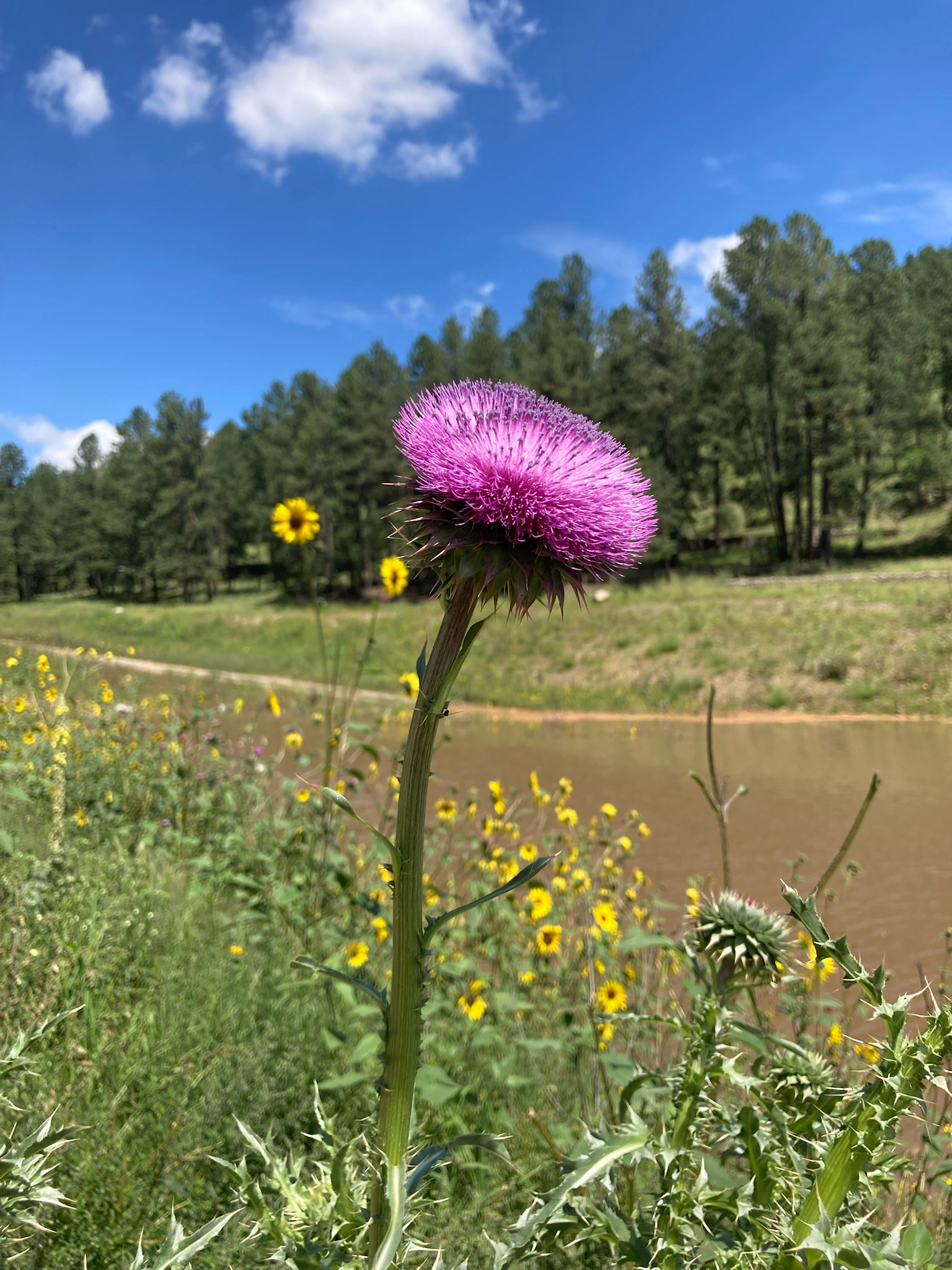
Photo of musk thistle Carduus nutans from iNaturalist user c-guinan. Link: https://www.inaturalist.org/observations/132367683

Even worse, they didn’t even know that there is an Endangered species of native thistle in those mountains!  We investigated and it looks like they at least didn’t kill any endangered thistles, but it could have been really bad. 


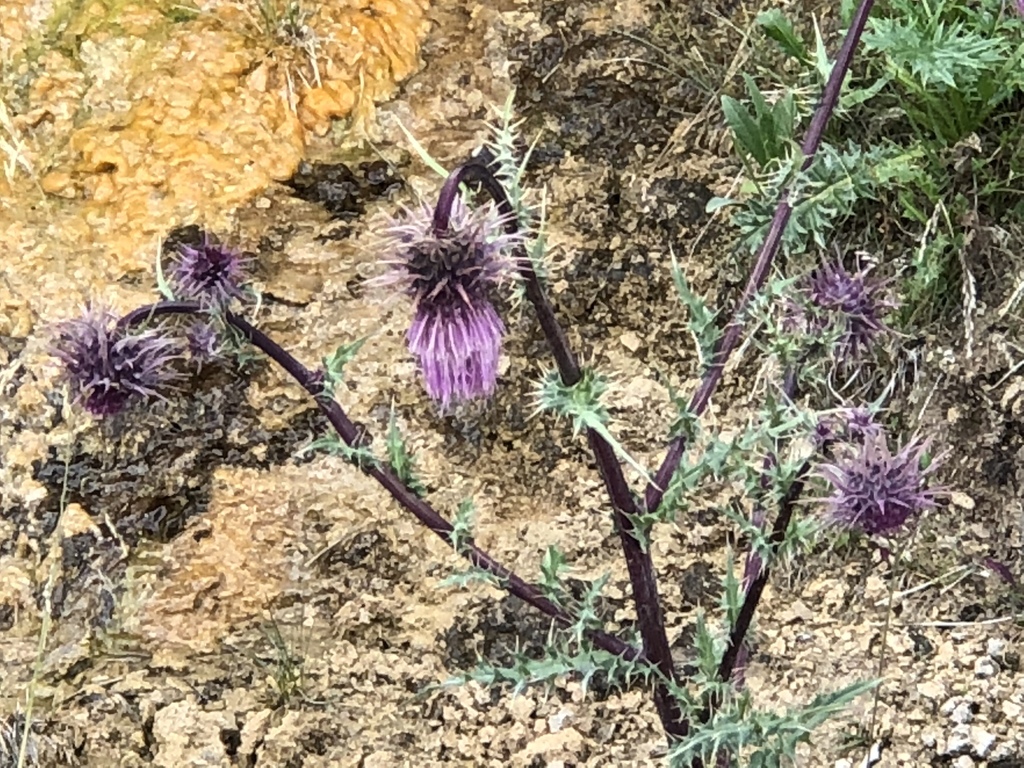
Photo of Endangered Sacremento Mountains Thistle Cirsium vinaceum from iNaturalist user ck2az.  Link: https://www.inaturalist.org/observations/14433149

I’m currently trying to find the volunteers on the Prescott national forest who are pulling up all of the Arizona thistle along popular trails.  Its especially troubling to me when people who are trying to do good by removing invasive species end up destroying native species.

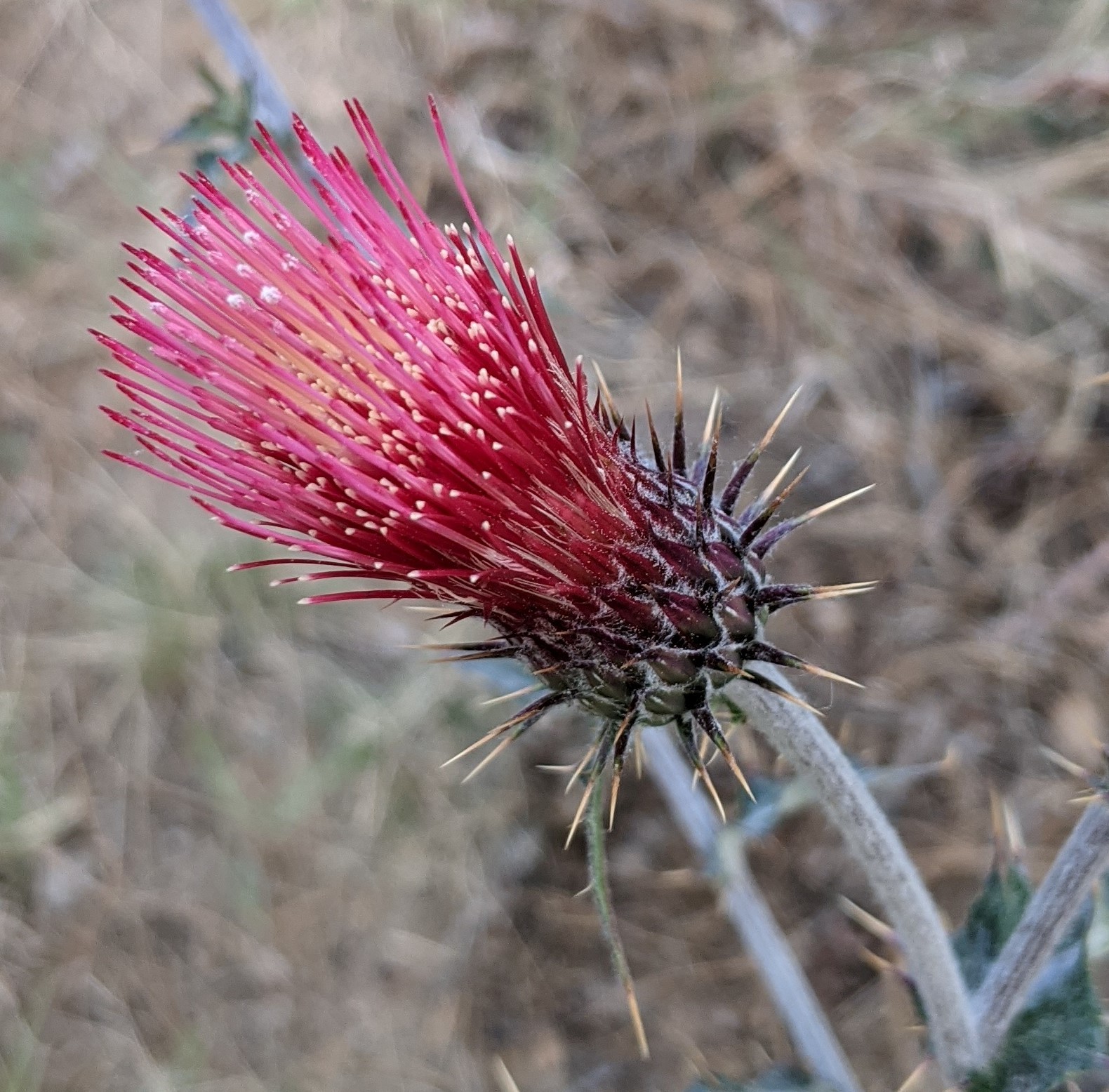
Arizona Thistle Cirsium arizonicum.  My photo on iNaturalist.  Link:  https://www.inaturalist.org/observations/87880049

Everyone who’s done natural resource work has stories of project missteps.  I don’t know how to prevent all mishaps, but talking about these misidentifications is a good first step.

The NM Native Plant Society has a great Thistle ID book written by Bob Sivinski.

Thursday, December 19, 2019

Glyphosate Fear-Mongering


Despite recent court cases, glyphosate is not recognized as a carcinogen or toxin as these terms are normally understood in environmental toxicology.  Yes, there is some research linking glyphosate with increased cancer risk, but that is not the scientific consensus.

I don't think this blog post on glyphosate can be counted as scientifically accurate, even though it does cite scientific research. Websites that sell fear based on a few studies while ignoring the body of scientific literature are not reliable sources for decision-making. 

I am writing as a concerned science-lover. For me (and I could be wrong), I see glyphosate fear-mongering as no different from conspiracy theories about vaccine harms or global warming.  Yes, there are scientific papers showing that vaccines cause autism and that global warming is not happening, but any article that only cites those papers without weighing (or at least mentioning!) the current scientific consensus would be misleading at best.

Focusing on glyphosate seems especially misguided given the other chemicals used in agriculture and commonly found in our food supply (e.g. chlorpyrifos).  While glyphosate may be the popular boogeyman of the year, science-based reporting should at least acknowledge that it is probably the least toxic of any chemical pesticides currently being used. 

A better approach than just selling fear:  promote solutions, such as better testing of all chemicals in our food supply. 

Wednesday, January 27, 2016

Why Are You Interested in EDF's Chemical Wristband Study?


I'm interested in science and the environment. I think we need more science, more data, more documentation.

I've looked into the quantified self movement for personal health improvement and think that a similar focus could transform all of our environments -- especially the indoor spaces we spend most of our time in.

 I recently ordered a Air Quality Meter  to attempt to look at chemicals in the environment.

So I'm also interested in EDF's Chemical Detection Initiative, that recently documented our exposure to hundreds of chemicals in the environment.

The graphic above describes how this technology works.

I'm hoping to learn the identity, industrial use, and possible harm of chemicals from my environment. It would be a great opportunity to learn chemistry! I took the 23andme test last year for my wife and I -- and it was a great opportunity to learn about state-of-the-art genomics.

I'm also interested to connect with others who have similar chemical exposure patterns and join a growing community of people interested in improving their own health and become agents of change to all of society.


Level of Concern pre-test:

Pesticides -4

Air Pollution -3


Chemicals in cosmetics/skin care products - 2


Chemicals in cleaning products - 2


Chemicals in furniture and building materials - 4


Pharmaceuticals - 4

Monday, April 13, 2015

Problems with Roundup?

Roundup  was recently labelled by the WHO as a "probable human carcinogen".

But farmers still love it: LibertyLink soybeans testimonial

Because it works:  Time-lapse video of herbicide treatment


I previously wrote about chemical use versus abuse in American agriculture, as well as some of the new stacked-trait GMO crops that are resistant to multiple herbicides.


Saturday, December 20, 2014

Chemical Use and Abuse in Agriculture: What's the Problem?

Peter Lehner's recent blog post on ACOEL was inspiring, but also puzzling, because he mentions three problems with agriculture, but only 2 are real problems.

While I agree with the need for a renewed emphasis on environmental contaminants in farming, the issue of 2,4-D seems out of place in his discussion.  Certainly the role of unregulated chemicals in our food supply needs to be brought up to international standards (*cough* Europe).  And certainly the disastrous role of factory farming in harming the environment and, through the over use of antibiotics, breeding new antibiotic-resistant diseases urgently needs to be addressed.

But 2,4-D and glyphosphate are some of the least toxic herbicides available, having been subjected to more scrutiny than any other compound in agriculture. They have been used for decades in both agricultural and turf and domestic garden applications, and the licensing of genetically engineered (GE) crops resistant to these herbicides really doesn't change anything.  2,4-D is already used as a pre-emergence and post-harvest weed control, and the new GE crop gives farmers the option of using it once or twice during the growing season.

These common weedkillers have been used, are currently being used, and will be used, whether or not our country goes down the GE crop road.  What's more, EPA has used the licensing of Dow's Enlist Duo GE soybeans to significantly increase regulation of herbicide use, with the option to review in 6 years.  It should be pointed out that the outcome of GE crops resistant to 2,4-D will likely be the same as it as for glyphosphate: industry will shoot itself in the foot by overusing single-chemical herbicides to the point that weeds evolve resistance.

While other areas of environmental regulation are woefully lacking (antibiotic overuse and GRAS chemicals), the use of herbicides is well-regulated and not a major risk to human or environmental health. NRDC would be well to focus on the important agricultural issues and let settled issues alone.

Sunday, December 14, 2014

“A Safe and Affordable Food Supply”: New GMOs Battle Resistant Superweeds

Stacked-trait GMOs
Herbicide-resistant weeds have more than doubled since 2009 to infest approximately 70 million acres of American farmland –an area larger than the states of Ohio and Illinois combined.  20 years after the introduction of genetically engineered (GE) Roundup Ready corn and soybeans, more tools are needed to maintain productivity.  

 GE crops were hailed as a major advance precisely because they did away with the need for more toxic herbicides like 2,4-D: Robert Fraley, executive vice president and chief technology officer at Monsanto, recently affirmed that "herbicide tolerant crops have been a great enabler. They've enabled farmers to use safer and more environmentally friendly chemicals and replace the products that were previously used...The benefits have been so real and so clear. As I said, it's reduced pesticide use."

However, use of Roundup (glyphosate) steadily increased, even as more and more weeds became resistant.  In 2007, as much as 185 million pounds of glyphosate was used by U.S. farmers, double the amount used six years ago, according to Environmental Protection Agency (EPA) data.

2,4-D and Dicambra are herbicides that are already used to “burn down” the weeds in the autumn, and as pre-emergent herbicides as a prophylactic in the spring, before planting.  But up until now these more-toxic herbicides could not be used during the growing season, as glyphosate can on GE corn and soybeans.  More tools were needed to maintain yields.

Enter Dow's Enlist Duo
Dow recently secured regulatory approval to roll out Enlist Duo in 2015, a stacked-trait GE for corn and soybean cultivars.  Stacked traits have already been used to enhance herbicide-resistant Roundup Ready soybeans with Bt, a natural pesticide.  There are also stacked trait soybeans that contain transgenes to produce oils that are less susceptible to rancidity, and commands a premium price on the market. 

The new GE crops will be resistant to both glyphosate and 2,4-D, allowing farmers to kill glyphosate-resistant weeds during the growing season. 

2,4-D is a plant hormone that kills broadleaf plants (but not grasses like corn, or wheat) by overstimulating growth.  In contrast, glyphosate works by inhibiting a crucial plant enzyme that is not present in animals.  Both are widely used in both residential (lawns and gardening) and commercial (farm) settings. 

Resistance Will Develop
Agronomists predict  that resistance to 2,4-D will develop as rapidly as resistance to glyphosate, because farmers will spur evolution by using the same herbicide on the plants in the same fields, successively selecting for anything with resistance.  USDA and EPA have vowed to better manage the technology, but compliance with integrated pest management strategies is voluntary.

2,4D has been known to drift off fields and kill nearby woodlots, fruit trees, and organic crops, so Dow has changed the chemical to reduce volatility and designed special nozzles to better control application.  EPA is “imposing first-time ever restrictions to manage injury to sensitive crops.  The EPA has put in place restrictions to avoid pesticide drift, including a 30-foot in-field “no spray” buffer zone around the application area, no pesticide application when the wind speed is over 15 miles per hour, and only ground applications (with the special nozzles) are permited. 

Another first for the GE crops is that the EPA is also imposing requirements to reduce potential for developing resistant weeds, such as mandating extensive surveying and reporting to EPA and grower education and remediation plans.  EPA will reevaluate after 6 years, and may impose new restrictions at that point. 

Resistant Superweeds
Some of the most common resistant weeds are: Marestail, Giant Ragweed, Volunteer Corn, Common Ragweed, Lambs quarter,  Agronomists idenitify resistant weeds based on the fact “that most... soybeans are RoundupReady, and that if weeds are still in the soybean field at the end of the season, then there must have been a failure of the system (i.e. spraying herbicides didn’t control them)."


"Experience with the Enlist system indicates that even without a fall herbicide treatment, multiple in season application of 2,4D seem to control marestail well.  Doing so will probably result in the development of resistance to 2,4-D in marestail, though, since this is the type of approach that led to glyphosate resistance – multiple applications of the same herbicide for control of the same weed." -Mark Loux, OSU Extension Herbicide Specialist