Showing posts with label management. Show all posts

Monday, November 25, 2024

More Forest Thinning Science

1. You need Water for Ecohydrology

I previously wrote about the effects of thinning Southwestern ponderosa pine forests on forest hydrology.  AE Brown et al (Journal of Hydrology, 2005) summarized the last 50 years of hydrology research around the world on exactly this question.  Their conclusion was that yes, thinning increases water availability by decreasing evapotranspiration (ET).  However, at drier sites there is less of a difference.

In the figure above, the difference between the grass and forest curves represents the change in mean annual water yield for 100% conversion of one vegetation type to the other.  Partial conversion (i.e. thinning) was shown to have a proportional partial response.  The lack of difference between grass and forest in drier climates (below 500mm or 20 inches precipitation/year) indicates that most ET is actually just evaporation in these areas.  Therefore, because transpiration does not play a large role, reducing transpiration via thinning would not be expected to generate a large increase in water availability.


2. Don't Miss the Forest for the Trees

This classic forestry study found that thinning ponderosa forests increased growth of the remaining trees, but decreased total wood production.  In other words, the increase in vigor didn't compensate for the decrease in trees.  This even includes the decrease in disease (bark beetles) in thinned forests. So the question becomes, do you want a healthier forest or more wood?  


Data is from the The Level-of-Growing-Stock (LOGS) study on thinning ponderosa pine forests in the US West: A long-term collaborative experiment in density management.  A 2020 follow up provides a summary review of this study that started in 1962.  The The AZ portion of the study was conducted at Fort Valley experimental Forest just north of Flagstaff.   PDF with much more info is available from https://www.fs.usda.gov/rm/pubs/rmrs_p055.pdf.

Wednesday, September 16, 2015

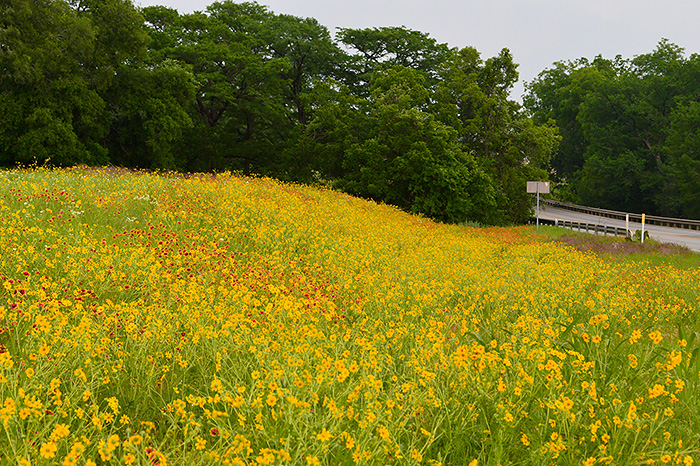
Roadsides Provide Critical Habitat for Pollinators


"Over the past 18 months, support for pollinators has undergone a seismic shift, led by President Obama, who called for a national Pollinator Task Force in the spring of 2014. Less than a year later, in a book-length "Strategy to Protect the Health of Honey Bees and Other Pollinators," the federal government set ambitious goals that include the restoration or enhancement of 7 million acres of land for pollinator habitat over the next five years. Roadsides will comprise a significant portion of that acreage..."
Read the rest of the article.

Wednesday, March 04, 2015

25 Years Without Cows: Hart Mountain National Antelope Refuge

From an article about a recent publication documenting changes on the Refuge:

"By comparing the new photos with the historical ones, the researchers determined that following 23 years of passive recovery after cattle were excluded from the Hart Mountain National Antelope Refuge, stream channels narrowed, woody vegetarian increased, and there was a noticeable reduction in eroding stream banks. Nearly all sites displayed a decrease in bare soil, resulting in an overall 90% increase in plant cover, mainly thanks to grasses, sedges, forbs, and willow. Willow and rush cover increased fourfold. "

The conclusion is clear: “Simply removing cattle from areas may be all that is required to restore many degraded riparian areas in the American West.”

Wednesday, November 19, 2014

Threatened and Endangered Species around Albuquerque, New Mexico

Threatened and Endangered Species from Bernalillo County, New Mexico:
Birds
Mexican spotted owl (Strix occidentalis lucida) USFWS T State S The owl inhabits canyon and forest habitats across a range that extends from southern Utah and Colorado, through Arizona, New Mexico, and west Texas, to the mountains of central Mexico. They require mature, old-growth forests of white pine (Pinus strobus), Douglas-fir (Pseudotsuga menziesii), and ponderosa pine (Pinus ponderosa); steep slopes and canyons with rocky cliffs for their habitat.
Southwestern willow flycatcher (Empidonax traillii extimus) USFWS E
State E The southwestern willow flycatcher breeds in relatively dense riparian tree and shrub communities associated with rivers, swamps, and other wetlands including lakes and reservoirs. Historically the southwestern willow flycatcher nested in native vegetation including willows (Salix sp.), seepwillow (Baccharis salicifolia), boxelder (Acer negundo), buttonbush (Cephalanthusoccidentalis), and cottonwood (Populus sp.). Following modern changes to riparian communities, this subspecies still nests in native vegetation, but also uses thickets dominated by non-native tamarisk (Tamarix sp.) and Russian olive (Elaeagnus angustifolia), or in mixed native non-native stands

Yellow-billed Cuckoo (Coccyzuz americanus) USFWS T
State S Status applies only to western population beyond the Pecos River Drainage; breeds in riparian habitat and associated drainages; springs, developed wells, and earthen ponds supporting mesic vegetation; deciduous woodlands with cottonwoods and willows; dense understory foliage is important for nest site selection; nests in willow, mesquite, cottonwood, and hackberry; forages in similar riparian woodlands;

Fishes
Rio Grande Silvery minnow (Hybognathus amarus) USFWS E
State E The Rio Grande silvery minnow extirpated; historically Rio Grande and Pecos River systems and canals; reintroduced in Big Bend area; pools and backwaters of medium to large streams with low or moderate gradient in mud, sand, or gravel bottom; ingests mud and bottom ooze for algae and other organic matter; probably spawns on silt substrates of quiet coves.

Mammals
New Mexico meadow jumping mouse (Zapus hudsonius luteus) USFWS E
State E
The New Mexico meadow jumping mouse (jumping mouse) is endemic to New Mexico, Arizona, and a small area of southern Colorado (Hafner et al. 1981, pp. 501-502; Jones 1999, p. 1). The jumping mouse appears to only utilize two riparian community types: 1) persistent emergent herbaceous wetlands (i.e., beaked sedge and reed canarygrass alliances); and 2) scrub-shrub wetlands (i.e., riparian areas along perennial streams that are composed of willows and alders) (Frey 2005, p. 53).


Other Special-Status Species in Bernalillo County, New Mexico:

Invertebrates
Obsolete Viceroy Butterfly (Limenitis archippus obsoleta)                       USFWS SOC
Slate Millipede (Comanchelus chihuanus)                                               USFWS SOC

Birds
Burrowing owl (Athene cunicularia) USFWS SOC Associated with prairie dog (Cynomys sp.) towns in dry, open, short-grass, treeless plains.

Common black-hawk (Buteogallus anthracinus)
State NM T
Southwestern U.S. is the northern extent of this species’ range. Occurs in New Mexico almost exclusively during the breeding season and in migration. Breeding populations known chiefly from the Gila River Valley in the southwestern portion of the state and from along the Mimbres River and the Rio Hondo watershed. Strongly tied to cottonwood gallery forests. In Texas breeds in or near the Trans-Pecos Region, with breeding documented in particular in the Davis Mountains and possible breeding along the Rio Grande. In New Mexico, uncommon summer resident, generally, restricted to the mountainous riparian habitats of the San Francisco, Gila, and Mimbres river drainages. 

Neotropic Cormorant (Phalacrocorax brasilianus)
State NM T
The Neotropic Cormant reaches its northern distribution in southern New Mexico. It feeds in lakes and wetlands.

Bald eagle (Haliaeetus leucocephalus alascanus)
State NM T
Occurs in New Mexico year-round. Breeding is restricted to a few areas mainly in the northern part of the state along or near lakes. In migration and during winter months the species is found chiefly along or near rivers and streams and in grasslands associated with large prairie dog colonies. Typically perches in trees.

Northern aplomado falcon (Falco femoralis septentrionalis)
USFWS E
State E
Associated with semi-desert grasslands with scattered yuccas, mesquite, and cactus.The species has also been reintroduced on the Armendaris Ranch in Socorro and Sierra Counties and on lands administered by the BLM, White Sands Missile Range, and the SLO beginning in 2006.

Peregrine falcon (Falco peregrinus)
State T
A year-round resident and local breeder throughout NM, nests in tall cliff eyries; also, migrant across state from more northern breeding areas in US and Canada, winters along coast and farther south; occupies wide range of habitats during migration, including urban, concentrations along coast and barrier islands; low-altitude migrant, stopovers at leading landscape edges such as lake shores, coastlines, and barrier islands.

Arctic peregrine falcon (Falco peregrinus tundrius)
State NM T
Winters along coast and farther south; occupies wide range of habitats during migration, including urban, concentrations along coast and barrier islands; low-altitude migrant, stopovers at leading landscape edges such as lake shores, coastlines, and barrier islands.

Southwestern Willow flycatcher (Empidonax trailli extimus)
USFWS E
State NM E
The flycatcher is a summer breeder within its range in the United States. It is gone to wintering areas in Central America by the end of September. For nesting, requires dense riparian habitats (cottonwood/willow and tamarisk vegetation) with microclimatic conditions dictated by the local surroundings

Northern goshawk (Accipiter gentilis)
State NM S
Breeds in coniferous forests; winters in farmlands, woodland edges, and open country. Breeds from Alaska east through Mackenzie and northern Quebec to Newfoundland, and south to New Mexico, Great Lakes, and New England; also southward to northern Appalachians. Winters south to Virginia and Southwest.
Unlikely to occur in project area due to lack of coniferous forest habitat.

Broad-billed hummingbird
State NM T
Reaches extreme northern range in desert canyons of southern New Mexico with dense mesquite thickets.
Unlikely to occur due to lack of canyon habitat.

White-eared hummingbird (Hylocharis leucotis)
State NM T
Irregular summer visitor to extreme southeastern Arizona; rare in New Mexico and Texas. Found in Mountain woodlands.

Brown Pelican (Pelecanus occidentalis)
State NM E
Generally found in warm marine waters, rarely occurring inland.  Only individuals seen in New Mexico, near water. May be storm-driven birds that moved inland during duress.

Baird's sparrow (Ammodramus bairdii)
State NM T
A winter resident in New Mexico and Texas. Generally prefers dense, extensive grasslands with few shrubs. Avoids heavily grazed areas.

Bell’s Vireo
State NM T
A small insectivorus bird, prefers dense vegetation of scrubby woodlands, old fields, or mesquite brushlands.

Gray Vireo (Vireo vicinio)
State NM T
Species strongly associated with piƱon-juniper and scrub oak habitats. Distributed mainly across the western two-thirds of the state. Prefers gently sloped canyons, rock outcrops, ridge tops, and moderate scrub cover. 

Mammals

Spotted Bat (Euderma maculatum)
State T
Found in open habitats, Ponderosa Pine forests, and marshlands. Suitable roosting sites limits distribution to areas within flying distance of cliffs and stony outcrops. (Adams, 2003)

Pale Townsend’s Big-eared Bat (Corynorhinus townsendii)
State S
Habitat includes montane forests and arid habitats with limited desert scrub vegetation.  Roosting sites include caves, cliffs, and rock ledges but have been found in abandoned mines and other man-made structures. (Adams, 2003)

E = Endangered. Any species considered by the USFWS as being in danger of extinction throughout all or a significant portion of its range. The ESA specifically prohibits the take of a species listed as endangered. Take is defined by the ESA as to harass, harm, pursue, hunt, shoot, wound, kill, trap, capture, or collect, or to engage in any such conduct.
T = Threatened. Any species that is likely to become an endangered species within the foreseeable future throughout all or a significant portion of its range. The ESA specifically prohibits the take (see definition above) of a species listed as threatened. 

Wednesday, September 03, 2014

Smoke from Jemez Mountains Controlled Burn Impacts Albuquerque

The fire was caused by lightening in the foothills of the Jemez Mountains more than two weeks ago. Instead of suppressing the fire, managers have used the smoldering blaze to burn out undergrowth and unhealthy Ponderosa thickets. While the forest is moist enough to preclude any danger of catastrophic fire, that moisture may also increase the amount of smoke.


Last night smoke from the fire drained down the Jemez River valley and into the Albuquerque metro area. By this morning the smog was visible as a distinct haze in the valley. Clear skies and dry air probably helped establish an inversion that contained the smoke within the valley. The smoke quickly dissipated once daytime convection began.

ABQ Journal Photo
The Albuquerque branch of the National Weather Service noted that the "smoke event" this morning was "dense" and "impactful".  Some politicians have used the smoke to argue against this type of forest restoration.

 The NWS does not expect smoke to be as bad today as it was yesterday. But on a recent update to Inciweb, fire managers note that "hand and aerial ignitions will be used again today to direct the wildfire over an area similar in size to yesterday’s activity. Large columns of smoke from this ignition will be visible..."

Current air quality information can be found at http://www.nmenv.state.nm.us/aqb/PinoFireInformation.htm.


Monday, February 03, 2014

Cows eat grass...and Rain grows grass (!)

Grasslands can recover from grazing, provided there is sufficient moisture to grow.  Arid environments often lack moisture, so recovery can be extremely slow (Valone et al) or nonexistent.  That is the overarching conclusion of several long-term vegetation studies in Arizona and New Mexico.  Shrub removal can increase grass cover, but at low levels shrubs do not seem to compete with grasses.  At the Santa Rita experimental range, south of Tucson, invasive species pushed aside native grasses, but then all vegetation cover decreased during the following 20-year drought.  
Figure from Mashiri et al.  Basal cover of perennial grasses on the Santa Rita Experimental Range from 1972 through 2006.  SR = Seasonal Rotation grazing; YL= Year Long grazing.  Following the wet 1980's, grass cover increased to the peak in the center of the graph, but has been falling ever since.
It may sound obvious that grazing can decrease grass cover and that it may take several wet years to regain aboveground growth.  Range science has long advocated for differential season of grazing, or intensive grazing, or other management alternatives, but some studies such as Mashiri et al find no long-term differences between management methods.

A recent study from Bestelymeyer et al did find some slight differences between winter- and summer-season grazing, but they were the opposite differences that traditional range science manuals would predict for Black Grama grass! 
Figure from Bestelmeyer et al.  Black Grama grass cover on the Jornada Experimental Range decreased with grazing and increased following grazing.


References:

Bestelmeyer, Brandon T., Duniway Michael C., James D.K., Burkett L.M., and Havstad Kris M. A test of critical thresholds and their indicators in a desertification-prone ecosystem: more resilience than we thought.  Ecology Letters, 01/2013, Volume 16, p.339-345, (2013)

Mashiri, F., M. McClaran, and J.S. Fehmi. 2008. Short- and Long-term Vegetation Change Related to Grazing Systems, Precipitation and Mesquite Cover. Rangeland Ecology and Management 61:368-379.

Valone, T. J., Meyer, M., Brown, J. H. and Chew, R. M. (2002), Timescale of Perennial Grass Recovery in Desertified Arid Grasslands Following Livestock Removal. Conservation Biology, 16: 995–1002.


Tuesday, December 10, 2013

New Science of Predator Control: Unexpected (emergent) Outcomes

Predator control has been based on the simplistic thinking that fewer lions or wolves would mean more deer and elk.  Therefore, many states promote over-hunting predators.  Interestingly, recent research from Washington State University's Dr. Wielgus and coworkers has reversed conventional wisdom: "Heavy hunting can result in higher overall density of cougars, increased predation on game, and more frequent conflicts with people -- in short, the exact opposite of what was intended." (quoted in National Geographic, Dec. 2013 "Cougars Make a Comeback")

Sunday, November 24, 2013

An Important Point about Grazing-based Land Restoration

"Allan Savory's holistic resource management [was described] as a "promising option," even though there is no science to back up claims about intensive grazing schemes.  The truth is that grasslands are relatively arid environments, and livestock don't make the grass grow: rain does.  And rain doesn't follow the hoof."
--Jeff Burgess, reader response in the November/December 2013 Nature Conservancy magazine

Addendum:  read this comprehensive response to Allan Savory's claims, or this recent direct rebuttal:

The Savory Method can not green deserts or reverse climate change, Briske, David D., Bestelmeyer Brandon T., Brown Joel R.,Fuhlendorf Samuel D., and H. Polley Wayne , Rangelands, Volume 35, Issue 5, p.72-74, (2013)

and this follow-up:


Sunday, November 17, 2013

Living with Fire in Northern New Mexico: Fire, Forests, and Communities

Dr. Bob Parmenter presented data from some of our post-Las Conchas fire recovery monitoring.  Craig Allen gave two talks about culture and climate change over the last ~1,000 years.

Slides and videos from the presentations have not been posted yet.

Sunday, February 26, 2012

Thursday, February 09, 2012

Are Invasive Species Evil?

Mark Davis argues against seeing invasive species as evil aliens.

In his talk today, "Invasion Biology, the Science and the Ideology" Davis lambasted a prominent paper on Garlic Mustard invasion, Ready or Not, Garlic Mustard Is Moving In: Alliaria petiolata as a Member of Eastern North American Forests. 2008. Vikki L. Rodgers, Kristina A. Stinson, Adrien C. Finzi. Bioscience. He looked up a half dozen of their key citations and showed how the original papers did not support or even directly contradicted, the claims in this prominent paper. Davis argues, persuasively, that ecologists have been too quick to lay blame on invasive plants.

He wrote a paper in 2011, Don't judge species on their origins. 2011 Nature. Mark A. Davis, et al. arguing conservationists should assess organisms on environmental impact rather than on whether they are natives. Are invasive species drivers, or passengers of species loss. They may be beneficiaries rather than agents of change. Eventually, intraspecific competition triumphs over interspecific competition as invasive species run up against resource limitations. Over time, invasive species advantages may erode as other species learn to use them as resources, too. Negative soil feedbacks accumulate over time for non-native plant species. Ecology Letters. Jeffrey M. Diez, Ian Dickie, et al.

Wednesday, November 02, 2011

Timber Harvest Effect on Soil

The overall effect is a small loss in total soil carbon; both total carbon content and concentration decrease in the "forest floor," but not in the surface or deep mineral soils. 
Black dots are total carbon; white dots are carbon concentration.

The decrease in total forest floor carbon is greater in hardwood forests, although there is some evidence that it takes longer to rebound in conifer forests because of their lower litter production.

Citation:
Nave LE, Vance ED, Swanston CW, Curtis PS. Harvest impacts on soil carbon storage in temperate forests. Forest Ecology and Management. 2010;259(5):857–866.