Showing posts with label animals. Show all posts

Friday, January 16, 2026

A Decadal Porcupine Survey in Arizona

My last post was a summary of iNaturalist porcupine sightings in Arizona.  This post compares those results to previously published results.  Brown and Babb published the results of their 2000-2007 survey data in 2009 (Brown&Babb 2009) and McCarthy followed up with the results of his 2011-2015 survey in 2017 (McCarthy 2017).  

Since my results focus on porcupines observed since 2016, it is interesting to compare these three decades of porcupine surveys.

Also, Taylor published a comprehensive survey of Arizona porcupines in 1935 from work in the late 1920's and early 1930's.  


Porcupine Population

Porcupine populations can be estimated to some degree by the number of animals observed in a given time.  However, each of the studies used different methods to count porcupines, so the counts are not directly comparable.  

Brown and Babb and McCarthy asked land managers to report porcupines and they compiled the results.  The iNaturalist data I report was submitted by more than 100 iNaturalist observers who happened to encounter porcupines.  


Total Observations 


Porcupines 

Whether compiled from questionnaires sent to land managers or from interested naturalists, fewer than 20 verifiable porcupines are reported per year during this century.  Brown and Babb include data from one land manager from the North Kaibab / North Rim of the Grand Canyon who reported "hundreds" of porcupines, but this report is not an accurate or verifiable count and I excluded it from this analysis.

Taylor's report was motivated by "the porcupine problem" and noted several instances of hundreds of porcupines observed in a single day, more than any of the more recent studies observed in a single year.  The later studies all concluded that porcupines are rare but widely distributed across Arizona.   

Roadkill

The majority of the kills reported by McCarthy were between June and October (61%). They state that this correlates to the months when the porcupines are most active.

This is somewhat true of iNat data, where 50% were reported June to October, but there appears to be a spring peak as well that is not mentioned by McCarthy.  However note that 50% is only 6 animals out of the total 12 roadkill sightings in iNat data so there is not much statistical depth to this observation.  McCarthy's 61% figure is based on 14 animals out of the 23 total roadkill sightings, so their data is not much deeper.

There are many more total observations in iNat (183 versus McCarthy's 56 observations), however there are fewer roadkill sightings.  Therefore 41 % of McCarthy's observations were roadkill, whereas only 6% of the iNat observations are roadkill.  This may be due to citizen scientists bias against photographing dead animals, especially roadkill which are often gruesome to look at and unsafe to photograph.


Months when porcupines are most active

McCarthy states porcupines are most active June to October, however their data actually show broad seasonal activity from April to October.  Brown & Babb show higher sightings May to October.  In contrast, the iNat data show  activity throughout the year.  


Brown and Babb and McCarthy do not separately show seasonality of live porcupines.  In the iNat data, because of a spike in observations of dead porcupines in April, the phenology of live porcupines shows dips in both spring and fall and definitely does not support McCarthy's conclusion that porcupines are most active May-October.


Many of the iNat sightings are from deciduous trees (cottonwoods and willows) where porcupines are more visible during winter leaf-off. 

Previous research did not emphasize the importance of these deciduous species.  

Taylor commented that "Occurrences in junipers, willows. black walnuts, aspens, and cottonwoods are apparently limited to a very few records out of several hundred available. No evidence is at hand that the porcupine, in the Southwest proper, feeds to any extent on these last-named trees…"

Brown and Babb only reported 5 porcupines in riparian deciduous trees out of their total 214+ observations, and McCarthy only reported 4 in these trees out of his total 56 observations.

It is possible that the preponderance of iNat porcupines in these trees is due to observer bias, with the Willow lake and Petrified Forest hosting large numbers of hikers and nature enthusiasts. However, it should be noted that many other areas of the state (including the Grand Canyon and areas around Flagstaff) also host large numbers of recreationalists without reporting large numbers of porcupines.  However, as stated above, deciduous trees leaf-off state does make porcupines easier to spot.


Looking at iNat observations of live porcupines on the ground, it does look like they are most active in June, with elevated activity through October.


Porcupine Distribution

McCarthy reported a continuation of the observations by Brown and Babb, i.e. that porcupines are sparsely spread throughout the habitats where they have been reported.  While this is true as far as it goes, it does appear that there are certain areas of either greater porcupine population density or greater observer bias in photographing them.  About half of the iNat observations are from two discrete locations: Willow lake in Prescott, and Petrified Forest National Park near Holbrook.  

McCarthy noted that porcupines commonly occur in habitats that are not dominated by conifer trees.  That certainly continues to be the case in the iNat data.  Taylor's original paper noted that national forests were the preferred habitat of porcupines, but in more recent years they appear to be more common in deciduous forests, grasslands, and other non-conifer forest habitats.

There are areas of apparently good habitat that do not support porcupine populations.  The Prescott National Forest, despite extensive stands of ponderosa pine with mixed oak understory, has consistently been noted as not having many porcupines.  Brown and Babb reported 7, but interestingly these were all from grasslands, not the forests areas.  Based on personal communication with employees of the Forest, no porcupines have been observed recently on that forest.

Taylor noted: "The porcupine…appears to attain its greatest numbers in parts of the San Juan (Colorado), Carson and Cibola (New Mexico), Coconino and Tusayan (Arizona) national forests. On some forests where conditions seem as favorable as on those mentioned, as the Santa Fe, Manzano, Apache, Kaibab, and Sitgreaves, porcupines are for the most part scarce or of little economic importance. In general as one goes southward porcupines become less numerous. They are decidedly scarce on the Lincoln, Gila, Crook, Tonto, and Prescott forests."

Another area of apparently suitable habitat is the upper Verde river, which has an extensive stand of cottonwood and willow trees surrounded by wildlands.  Surveyors, who look for Yellow Billed Cuckoos throughout this area each month of the growing season, report that they have never seen a porcupine.  Yet porcupines are well known from the cottonwoods and willows around nearby Willow lake in Prescott.

Each of the previous authors have speculated that mountain lion predation may control porcupine abundance.  It may be that mountain lions are less present around Willow lake in Prescott and in Petrified Forest National Park, and more abundant along the upper verde and in the conifer forests of Prescott National Forest.  The present study cannot cast any light on that hypothesis.  

Another hypothesis for the patchy distribution of porcupines is habitat fragmentation by roads and other human development.  As discussed above, the present study did not find a high proportion of porcupine roadkill, but incidental observations and discussions suggests that porcupines are commonly killed on roads but those observations were not documented in iNaturalist.  

If porcupine populations are small and patchy in distribution, and if migrations between populations is difficult and uncertain, then porcupine populations may be reproductively isolated.  

Taylor:  "A noteworthy feature of porcupine distribution is its lack of uniformity. In some regions the animals will be fairly abundant, while in others, perhaps not far away, they will be scarce, although conditions appear to be equally favor-able."

Uldis Roze, in "The North American Porcupine," suggested that porcupines are dependent on a species-specific microbiome to digest their high cellulose diet of rough plant matter.  This is based on observations that when porcupines are introduced to a new area they consume the fecal pellets of resident porcupines in an apparent attempt to inoculate their microbiome.  Porcupines eat a wide variety of plant species, but individual porcupines are documented preferring certain plants, possibly based on their ability to digest them. 

If these ideas are correct, then porcupines may have difficulty colonizing areas that do not currently support porcupines.  It may take awhile to develop a "taste" for plants in different areas. If so, porcupine populations may be at risk of long term decline in Arizona.  Small and isolated populations may die out, and if nearby porcupines cannot safely travel and cannot easily digest the different plants in those areas, it may be difficult or impossible to replace extirpated populations.  

Taylor: "The porcupine must occasionally, if not regularly, make long trips across country. It must possess considerable capacity to adapt itself to whatever dens, natural burrows, rocky shelters, or vegetative cover it can find in the non-timbered areas into which it roams. The obvious wanderlust of the animal must tend to insure the species the widest possible geographic and ecologic range. Foster reports occasional porcupines found in badger holes in the treeless Williamson valley, Yavapai county, Arizona."

The large continuous band of conifers across the national forests of Arizona should continue to provide habitat for sustainable porcupine populations.  Hopefully the few scattered iNat observations across this area are few and scattered due to lack of observers and not lack of porcupines.  If porcupines are  not doing well in this bastion of habitat they indeed face an uncertain future in Arizona.

The American Southwest, including parts of Texas, NM, and Arizona marks the southern extent of porcupines except for a few endangered populations in the mountains of Mexico.  As the climate warms, it is possible that porcupines find Arizona's environment increasingly challenging.  However, Taylor states that porcupines are limited by food availability, not climatic extremes.

Citations
Brown, David E., and Randall D. Babb. "Status of the Porcupine (Erithizon dorsatuh) in Arizona, 2000–2007." Journal of the Arizona-Nevada Academy of Science 41.2 (2009): 36-41.

McCarthy, Michael. "Porcupines (Erethizon dorsatum) in Arizona, 2011–2015." Journal of the Arizona-Nevada Academy of Science 47.1 (2017): 19-22.

Roze, Uldis. The North American porcupine. Cornell University Press, 2009.

Taylor, Walter Penn. Ecology and life history of the porcupine (Erethizon epixanthum) as related to the forests of Arizona and the southwestern United States. No. 3. University of Arizona, 1935.

Saturday, December 27, 2025

Porcupines in Arizona


An Arizona Porcupine observed at Willow Lake in Prescott.  Link to iNat observation.  


Porcupines are infrequently observed in Arizona, with only 206 total observations on iNaturalist since 2009, of which 198 are positively identifiable.  (Compared to about 900 observations in New Mexico.)  

Of the 198 in Arizona, 35 were at Willow Lake in Prescott, 55 at Petrified Forest National Park in NE Arizona, and about 30 between Williams and Flagstaff.  The remaining 78 were observed in ecosystems across the state, except for the Sonoran desert.

102 were observed on the ground, but 24 were dead, and half of those (6% of the total) were roadkill (viewer discretion advised).

Porcupine dead on road in Prescott.  Link to iNat observation.

96 porcupines were observed using different tree species as habitat.  The most common tree was cottonwood (Populus fremontii), followed by Ponderosa Pine (Pinus brachyptera).  Willows (Salix goodinggii) were also frequent.  Porcupines were observed in all common tree species, including oaks (Quercus), Junipers (Juniperus), Pinyon pines, Elms, and Douglas Fir (Pseudotsuga menziesii).  

Porcupine in cottonwood tree, Willow lake. Link to iNat observation. 


Thursday, February 06, 2020

Missing Mammals?


 Animal population distributions can be assessed using iNaturalist.  The website is used by citizen scientists to report animal and plant observations.  Rare animals may not be mapped well, but my hypothesis is that large mammals are well mapped because humans tend to make note of them.  This may be less true for nocturnal animals, and it also depends on the presence of humans.

Raccoon observation from iNaturalist.


The map above of raccoons and the map below of coyote observations shows that both species are well-distributed across the U.S.  Clusters of observations are probably more likely due to sampling bias around large cities rather than actual differences in population density. 

Therefore, these maps can show overall distribution but may not be as useful for determining densities.

Coyote observations from iNaturalist.

The next map shows that moles do not occur in the central arid and mountainous part of the U.S.  It appears that these animals need mesic conditions and rich soil.

Mole (family) observations from iNaturalist.

In contrast, Pocket Gophers, a similar group of burrowing animals, are found throughout the arid West as well as along the Pacific coast and in Florida.
Pocket Gophers

But another burrowing mammal, the Prairie Dog, is restricted to the arid West:

Prairie Dogs

While the Prairie Dog distribution makes sense at the continental scale, zooming in reveals interesting patterns.  In northern AZ, Prairie Dogs are mainly restricted to the I-40 corridor, despite extensive grassland habitat in, for example, the Chino and Prescott valley area. The data for this zoomed-in view is much sparser than the national map and it is likely that there are many areas with missing observations. 

However, I am confident that any highly-visible Prairie Dog colonies in the Prescott area would have been photographed at some point.  Given the presence of suitable habitat surrounding occupied habitat in AZ, it may be that Prairie Dogs populations have been extirpated and fragmented across northern AZ.

Prairie Dog observations in northern AZ.


Each of the above species distributions can be related to environmental variables, but other mammal distributions are more complex.  Porcupines feed on the growing tips of conifer and deciduous trees, but apparently do not occur in much of the Midwest and southeastern parts of the U.S.  I'm not sure why this would be, as there is plenty of what looks like suitable habitat in these regions, and the presence of the species in the southwest and the northeast spans a large environmental gradient.

Porcupine distribution

Porcupine observations are quite scattered across much of the West, despite the fact that they are fairly visible in trees; birders looking for birds would be very likely to see them. There are large areas of suitable habitat in AZ, for example along the Verde river in Cottonwood.  I'm not sure why this species hasn't been observed anywhere on the Verde river.  Perhaps it has been extirpated from these areas.  Or, the two observations around Prescott may have been of dispersing animals and the population is only reproducing in the higher elevations around Flagstaff.

Porcupines in northern AZ.


Badgers also show a predominantly Western and great-plains distribution.  They need large areas of open space.

Badger distribution
However, in Northern AZ few animals have been observed.  This nocturnal burrowing animal may simply escape frequent detection, or it may be very infrequent on the landscape.  Supporting the idea that humans rarely encounter this animal, many of these observations are road kill.  Interestingly, badgers are found in AZ both in high-elevation mountain habitats and in low-elevation Sonoran desert habitat!
Badgers observations in AZ.

 Another animal with a strange distribution is the Opossum.  It seems to avoid most of the interior arid West, except for southern AZ.  The observations in Tucson would seem to be environmental outliers compared to the populations along the West coast and in the Eastern U.S.


Opossum distribution.  

Much can be learned by studying species distributions and noting where animals have been observed as well as where they have not.  Trying to explain the observed distributions raises many questions. The mysteries surrounding animal distributions are fertile ground for theorizing about animal behavior, history, and habitat needs.

Wednesday, November 12, 2014

Comparative Physiology: Maximum Lifespan

A conundrum if the amino acid methionine is a determinant of maximum lifespan: Why do carnivores and vegetarians live the same? Perhaps it could be for different reasons.... antinutrients for the latter and methionine for the former. These are universal rules that apply even between disparate physiologies. I haven't been able to find any papers that examine methionine diet content versus longevity.
SourceEcology and mode-of-life explain lifespan variation in birds and mammals, Proceedings of the Royal Society BDOI: 10.1098/rspb.2014.0298


This is a valuable resource on important "carninutrients" lacking in vegetarian diets.  

Wednesday, August 22, 2012

Plant OR Animal Distributions

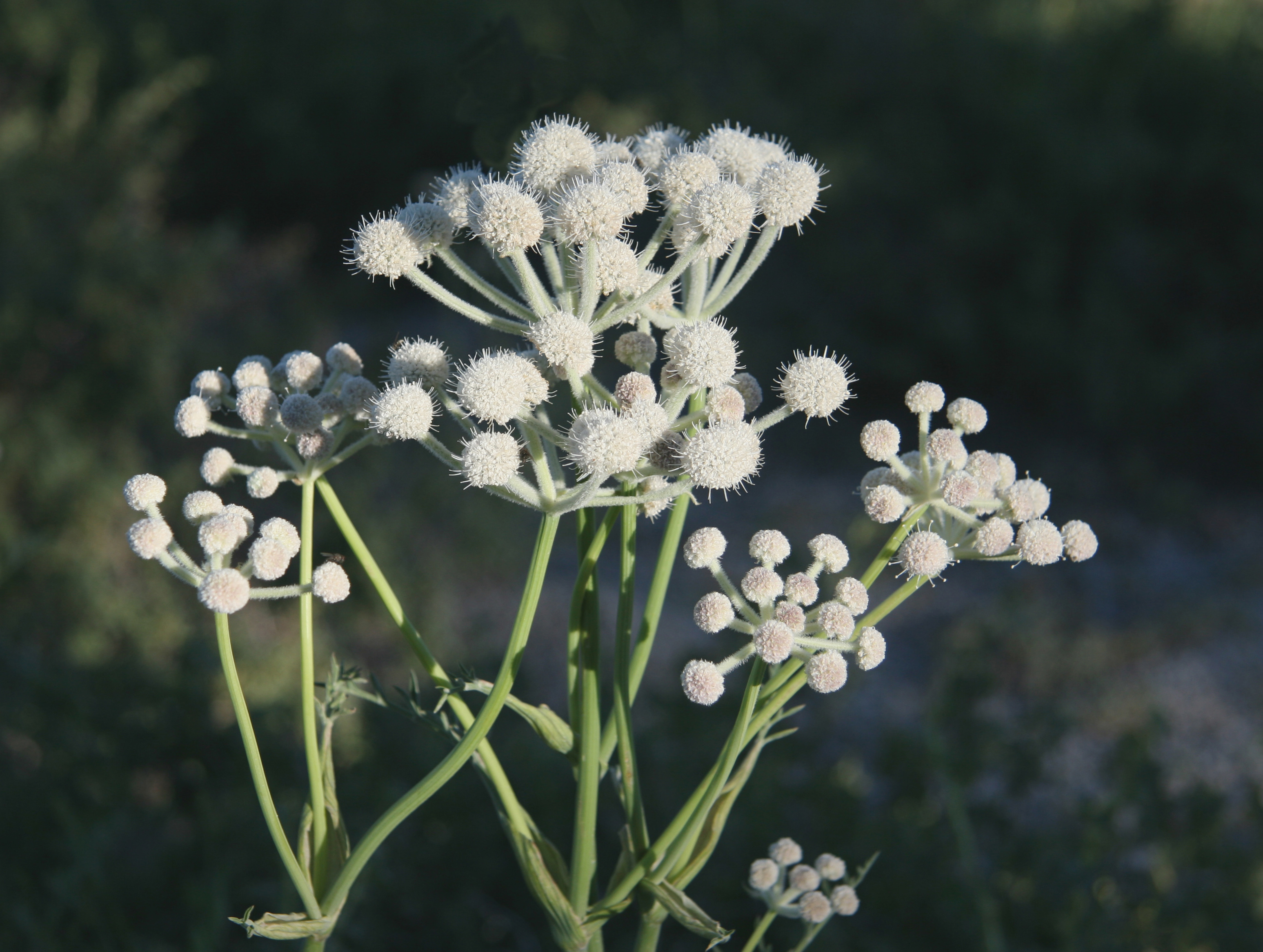
BOMAP has the best plant distribution maps, by county.

Sphenosciadium capitellatum:


The GAP program has the best vertebrate distribution maps (modeled).

American Pika (Ochotona princeps):


Sunday, February 26, 2012

Extinctions in Australia

Australia has one of the worst extinction records, not just recently but over the last 50,000 years. Why? And would answering that question shed light on species loss around the globe? Telling a believable history based on paleontology, paleoecology, anthropology, and natural history is crucial to understand the patterns in dynamic ecological processes. Tim Flannery presents a very readable attempt in Future Eaters (1994) but the science at that time was not conclusive and too much of this book is conjecture. Chris Johnson, Professor at University of Tazmania , has finally succeeded with his Australia's Mammal Extinctions: A 50 000 Year History (2006).

Dr. Johnson describes tree major waves of extinction and concludes that new keystone predators caused every one:

1. Human Arrival ~46 Kyr
2. Aboriginal Intensification and Dingo Arrival 5 Kyr
3. White Arrival with Sheep, Rabbits, Fox, and Cats 0.2 Kyr


Australian megafauna that went extinct around 46,000 years ago. A human hunter is shown for scale in the middle.


First Wave Extinctions
46,000 years ago the first humans entered an Australia that would be unrecognizable today: lowered sea levels in the middle of the last glacial (110,000-14,000 years ago) had revealed a vast continent almost twice as large as the one on maps today. It wasn't just the land that as bigger. Dozen of species of giant kangarooos and other marsupials filled every niche from large giraffe-like creatures to marsupial hippos, elephants, and even marsupial lions. On top of all that there were marsupial tapirs and a giant 500 pound burrowing wombat. Not to mention a super-lizard that would dwarf modern komodo dragons.


Extinct Australian Megafauna: A Marsupial Lion, Thylalaceo, attacking a mega-Kangaroo. credit

Dr. Johnson explains the pattern of extinction by noting that these animals all had low birth rates while the remaining animals were fecund enough to tolerate increased human predation.

Figure 6.3 From Johnson (2006). Much smaller and lighter animals went extinct in Madagascar and Australia than in North and South America, but this discrepancy can be explained by showing that all three extinction events had similar Fecundity to Extinction relationships.

Survivors included possums, gliders, koalas, bandicoots, and billabies, the numbat, marsupial moles, and the thylacine (AKA Tazmanian Tiger) and the Tazmanian Devil. All of these species continued to cohabit Australia with early humans up until...

Second Wave Extinctions
In the middle of the Holocene, about 5,000 years ago (and 5,000 years after the end of the last Ice Age), both the thylacine and the Tazmanian Devil went extinct on the Australian mainland. What changed? Perhaps the end of the ice age brought shrinking coastlines and increased crowding of Aboriginals onto less and less good land ("Intensification"). Or perhaps it was the arrival of another keystone predator, the dingo. More info.


Figure 11.4 from Johnson (2006) showing populations of rat-kangaroos and foxes in a) southern, b) central and c) northern New South Wales. Rat-kangaroos solid lines, foxes dashed lines.


Third Wave Extinctions
Whatever the causes of the first two extinction waves, they left humans and dingos as the only keystone predators. When Europeans arrived 200 years ago and began a program of dingo eradication and Aboriginal resettlement, many prey species populations (such as kangaroo and emu) exponentially increased. Unfortunately, at the same time, two new predators were introduced: the fux (Vulpes vulpes) and the house cat. Without keystone predators to control these "mesopredators", the fox and cat swept over the Australian countryside, extincting any native animals that fit into their mouth (key size was about 500g-5kg). Especially hard hit were ground-dwellers in open habitats. The added environmental changes wrought by widespread clearing for sheep ranching and the invasion of rabbits breeding like, well, rabbits, was enough to bring Australia's ecosystems to their knees. Dr. Johnson describes this process as "hyperpredation", when a generalist predator (like fox or cat) can build up to high population levels eating common prey (rabbits) but then turns to rarer species when rabbit population fluctuates.


Figure 12.3 From Johnson (2006) showing interactions that led to Hyperpredation on native mammals.

In general, predators can exert huge effects on ecological communities: "The devastating impact of new predators and the pervasive effects of shifts in the balance of existing predator-prey interactions are the themes that underline the whole history of extinctions in Australia for the last 50,000 years." The surprising conclusion: dingoes control should be stopped so that dingoes, the last remaining top-predator, can control foxes and cats. According to Dr. Johnson, increased dingo population may be Australia's last hope for a balanced ecosystem.

Addendum
Dr. Johnson considers environmental (climate) change hypotheses, but I wish he had dealt more with the concomitant changes to vegetation communities and ecosystem processes. For example, Loreau and Schmitz both emphasize how changes in herbivore populations can have large indirect effects on nutrient cycling that then feed back into increased changes in vegetation communities. Dr. Johnson does note that people did not seem to change fire frequency/intensity until Aboriginal Intensification, but the data for this seem weak. His Figure 7.1 shows that megafauna extinction removed more than 75% of animal biomass from Australian ecosystems. This must have had a huge effect. But, even today, it can be difficult to document the interactions and feedbacks between herbivores and plants, so the failure to find evidence of this 45,000 years ago is not surprising.

Example of how megafauna are still relevant in Australia today.