Showing posts with label food. Show all posts

Wednesday, November 27, 2024

Acid-Base Balance: Foods and Supplements

I previously wrote about the role lactic acid can play in disease.  This raised the question of whether foods and supplements can buffer metabolic acidity.  If so, which foods or supplements are most beneficial?  Does pH correlate to the effect on the acid-base balance of the body?

This is important because:

After researching this, I concluded that a food's pH does not directly correlate with its impact on overall acid base balance.  Potential Renal Acid Load (PRAL) is determined by mineral and protein composition, not its inherent acidity.  

For example:

  • Lemons taste acidic due to citric acid, but have a negative PRAL (alkaline-forming) because they're rich in potassium and other compounds that generate bicarbonate when metabolized
  • Animal proteins may not taste acidic but have a high positive PRAL (acid-forming) due to sulfur-containing amino acids that get metabolized to sulfuric acid.

The key biochemical factors that determine a food's PRAL include:

  1. Protein content (especially sulfur amino acids) - metabolized to produce acids
  2. Mineral content: 
    1. Potassium, calcium, magnesium - metabolized to produce bicarbonate (alkaline)
    2. Phosphorus, chloride - contribute to acid load
  3. Organic acid content - intermediates in the citric acid cycle (Krebs cycle), their oxidation generates bicarbonate. Each molecule of malate or citrate metabolized can generate multiple bicarbonate molecules.

Details

The pH of urine is influenced by the body's metabolic acid load and the kidney's ability to regulate hydrogen ion (H⁺) excretion.  The kidneys play a crucial role in maintaining acid-base balance by adjusting the amount of hydrogen ions eliminated or retained.  When the body experiences a metabolic acid load, the kidneys respond by increasing H⁺ excretion. This lowers urine pH, reflecting the increased acid load on the body.  However, positive cations can also stimulate renal acid-base regulation, leading to increased hydrogen ion excretion (and bicarbonate (HCO₃⁻) regeneration).  This results in a decrease in urine pH, even as the body experiences a reduced metabolic acid load.

Cations can also activate enzymes that convert metabolic acids to bicarbonate.  The more positively charged the cation, the more efficiently it can displace hydrogen ions.

Organic acid conjugation to cations enhances alkalinization.  For example, citrate enters the citric acid cycle directly and generates multiple bicarbonate (HCO₃⁻) upon oxidation.


Table of Common Supplements and Food Additives; their pH and effect on acid-base balance.  

This data shows how solution pH and PRAL effects don't always correlate. For example, while KCl has a neutral pH in solution, it has a slightly negative PRAL due to the potassium content. However, extreme pH (either acid or base) can correlate with PRAL effect.


Categories of Supplements

  1. Neutral pH, Alkalizing Effect: 
    1. Potassium citrate
    2. Calcium lactate
    3. Potassium gluconate
    4. These demonstrate the pH vs. physiological effect paradox
  2. Mineral-Organic Complexes: 
    1. Magnesium citrate and malate show slightly acidic pH but strong alkalizing effects
    2. Zinc citrate has less alkalizing effect despite similar pH
  3. Simple Salts: 
    1. KCl shows neutral pH with mild alkalizing effect
    2. NaCl shows neutral pH and neutral physiological effect
  4. Strong Acids/Bases: 
    1. HCl, KOH, NaOH show correlation between pH and physiological effect
    2. These are exceptions to the general trend of pH not predicting physiological impact

Alkalinizing Potential Ranking

The formula for PRAL (mEq/100g) is: PRAL = 0.49 × protein (g) + 0.037 × phosphorus (mg) - 0.021 × potassium (mg) - 0.026 × magnesium (mg) - 0.013 × calcium (mg).  

Negative PRAL indicates an alkalizing effect on the body.


Example:  mice

Mice diets were compared using Dietary Cation Anion Balance (DCAB), a similar metric to PRAL.  DCAB is calculated by adding the weighted amount of acidifying anions and alkalizing cations in the diet. 

It has been shown in many species that the dietary cation anion balance (DCAB) influences acid base homeostasis and urine pH.  With the DCAB, the resulting urinary pH can be predicted with species-specific equations. 

DCAB [mmol/kg DM] = 49.9 · Ca + 82.3 · Mg + 43.5 · Na + 25.6 · K − 59.0 · P − 62.4 · S − 28.2 · Cl; mineral content in g/kg DM.  (Negative DCAB indicates an acidifying effect on the body.)

The paper found that a negative DCAB results in metabolic acidosis, and "Fed long-term, this can contribute to the reduction of bone mineral density due to a PTH-mediated increase in renal calcium excretion. Metabolic acidosis also induces renal phosphorus excretion, resulting in hypophosphatemia."

Citation: https://www.mdpi.com/2076-2615/11/3/702 

Böswald, L.F.; Matzek, D.; Kienzle, E.; Popper, B. Influence of Strain and Diet on Urinary pH in Laboratory Mice. Animals 2021, 11, 702. https://doi.org/10.3390/ani11030702


Example:  human athletes

Alkaline water has demonstrated its effectiveness as an alkalizing agent in the treatment of metabolic acidosis in both animal and human research. Past studies have shown that daily intake of 2.5–4 L of alkaline water for 3~6 weeks has significant impacts on anaerobic performance and acid–base balance in athletes.  This study showed that alkaline water co-ingested with glutamine led to decreased stress markers in athletes.  Masterjohn hypothesizes that glutamine is converted to glutamate to buffer lactic acid in muscles, and that decreasing PRAL contributes to more available glutamine for other metabolic functions..  

Citation: https://www.mdpi.com/2072-6643/16/3/454

Lu, T.-L.; He, C.-S.; Suzuki, K.; Lu, C.-C.; Wang, C.-Y.; Fang, S.-H. Concurrent Ingestion of Alkaline Water and L-Glutamine Enhanced Salivary α-Amylase Activity and Testosterone Concentration in Boxing Athletes. Nutrients 2024, 16, 454. https://doi.org/10.3390/nu16030454


Thanks to Claude Sonnet for back-and-forth conversation, and for creating the table and figure above.  

Monday, July 10, 2023

Are Pollinators Necessary for Food Production?

Pollinator enthusiasts claim that "1 in 3 bites of food are dependent on pollinators", but the reality is that many crops have been bred to self-pollinate.  For example, soybeans produce bean-like flowers, and many wild beans do require insect pollinators, but soybean flowers never open; they self-pollinate.  

In the wild, 70-90% of flowering plant species (angiosperms) do require an animal (usually an insect, bird, or mammal) to move pollen from one flower to another. Source. Only a few species have evolved to become self-reliant or to rely on wind.  But in human agriculture, we've selected for species that "breed true", which often means selecting for self-pollination. 

Many flowering agricultural crops would appear to need pollinators, but don't.  Or at most the pollination is optional: it doesn't hurt for insects to visit the flowers, and sometimes they help to fertilize and hence set more fruit, but they aren't strictly needed.  Although about three-quarters of crops benefit in some way from animal pollination, only about 10 % depend fully on pollinators to produce the seeds or fruits we consume, and they collectively account for only 2 % of global agricultural production. Source.

I created this table to show the AZ crops that require pollinators.


Data from Our World in Data: https://ourworldindata.org/pollinator-dependence

More information: https://en.wikipedia.org/wiki/List_of_crop_plants_pollinated_by_bees

Sunday, December 14, 2014

Excess or Insufficient Micronutrients?

Some authors have argued that excess micronutrients, specifically zinc, iron, and copper are a cause of a number of diseases, from atherosclerosis to Alzheimer's. (1) But other writers argue that most Americans are micro nutrient-deficient (very few Americans are macronutrient deficient!). (2)

Micronutrients are critical for human health, but many have relatively narrow ranges associated with optimal health.  Assuming that U.S. dietary guidelines are valid (debatable, but a good starting point), how many people really are receiving inadequate or overabundant micronutrients?

I searched journal articles featuring contemporary data from the U.S. NHANES which surveys a representative sample of the U.S. population.  

Large portions of the population had total usual intakes (food and supplement use) below the estimated average requirement for vitamins A (35%), C (31%), D (74%), and E (67%) as well as calcium (39%) and magnesium (46%). Only 0%, 8%, and 33% of the population had total usual intakes of potassium, choline, and vitamin K above the adequate intake when food and multivitamin use was considered. The percentage of the population with total intakes greater than the tolerable upper intake level (UL) was very low for all nutrients; excess intakes of zinc were the highest (3.5%) across the population of all of the nutrients assessed in NHANES.(3)

Population-based studies indicate that vegetarians have lower mean intakes of vitamin B-12 and zinc and higher intakes of fiber, magnesium, and vitamins A, C, and E than do nonvegetarians. Usual intake data suggest a similar prevalence of inadequacy between vegetarians and nonvegetarians for magnesium and vitamins A, C, and E, with both groups at high risk of inadequate intakes of these nutrients. These same data report that vegetarians have a higher prevalence of inadequacy for iron, vitamin B-12, protein, and zinc than do nonvegetarians. Vegetarians should optimize intakes of vitamin B-12, zinc, and protein; and both vegetarians and nonvegetarians need to increase intakes of calcium, magnesium, fiber, and vitamins A, C, and E. (4)

But these studies only analyze reported food intake, which is notoriously unreliable, even, possibly, in NHANES. Interestingly, NHANES also does actual blood tests, and the results from that research found very few physiologyical (as opposed to dietary) deficiencies.  CDC's National Report on Nutritional Indicators (2012, valid for the period 2003-2006,  only found deficiencies in B6 (11%), Iron (women: 10%), Vitamin D (8%), Vitamin C (6%).   This same report indicates that folate supplementation is responsible for lowering deficiency to less than 1% of the U.S. population.  They also note that many women have iodine levels "bordering on insufficiency".  They did not note any micronutrient excesses. (5)


Sources:

(1) Power Foods for the Brain.  Barnard, Neil.  2013

(2) see, for example, http://chriskresser.com/are-supplements-really-necessary and http://chriskresser.com/why-you-should-think-twice-about-vegetarian-and-vegan-diets

(3) J Am Coll Nutr. 2014;33(2):94-102. doi: 10.1080/07315724.2013.846806.
Multivitamin/mineral supplement contribution to micronutrient intakes in the United States, 2007-2010.
Wallace TC1, McBurney M, Fulgoni VL 3rd. (Affiliation: Council for Responsible Nutrition)

(4) Am J Clin Nutr. 2014 May 28;100(Supplement 1):365S-368S.
Nutritional adequacy of plant-based diets for weight management: observations from the NHANES.
Farmer B.PlantWise Nutrition Consulting LLC

(5) Second National Report on Biochemical Indicators of DIet and Nutrition in the U.S. Population. 2012

“A Safe and Affordable Food Supply”: New GMOs Battle Resistant Superweeds

Stacked-trait GMOs
Herbicide-resistant weeds have more than doubled since 2009 to infest approximately 70 million acres of American farmland –an area larger than the states of Ohio and Illinois combined.  20 years after the introduction of genetically engineered (GE) Roundup Ready corn and soybeans, more tools are needed to maintain productivity.  

 GE crops were hailed as a major advance precisely because they did away with the need for more toxic herbicides like 2,4-D: Robert Fraley, executive vice president and chief technology officer at Monsanto, recently affirmed that "herbicide tolerant crops have been a great enabler. They've enabled farmers to use safer and more environmentally friendly chemicals and replace the products that were previously used...The benefits have been so real and so clear. As I said, it's reduced pesticide use."

However, use of Roundup (glyphosate) steadily increased, even as more and more weeds became resistant.  In 2007, as much as 185 million pounds of glyphosate was used by U.S. farmers, double the amount used six years ago, according to Environmental Protection Agency (EPA) data.

2,4-D and Dicambra are herbicides that are already used to “burn down” the weeds in the autumn, and as pre-emergent herbicides as a prophylactic in the spring, before planting.  But up until now these more-toxic herbicides could not be used during the growing season, as glyphosate can on GE corn and soybeans.  More tools were needed to maintain yields.

Enter Dow's Enlist Duo
Dow recently secured regulatory approval to roll out Enlist Duo in 2015, a stacked-trait GE for corn and soybean cultivars.  Stacked traits have already been used to enhance herbicide-resistant Roundup Ready soybeans with Bt, a natural pesticide.  There are also stacked trait soybeans that contain transgenes to produce oils that are less susceptible to rancidity, and commands a premium price on the market. 

The new GE crops will be resistant to both glyphosate and 2,4-D, allowing farmers to kill glyphosate-resistant weeds during the growing season. 

2,4-D is a plant hormone that kills broadleaf plants (but not grasses like corn, or wheat) by overstimulating growth.  In contrast, glyphosate works by inhibiting a crucial plant enzyme that is not present in animals.  Both are widely used in both residential (lawns and gardening) and commercial (farm) settings. 

Resistance Will Develop
Agronomists predict  that resistance to 2,4-D will develop as rapidly as resistance to glyphosate, because farmers will spur evolution by using the same herbicide on the plants in the same fields, successively selecting for anything with resistance.  USDA and EPA have vowed to better manage the technology, but compliance with integrated pest management strategies is voluntary.

2,4D has been known to drift off fields and kill nearby woodlots, fruit trees, and organic crops, so Dow has changed the chemical to reduce volatility and designed special nozzles to better control application.  EPA is “imposing first-time ever restrictions to manage injury to sensitive crops.  The EPA has put in place restrictions to avoid pesticide drift, including a 30-foot in-field “no spray” buffer zone around the application area, no pesticide application when the wind speed is over 15 miles per hour, and only ground applications (with the special nozzles) are permited. 

Another first for the GE crops is that the EPA is also imposing requirements to reduce potential for developing resistant weeds, such as mandating extensive surveying and reporting to EPA and grower education and remediation plans.  EPA will reevaluate after 6 years, and may impose new restrictions at that point. 

Resistant Superweeds
Some of the most common resistant weeds are: Marestail, Giant Ragweed, Volunteer Corn, Common Ragweed, Lambs quarter,  Agronomists idenitify resistant weeds based on the fact “that most... soybeans are RoundupReady, and that if weeds are still in the soybean field at the end of the season, then there must have been a failure of the system (i.e. spraying herbicides didn’t control them)."


"Experience with the Enlist system indicates that even without a fall herbicide treatment, multiple in season application of 2,4D seem to control marestail well.  Doing so will probably result in the development of resistance to 2,4-D in marestail, though, since this is the type of approach that led to glyphosate resistance – multiple applications of the same herbicide for control of the same weed." -Mark Loux, OSU Extension Herbicide Specialist


Wednesday, December 03, 2014

Soylent Formula and Macronutrient Ratios

I'm designing the perfect foodstuff. Inspired by Soylent (video), but they don't understand the basic truth that endurance exercise (and oh-so-much of life is endurance exercise) (or you can watch a video of Peter Attia's self experimentation) is powered by fats, not carbohydrates and sugars.

Just look at these hunter-gatherer-runners (video). In The Story of the Human Body, Dr. Daniel Lieberman concludes that “Like it or not, we are slightly fat, furless, bipedal primates who crave sugar, salt, fat, and

starch,” he writes, “but we are still adapted to eating a diverse diet of fibrous fruits and vegetables, nuts, seeds, tubers, and lean meat. We enjoy rest and relaxation, but our bodies are still those of endurance athletes evolved to walk many miles a day, often run, as well as dig, climb, and carry.”

Soylent Nutrition:
(Carbohydrate/Fat/Protein ratio of 50/30/20):
Ingredients                                                                  Quantity
Soylent Blend                                                                                                      166.2g 
oat flour  36.67
Sweetener, maltodextrin  55.0
rice protein 80% ultra  40.0
vitamin and mineral premix  9.3
Oil, soybean lecithin 2.0
gum acacia rosa 3.5
Salt, sea 0.7
artificial vanilla flavor 0.6
Sweetener, sucralose, Splenda 0.2
Gum, xanthan, Ticaxan, pwd 0.2
Oil, canola 16
Oil, fish, sardine 2.2

Tuesday, October 28, 2014

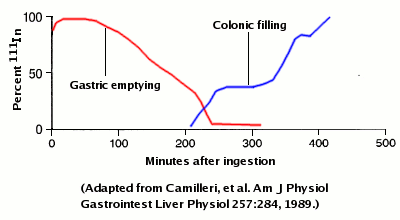
How Long Does Food Stay in the Stomach?

I started wondering how long food stays in the stomach. They say fruit moves through quickly, but can you feel food exiting your stomach, passing through the pylorus to the small intestine?  How does it happen? Bit by bit or in one semi-continuous emptying?  


According to the best website on the topic, "when the peristaltic contraction reaches the pylorus, its lumen is effectively obliterated - chyme is thus delivered to the small intestine in spurts....Liquids readily pass through the pylorus in spurts, but solids must be reduced to a diameter of less than 1-2 mm before passing the pyloric gatekeeper. Larger solids are propelled by peristalsis toward the pylorus, but then refluxed backwards when they fail to pass through the pylorus - this continues until they are reduced in size sufficiently to flow through the pylorus."

If you eat after a meal (i.e. snacking), before the stomach has emptied, what happens? Any liquids or very small bits would almost immediately begin passing the pylorus, but large chunks would swirl in the grinder until they're small enough. But can the stomach segregate new snack bits from older meal bits? Or does adding snacks on top of still-digesting meals slow exit of all food while the stomach continues grinding?  Interestingly, I found out that one of the functions of the stomach is to coagulate colloids (e.g. milk) with acid and protease so that they don't immediately enter the small intestine.

Has does the stomach know when to empty? What controls it? The small intestine can exert negative feedback control on the stomach, slowing down peristalsic emptying if the small intestine is full. In other words, the stomach is a holding tank until the small intestine is ready, and it slows down or speeds up peristalsis to small intestine.

I think even the feeling of intense hunger, which feels like it emanates from the lower stomach, is not the stomach at all but the small intestine communicating, "I'm ready for more!". It is the body speaking to the mind....that raw pang of yearning and focus is the voice of the body.


This website is a great resource!

Tuesday, October 07, 2014

Food Stamps in New Mexico: No Whole Milk,

Whole and 2% Milk is only allowed for infants age 1-2 years, all others can only buy 1% and skim milk.  No organic foods of course...what about meat?  Not covered!


Here are some resources describing the list of approved foods.

Monday, February 20, 2012

How Much Energy It Takes to Eat

Most energy use in the path from farm to fork happens in the kitchen. Just driving to the grocery store to pick up the groceries uses more energy than all the industrial agriculture, shipping warehouses, and long-hauls trucks used to get your groceries into the store. Also, depending on how much you buy at one time, you are likely burning more calories (in gasoline) than you just bought....think about that the next time you're calorie-counting!

Apparently, most of the (increasing) energy consumption in the kitchen comes from more people owning dishwashers and second refrigerator/freezers. Energy use has increased in the kitchen even while people spend less time in the kitchen.

Of course, the above perspective does not mean that reducing energy consumption in any sector is less important than any other sector.

Source.

Monday, November 15, 2010

Vital Water and Homeostasis

1. Comparing Oxidative-Reductive Potential (ORP) and pH of various foods and drinks to human body fluids, Okouchi et al (2002). 2. The idea of renal net acid excretion (RAE) indicates that homeostasis in animals is mainained against the intake of heterogeneous substances.

1. Okouchi S, Suzuki M, Sugano K, Kagamimori S, Ikeda S. Water Desirable for the Human Body in Terms of Oxidation-Reduction Potential (ORP) to pH Relationship. Journal of Food Science. 2002;67(5):1594-1598.


2. Remer T. Influence of nutrition on acid-base balance--metabolic aspects. European Journal of Nutrition. 2001 October;40(5):214-220.

Wednesday, November 03, 2010

Accountability, Transparency, Scientists and Government

The FDA has promulgated a series of Recommended Daily Allowances (RDA) based on the proprietary review of scientists in the National Academies. The justification for these RDA values are not even available at a large institution such as Ohio State University. Because of this opacity, a large number of people have gravitated to interesting or promising parascientific ideas about the role of vitamins in nutrition. For example, many question the food pyramid's focus on carbohydrates. (Westin A Price) Others argue that the RDA for Vitamin C should be increased by a factor of 10. (Linus Pauling) Or that many health problems can be explained by a deficiency in, for example, iodine. Other groups question whether too much cholesterol is bad, whether too much salt is unhealthy. Much of the creative critiques of establishment medicine is based on rigorous research and reasonably open communication, although usually not entirely peer-reviewed. This gray literature is, however, limited compared to scientific publications. Yet when the scientific process is not transparent, it looses the inherent advantage of demonstrative accountability.

In 1998 Congress broadened the Freedom of Information Act (FOIA) to specify that all government funded science should be shared and freely available to the public. Dr. Sheila Jasanoff, a professor of Science, Technology, and Policy at Harvard University, has recently written an excellent primer in the May 7 2010 issue of Science on her perspective of how climate science measures up; "Policy Forum: Science and Society: Testing Time for Climate Science."

She describes the "Three-Body Problem" as consisting of individuals, reliable bodies of knowledge, and procedures. The individual scientist or expert must be held to high standards of honesty and integrity. In science, peer review partly serves this purpose. Reliable bodies of knowledge create scientific knowledge. Scientific advisory committees translate scientific findings into policy-relevant forms: individual members' impartiality and sound judgment is critical. Under the Federal Advisory Committee Act (FACA) (Public Law 92–463), scientific advisory committees must be fairly balanced and, in the absence of special circumstances, committee meetings and records are presumed to be open to the public.

science policy blogs
http://bigthink.com/blogs/age-of-engagement
http://climateprogress.org/2010/04/28/im-speaking-at-harvard-friday-on-science-blogging/

Sunday, October 31, 2010

Intensive farming may ease climate change

"Land saved from cultivation offsets carbon emissions" Nature 465, 853 (2010)

This Nature News item reviews a paper published by Burney et al in PNAS entitled "Greenhouse gas mitigation by agricultural intensification." The article shows that agriculture today is more land-efficient than in 1960. Yet it has been interpreted to say that modern intensive industrial agriculture is better than organic. The authors should write a statement clarifying their work but they may not. The reason? The study, as written, is trivial, and only with the added implication is it interesting. But the implication is not true.

In addition to commiting the unforgivable sin of reasoning based on historical counterfactuals, the article presents a myopic and simplistic either-or argument rather than a systematic analysis of factors contributing to agricultural land use. The fact that 50% of all food produced is wasted strikes me as one area where adding efficiency could reduce the overall footprint of agriculture. Certainly the choice of which land to pave over (usually the most fertile agricultural land) and which land to convert to agriculture (eg primeval Amazonian rainforest) has been especially perverse and unnecessary. Furthermore, our society's choice of food is also not a given "quality of life" as the article assumes; rather, it is a socially constructed and contigent demand on land use. If Americans consumed more primary production (plants) and less secondary production (animals) we could vastly decrease our agricultural footprint.

Other issues could be raised, but these points show some of the many analytical failings of this article. Despite, or perhaps because of its unsupported thesis, it has also been extensively commented upon; the authoritative review of responses in here.

Thursday, December 24, 2009

Americans throw away more food than most people consume

According to a paper by Kevin Hall et al in PLoS, Americans waste about 1,400 Calories a day, about as much as is needed to feed an average adult in much of the world. They arrived at this figure by calculating the total number of food calories produced on farmland in America (plus imports, minus exports) and compared this to the total calories consumed by Americans. Although we Americans are doing our best to consume large amounts of food, we still end up throwing away or otherwise wasting enough food every day to feed another person.

Thursday, January 08, 2009

Revenge of the Lawn

Imagine, if instead of growing grass, Americans grew food... the "Food Not Lawns" movement is trying to help do just that.
The definitive anti-lawn essay: Turf War. Elizabteh Kolbert. The New Yorker. p.82 July 21, 2008.

"The insecticide carbaryl, which is marketed under the trade name Sevin, is still broadly applied to lawns. A likely human carcinogen, it has been shown to cause developmental damage in lab animals, and is toxic to—among many other organisms—tadpoles, salamanders, and honeybees. In “American Green” (2006), Ted Steinberg, a professor of history at Case Western Reserve University, compares the lawn to “a nationwide chemical experiment with homeowners as the guinea pigs.”

Meanwhile, the risks of the chemical lawn are not confined to the people who own the lawns, or to the creatures that try to live in them. Rain and irrigation carry synthetic fertilizers into streams and lakes, where the excess nutrients contribute to algae blooms that, in turn, produce aquatic “dead zones.” Manhattanites may not keep lawns, but they drink the chemicals that run off them. A 2002 report found traces of thirty-seven pesticides in streams feeding into the Croton River Watershed. A few years ago, Toronto banned the use of virtually all lawn pesticides and herbicides, including 2,4-D and carbaryl, on the ground that they pose a health risk, especially to children."

More quotes:

"In his anti-lawn essay "Why Mow?," Michael Pollan puts it this way: "Lawns are nature purged of sex and death. No wonder Americans like them so much."

See also "the nation's first grassroots anti-grass movement, which dubbed itself Wild Ones." SALT: Smaller American Lawns Today

Wednesday, April 02, 2008

Raw

Raw is the easiest and most difficult diet. Balancing acid/alkaline, fiber and oil...really you're using your body to burn nutrients rather than letting others burn/cook for you. All foods are drugs; plants have pronounced effects (like melons, celery, and grapefruit to name a few). Sometimes I eat meat just to avoid the pharmacology of plants. But even meat has hormones and emotions. It is impossible to get tired of eating raw food because it is inherently healthy. Cooking food is an attempt to trick our bodies to keep eating food that isn't good for us. That's why we get tired of various cooked food, and try to cook in a new way that we aren't tired of yet...

There is a lot that goes into the construction of the quotation marks around "raw food". Lots of thought. Maybe that's why I like it? But also simplicity. I explain it now to neophytes as just trying to get the freshest food I can -- there are no lines in the sand.

The single best resource for thinking more about the issues this raises is this summary: http://www.rawtimes.com/anopsy1.html
and this long essay: http://www.geocities.com/HotSprings/7627/ggindex.html (click Anoposology, an essay that concerns you). Both by Guy-Claude Burger. I have printed this essay several times and given it to several friends. It is a good book to keep and pass on. One key idea is that this is an experiential diet; you learn what your body has to teach you, not what the categorizers and dietetitions think.

If you like a plurality of viewpoints, and especially for thinking about the ethnological and anthropological, try this "paleodiet" clearing house. There is good research here. http://www.paleodiet.com/ The first essay by ben balzer is a 15-minute readable introduction you can tell your friends about.

Monday, April 30, 2007

Henry Miller's Gourmet

At a Jewish delicatessen. Plenty of sour cream, radishes, onions, strudels, pastrami, smoked fish, all kinds of dark bread, creamy sweet butter, Russian tea, caviar, egg noodles--and Seltzer water.

In addition to fried onions and mashed potatoes we had succotash, beets and Brussels sprouts, with celery, stuffed olives and radishes on the side. We washed this down with red and white wine, the best obtainable. There were three kinds of cheese, followed by strawberries and rich cream. For a change we had some excellent coffee, which I prepared myself. Good, strong coffee with a bit of chicory in it. All that lacked was a good liqueur and Havana cigars.

Delicious breakfast, ...always fresh fruit and berries smothered in cream, muffins fresh from the oven, thick strips of bacon, marmalade, steaming coffee with whipped cream. I felt like a pasha.

A "snack" consisted of cold cuts, salami, headcheese, olives, pickles, sardines, radishes, potato salad, caviar, Swiss cheese, coffee, a German cheesecake or apple strudel, with kummel, port or Malaga to top it off.

What better than a caviar sandwich on black bread smeared with sweet butter--at 2:00 A.M.? With a glass of Chablis or Riesling to wash it down, certes. And to round it off, perhaps a dish of strawberries floating in sour cream, or if not strawberries then blackberries or huckleberries or blueberries or raspberries. I see halvah and baklava too. Goody goody!

Friday, April 27, 2007

Farm Bill Letter

Senator,

I am very concerned about the upcoming vote on the Farm Bill. I consider the existing farm bill a prime example of government "pork". The basic issue is whether we, the American consumers, should be allowed to choose which food and which farmers to support.

This is a very important issue, one that we are confronted with every week at the supermarket. Government subsidies have made it cheaper to buy Coca-cola than local apple juice. Why the government would want to promote corn syrup while we are in the midst of a diabetes crisis boggles my mind.

Please stay out of my dinner. Let the market decide which foods are produced (that's what capitalism is good at). By all means provide funding to retrain farmers who were dependent on subsidies, and put tariffs on imports from countries that lack our environmental and labor standards. But let us, the American people, choose how to spend our own money.

Thank you.

Conor Flynn

Monday, October 09, 2006

Top Ten Things To Do To Make Tucson Sustainable

(1) Harvest and conserve water
Step One:  Enjoy sponge baths or basin baths rather than showers.
Note:  A person can bathe in less than a quart of water this way!
At full sustainability Tucsonans will have cisterns, composting toilets, neighborhood water harvesting, and comprehensive water education.    

(2) Use the sun's energy
Step One:  Hang your laundry to dry in the sun.  
Note:  Some communities have restrictions against hanging out laundry.
At full sustainability Tucson will derive all its electricity and transportation from the sun's energy.
   
(3) Eat local and native foods
Step One:  Visit a farmers market.
Note:  Farmers Markets are listed in Tucson Weekly.
At full sustainability Tucson will have a City Food Policy to ensure access to healthy food for all Tucsonans.   Large daily farmers markets with bioregional products will supplement neighborhood food production and neighborhood desert food harvesting.  

(4) Work outdoors with neighbors
Step One:  Organize a neighborhood walk/doorknocking to discover neighborhood assets and what projects interest your neighbors.  
Note:  For tips on organizing neighborhood doorknockings, contact Pro Neighborhoods, (520) 882-5885.
At full sustainability every neighborhood will be safe for pedestrians and bicyclists, have a workable plan for emergencies which cares for all dependents, and engage in sustainable urban food production.
                 
(5) Ride bicycle or walk to your eco-village hub
Step One:  Identify your local commercial hub and do errands there without using fossil fuel; take public transit if your destination is further or you are physically challenged.
Note:  As you walk and bike your neighborhood you may notice places which need   shade trees.  These locations can become urban agriforestry projects.
At full sustainability Tucson will be organized into 60 to 80 complete eco-villages to which people can walk or bike.   These eco-villages will be connected by a safe comprehensive system of bike paths which do not mingle with auto traffic.

(6) Plant A Food Bearing Tree
Step One:  Dig a hole and bust through the caliche.  
Note:  This is more fun if you dig with friends and throw a party when the tree is planted.  Get hold of a caliche bar.  Contact Tucson Botanical Gardens or Tucson Organic Gardeners for best species of trees to plant in your location.
At full sustainability Tucson will be an edible urban forest.

(7) Save food scraps and compost with worms
Step One:  Build a simple home made "worm farm."  Many websites teach how, e.g.: www.earth911.org/master.asp?s=lib&a=organics/composting/wormcompost.asp
Note:  Worms create worm castings and worm juice which are rich plant food.
At full sustainability Tucson's home kitchens, restaurants and cafeteries will be connected by a comprehensive composting program.

(8) Grow food in home garden or community garden
Step One:  Contact Tucson's Community Food Bank or Tucson Organic Gardeners for information on how to grow food.
Note:  We can garden year round in Tucson.   Water is our limiting factor; therefore, water harvesting for gardening is crucial.   Sustainable Tucson highly recommends Brad Lancaster's book Rainwater Harvesting for Drylands, available at Antigone Books, Silverbell Trading, and through Sustainable Tucson in case quantities.
At full sustainability, Tucson and its bioregion will be mostly food self-sufficient.  

(9) Educate yourself and Tucson's representatives about sustainability. 
Step One:  Read the voter's guide for the upcoming election.   Who takes sustainable positions on solar and wind energy, mass transit, bike paths, water conservation?
Note:  Sustainability education is enjoyable in a group.  Our eco-zone potlucks are a wonderful way to share books, DVD's, videos, and ideaswith each other.  Why not start a group in your neighborhood?  Then invite a person running for office.
At full sustainability any school child will be able to tell a visitor to Tucson how our sustainable city works.

(10) Become an entrepreneur in the growing sustainable economy
Step One:  Identify your own art/passion/potential product or service.
Note:  Many entrepreneurs (self-employed people) market products and services. 
At full sustainability, Tucson (including its bioregion) will be mostly self-sufficient for water,
food, energy, and transportation.  Tucson's sustainable infrastructure will need to be planned, installed, and maintained by local businesses attuned to our city's terrain and culture.   Tucson will have a local credit clearing house which keeps our region's financial resources circulating locally.  

Written by Lindianne Sarno with Nicole Christine, Bob Cook, Tom Greco, and Joanie Sawyer.  
©Sustainable Tucson 2006.