Showing posts with label test. Show all posts

Thursday, September 26, 2024

Nutritional Yeast contains variable amounts of B vitamins

Nutritional yeast is tasty and nutritious!  How nutritious is it?  Well, that depends on whether it is fortified or not, and how much information you find on the nutrition label.  

After looking at the labels of about a dozen brands, I found that nutritional yeast is consistently a good source of B2, B3, and B5, and with fortification is a great source of all major B vitamins except probably B7.

Fortified nutritional yeast contains extra B vitamins and sometimes iron. These extra nutrients are added during the processing of the product to make it more nutritional.  The vitamin content of fortified nutritional yeast depends on how much it is fortified.

For example, here are two popular brands, Braggs and Bob's Red Mill:

% Daily Value (DV) per 2 tablespoon serving. Data reported from nutritional labels.

Both brands add supplement B1, B2, B3, B6, B9, and B12, but they add different amounts.  In general, both seem to try to add more than 200% and less than 500% of the daily value.  Bragg adds more of most B vitamins, but Bob's Red Mill adds more Folate (B9).  Neither brand reports any B5 or B7, but that doesn't mean they don't have any.  According to my analysis of unfortified nutritional yeast, they probably just didn't bother to measure and/or report it.

Non Fortified or Unfortified Nutritional Yeast contains only the vitamins and minerals found in the yeast cells and has no added vitamins and minerals.  It contains variable amounts of B vitamins due to differences in yeast strain, growth substrate, growing conditions, and deactivation temperature.  

While some brands (like Anthony's) don't report any nutritional values, I was able to find 7 brands on Amazon that reported nutritional testing results for their products:

% Daily Value (DV) per 2 tablespoon serving, data reported from nutritional labels.

Note that unfortified nutritional yeast does not contain B12.  For other B vitamins, the percent daily values are generally less than 100% and usually less than 50% per 2 Tablespoon serving.  

Another way to visualize this information is by Brand:

% Daily Value (DV) per 2 tablespoon serving, data reported from nutritional labels.

Microingredients and Naturebell are the most consistent.  Sari reports the least number of vitamins.  Food Alive reports some very high levels but also some very low levels.  Revly is also missing several vitamins.  They also reported more than 400% B2 but I removed this outlier; it may have been due to testing fortified nutritional yeast by mistake.

The differences between brands are larger than the similarities.  Some brands reported zero or almost zero B1, B2, B6, and B7.  Conversely, other brands reported over 100% DVs of B1, B2, B5, and B6.  Only B3 and B5 were consistently reported with decent amounts across all brands.  

If we assume unreported values are not zero but were just not measured and look only at the vitamins reported by each brand, the mean vitamin content of unfortified nutritional yeast looks pretty good.  However, the standard deviations are as large as the reported values for 4 of the 7 B vitamins.  While some brands are good sources of B1 and B6, some were quite low for these nutrients.  It seems that unfortified nutritional yeast can only be relied on to supply more than 20% daily value per serving for B2, B3, and B5:


Note that all of these unfortified nutritional yeast brands contain B5, so it seems likely that fortified nutritional yeast brands also contain this important nutrient and simply fail to test and/or report it.  However, the percent daily value for B5 is much less than that of other B vitamins in fortified nutritional yeast.  

Four of the seven unfortified brands reported B7, so it is likely that the other unfortified and fortified brands also contain this nutrient, but fail to test and/or report it.  However, even the brands that report B7 report such a small and variable amount, nutritional yeast probably cannot be relied on as a good source of this important vitamin.


** Update **

I reached out to Sari Food to ask if their package listed nutritional values for all B vitamins, or if some were omitted.  They confirmed that some were omitted and provided me with a new nutritional analysis that differed significantly from the nutrition reported on the package.  

The new analysis reported 7 B vitamins, compared to the package that only lists 3.  Their analysis showed significant amounts of B1 and B7 that were not listed on the package.  Interestingly, the new analysis also differed from the package for the 3 listed on the package.  I think this shows the variability between different batches of the same product. 
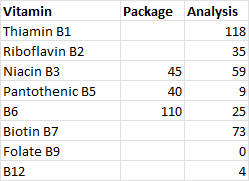
% DV of B vitamins for Sari Nutritional Yeast

Revised Figure showing % DV by brand:


These results increased the average % DV of the 7 brands in my sample for B1 and B7, and decreased the % DV for B6.  This now shows that unfortified nutritional yeast are generally good sources of B1, B2, B3, B5 and B7.  B6 appears to be less common, and I'm not confident that the B9 data is accurate - Sari's new analysis still didn't report any Folate.  Unfortified nutritional yeast is not a good source of B12.

Updated with new analysis from Sari Foods.


Wednesday, March 23, 2016

Food4me study tested Nutrigenomics...and found no benefits

Food4me is a large online study designed to test whether personalized nutrition advice based on analysis of phenotypes (waist cicrumference, blood markers: glucose, cholesterol, carotenes, n-3 index ) or genotypes (SNPs in genes such as MTHFR, FTO, TCF7L2, APOE E4, FADS1 ) could perform better than standard nutritional advice.  The study recruited more than 1,600 volunteers from across Europe to take part.  Participants performed quantified health self-analyses such as biometric measurements and movement counts. They also used a do-it-yourself blood sampling technique that involves drying blood from a finger prick on absorbent paper, which can then be analyzed for more than 92 metabolic biomarkers in a lab.  They also submitted saliva samples that were checked for more than 36 genetic variants that have been linked to nutritional needs and health outcomes.

"A scientific knowledge base was developed, capturing the current knowledge in the field of nutrition
with a particular focus on the interaction of food consumption, nutrient intakes, biomarkers,
genetic variation to health. SNP information comprises risk allele frequencies as well as gene
symbols and functions. The collected scientific knowledge represented in the data base covers
currently 35 food items, 92 biomarkers, 36 genetic variations, 16 different health outcomes, and
180 established interactions based on scientific publications and an expert assessment."

After one year, the results are in.  Although their internet-based nutritional intervention was associated with positive outcomes, a recent whitepaper concluded that, after testing various diets, there were no improved health outcomes from phenotypic or genetic information.

The researchers state that, "despite enormous efforts over the last decade to identify gene variants that define the susceptibility of an individual to a life-style dependent disease, the outcomes of the large-scale profiling studies are rather disappointing. Although a large number of genes and variants have
been found (there are for example around 60 genes that carry a susceptibility risk to develop
type 2 diabetes mellitus (T2DM)), the effect sizes of each individual gene variant are generally
very low. In almost all cases, the risk-variant increases disease risks by only a very few percent..."


Wednesday, January 27, 2016

Future of blood testing?

Data is power, and these four potentially-revolutionary blood- or breath-testing companies could help generate next-generation medical insights:

University of Southampton, Sharp Labs Europe is developing a mobile lab-on-a-chip 5-10 years

Integrated Diagnostics has a "sniffer" test to look for lung cancer. http://www.indidx.com/articles

V-chip to test 50 different blood chemical markers with microfluidics is still in development. 5-10 years

Theranos lab testing is already cheap and easy online, but they have recently been investigated by the FDA for failing to prove that their tests are accurate.

Wednesday, January 07, 2015

Blood Glucose Charts


From wikipedia article on diabetes.


======
Interesting behavioral health article on hypoglycemia and anger, violence.  
=====
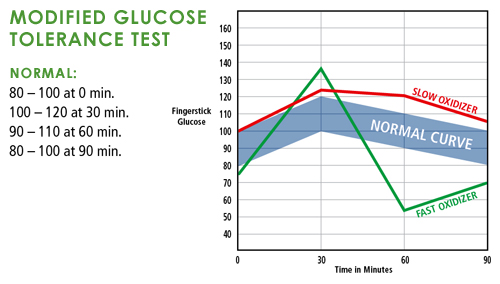
Fast versus slow oxidizers (=induced hypoglycemia).  This website basically recommends eating more fat and protein if you have these below-normal glucose excursions.

Friday, November 26, 2010

"Brawling Over Mammography"

An interesting debate about the problem of false-positives in medical testing. Obviously, everyone wants to be tested "just in case", but a sensible policy would favor plausibility testing; everyone is not equally likely to have every disease. This article from the February 19, 2010 issue of Science, details the situation surrounding the release of a report by the U.S. Preventive Services Task Force that ran afoul of political accusations of "medical rationing". For women age 40-49 years with no other risk factors, the odds that a positive mammogram is actually due to cancer, rather than a false-positive test, is only about 2%. In other words, for every one breast cancer detection, 50 women are told that they have tested positive on their mammogram.

Thursday, June 11, 2009

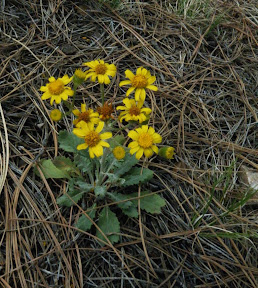
First Wildflowers of the Southern Rockies (for my sister)

This post is about a month late, but here goes...The First Wildflowers of the Spring! (as observed in the Sangre de Christos of Northern New Mexico)

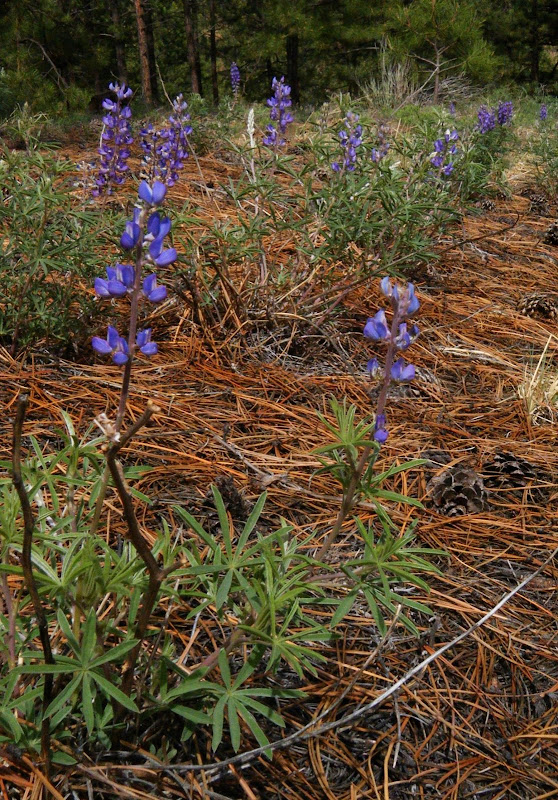
Lupine (Lupinus)
From Botanizing in New Mexico


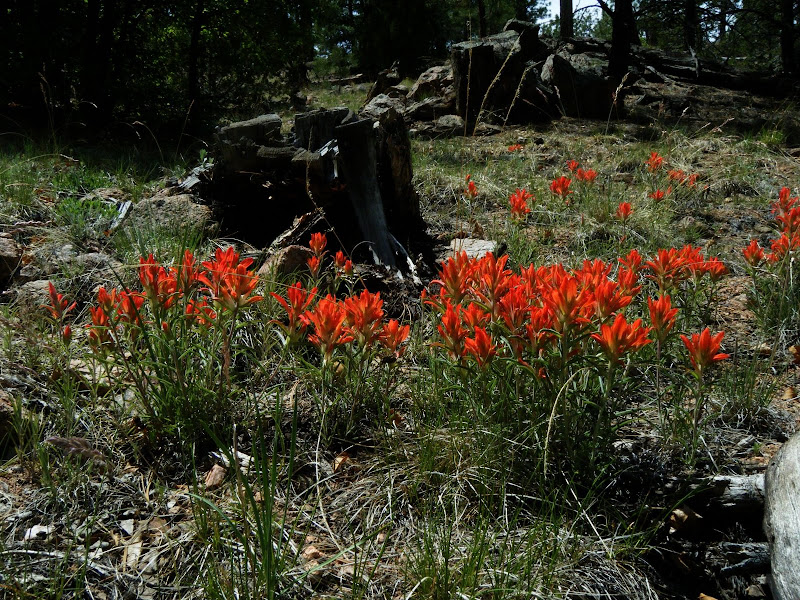
Paintbrush (Castilleja)
From Botanizing in New Mexico


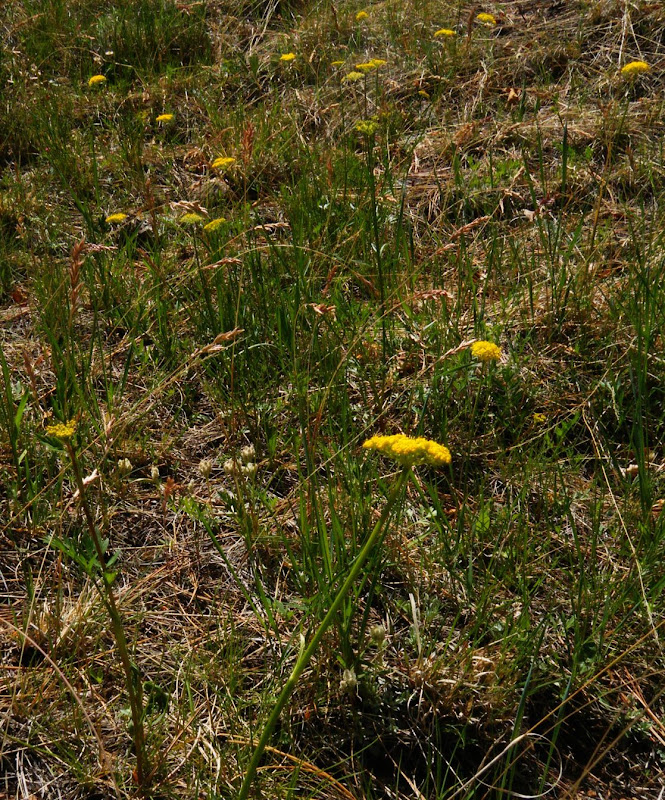
Yellow Carrot (Pseudocymopterus)
From Botanizing in New Mexico


Daisy
From Botanizing in New Mexico


Draba
From Botanizing in New Mexico


Strawberry (Fragaria virginiatus)
From Botanizing in New Mexico


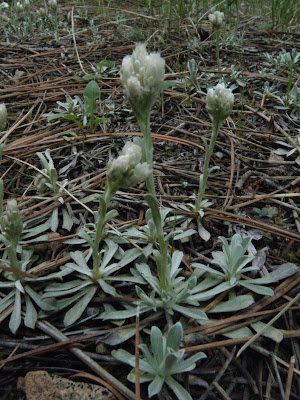
Pussytoes (Antennaria spp)
From Botanizing in New Mexico


Violet
From Botanizing in New Mexico


Clematis
From Botanizing in New Mexico


Frillary (Erodium)
From Botanizing in New Mexico


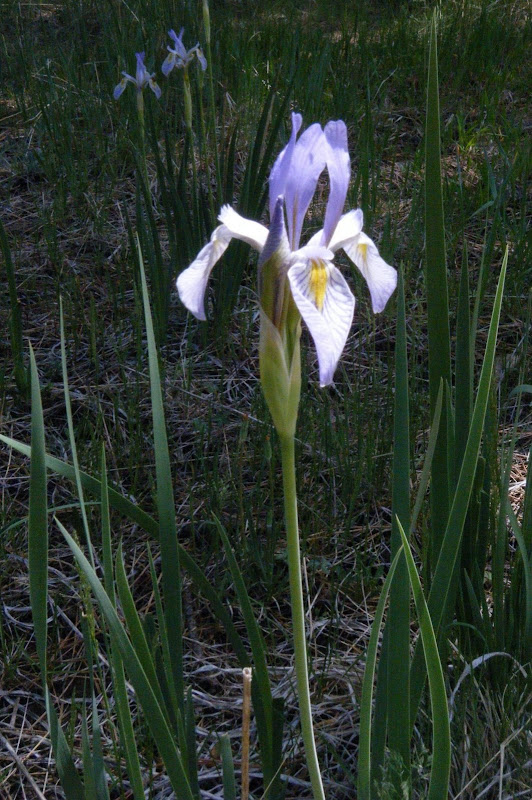
Iris
From Botanizing in New Mexico


Not pictured: Dandylion, Valerian, Senecio, thistles, Thermopsis (yellow wild pea), bluebells/chimingbells (Mertensia), orchids. Any other suggestions? How different are yours (if you live in another part of the country...)?

Can you name this Bug?

beetle on rush in alpine Colorado fen
From Flora and Fauna


beetle found on gravel bar, middle Verde River, AZ
From Verde River


caterpillar found in Sonoita Valley grass/mesquite woodland
From Sonoita Valley Grasslands


dragonfly found in Sonoita Valley grass/mesquite woodland
From Sonoita Valley Grasslands


mating "space cadet" grasshoppers, found in Sonoita Valley grass/mesquite woodland
From Sonoita Valley Grasslands


cool spider in saguaro east
From Saguaro National Park


butterfly and spider, Gila national forest, NM (ponderosa pine forest)
From Gila National Forest

Thursday, March 08, 2007

Consciousness and YES/NO Psych Questionnaires


The questions were of the form "does x feel happy/sad/pride" where x were specific examples of mammals, insects, plants, machines, and natural objects. For example, "do ants feel sad?" and my task for one hour was to answer "yes" or "no" as quickly as possible; there were literally thousands of examples, presented every 2 seconds nonstop for 45 minutes. This was supposed to tell them about my "attributions of consciousness". What?

[Idea: Why didn't they test just ten examples from each of the categories?? 1) That wouldn't take an hour, and an hour is the canonical amount of time students are willing to . 2) To increase statistical power. Another, more efficient, question structure could be based on adaptive learning, where the computer generates each question based on the previous answers, so that it moves from general to specific, eventually oscillating around my indecision point (assuming a scale of consciousness graded from most similar to humans to least...this is assuming that people aren't more likely to say that a motorcycle can feel happy than a worm)]

IS this what science has come to? Who cares? These guys get public funding for this? What's worst is how insulting this is to me; that my nuanced feelings, opinions, hopes and fears about the realm of consciousness could be reduced to yes or no. No possibility for discussion / completely dehumanized: do they really think they're plumbing the depths of my soul in this artificial setting? Or, by "controlling all extraneous variables" will they only find only what they're looking for? I'll never believe another psych study based on bored college students pressing yes or no as rapidly as possible. College students are some of the most dumb and desperate people in society. Most of those guys were frat boy dropouts, hung over and world-weary; the quiet desperation of years of unreflective failure necessary to motivate young men to throw away their hours of youth for pocket change.

My strategy was twofold: first, panic and prepare to leave, but then rationalize myself into staying. I already sit inside staring at a screen all day anyway. Just relax, learn to accept things as they are. You are in a comfortable chair in a room of meticulously immaculate and barren cubicles. Is this hell? Purgatory? The ultimate aspiration of hegemonic standardization, the real essence of school and work and society? You've already started, already committed. Don't change horses in midstream. Impossible to rebel anyway; resistance is futile. If you leave now, shouldn't logically you also leave your job, turn off and drop out of civilization entirely? No, remain calm. I took my shoes off, relaxed my face into its most natural wide-relaxed expression, and drifted off while letting my fingers do the walking over the amazingly banal cavalcade of animals, plants, and machines. Such cacophony in the world, and to think that this is only a fraction of the things we have put words to: boulder, giraffe, falcon, daffodil, desert, taxi cab.

In the end I took my $10 but couldn't look the experimenter in the eye. And maybe I'm just paranoid, but I couldn't help thinking that that was the point of the study, that the real test was what it always is: will you take the money and shut up, or cause a riot? I've always been a reasonable fellow. But I don't believe anyone in that room was conscious.