Nutrition and Physical Degeneration by Dr. Weston Price
Cells Gels and Engines of Life by Gerald H Pollack
7 Clues to the Origins of Life
Structure of Evolutionary Theory by SJ Gould
Maxwell's Demon: entropy, information, computing / compiled by Harvey S. Leff and Andrew F. Rex
An Album of Fluid Motion by Milton Van Dyke
Atlas of Optical Phenomena
Tuesday, December 19, 2006

Three Super-Foods

Dates
1) Chimri, or Kimri, stage: green, hard, bitter, 80% moisture, 50% sugars (glucose and fructose) by dry weight; 2) Khalal stage, the next 6 weeks: become full grown, still hard; color changes to yellow, orange or red, sugars increase, become largely sucrose; 3 ) Rutab stage, the next 4 weeks: half-ripe; soften, turn light brown; some sucrose reverts to reducing sugar which gains prominence; 4) Tamar stage: ripe; the last 2 weeks; in soft dates, the sugar becomes mostly reducing sugar; semi-dry and dry dates will have nearly 50% each of sucrose and reducing sugars.
Coconuts

The local Solomon Islanders describe six stages of coconut development from the immature kabuaro progressing through leuleu, bulo, zokelebuol, and rauka to the most mature coconut kopa. Kaburo, the most immature coconut, contains less "meat" or endosperm and is mostly fluid. Leuleu, bulo, and zokelebuol have more mature meat and zokelebuol is the best to eat. As the coconut ages, the meat thickens and becomes tougher.
Chia Seeds
Like tapioca, only better.

Friday, December 08, 2006
Controversial Science Volumes
Sometimes silence speaks volumes about the state of science:
- An Analytical System of Clinical Nutrition. Dr. Schenker.
- Control of Colloid Stability through Zeta Potential.
- Cells, gels, engines of life.
Consciousness: ROBUST or FRAGILE?
Consider the general phenomena of life and consciousness itself. One definition could be related on its ability to sustain itself, a system of negative feedback that buffers homeostasis. I call that the ROBUSTNESS definition.
Another definition would focus on the FRAGILITY of life, on its sensitivity to initial conditions, on the presence of a 'sweet spot' that, if pushed at the right time, can make a large difference. Life is dynamic.
Lyapunov exponent measures whether the butterfly effect is possible: if a butterfly flaps its wings in China, could that cause it to rain in Arizona? If the equations that govern weather have a Lyapunov exponent greater that the absolute value of one, then two very similar initial conditions (the butterfly flaps, the butterfly doesn't flap) can have arbitrarily divergent outcomes (it rains or its sunny and clear). This is what the Mandlebrot set measures. If you make a splash in the ocean, odds are that it won't cause a tidal wave. But if you're mean to a Postal Worker on the wrong day of the month it could have disastrous consequences.
Entropy always increases on the whole, but for life order is maintained at the expense of the periphery. This has nothing to do with Lyapunov exponent because there is not necessarily more order in a system with negative feedback where small differences are ironed out than there is in system with positive feedback which is extremely sensitive to initial conditions. Order or disorder matters more in the second. Entropy is a property of a system, whereas Lyapunov exponent is a property of the equations of change. Entropy is one constraint in the equations of change, a constraint that must always be satisfied by increasing. The question of whether life is ordered or entropic can perhaps best be dealt with by noting that entropy is the inverse of information. ...
Another definition would focus on the FRAGILITY of life, on its sensitivity to initial conditions, on the presence of a 'sweet spot' that, if pushed at the right time, can make a large difference. Life is dynamic.
Lyapunov exponent measures whether the butterfly effect is possible: if a butterfly flaps its wings in China, could that cause it to rain in Arizona? If the equations that govern weather have a Lyapunov exponent greater that the absolute value of one, then two very similar initial conditions (the butterfly flaps, the butterfly doesn't flap) can have arbitrarily divergent outcomes (it rains or its sunny and clear). This is what the Mandlebrot set measures. If you make a splash in the ocean, odds are that it won't cause a tidal wave. But if you're mean to a Postal Worker on the wrong day of the month it could have disastrous consequences.
Entropy always increases on the whole, but for life order is maintained at the expense of the periphery. This has nothing to do with Lyapunov exponent because there is not necessarily more order in a system with negative feedback where small differences are ironed out than there is in system with positive feedback which is extremely sensitive to initial conditions. Order or disorder matters more in the second. Entropy is a property of a system, whereas Lyapunov exponent is a property of the equations of change. Entropy is one constraint in the equations of change, a constraint that must always be satisfied by increasing. The question of whether life is ordered or entropic can perhaps best be dealt with by noting that entropy is the inverse of information. ...
DNA: Most over-rated thing ever?

Life can be explained at many levels, but unfortunately apparently the most facile way at present is chemically. Molecular explanations of life are popular right now, but as with many things they assume what they attempt to discover. However, it remains to be seen if molecular descriptions of life are the most parsimonious way of understanding (controlling) the system.
Clues to a possible electromagnetic understanding of the fundamental nature of life.
:
DNA and all proteins have an inherent charge, an isoelectric point.
Ionized air influences mood.
Earth geoelectromagnetism cycles at the same frequency as most brain waves.
Atherosclerosis is a disease of ion imbalance affecting the suspension of colloids, namely the stickyness of blood cells.
Egg head/tail dichotomy is electrical potential difference, a difference preserved throughout life, but which is reversed under general anesthesia.
Acid/base imbalance related to CO2 intake and diet.
Tuesday, December 05, 2006
Cocktail Party Reasons for Eating Raw
- Precautionary Principle, i.e. "Why do you eat Organic Food?"
- Faster Better Cheaper (no dishes, no preparation, no heating fuel).
- Carcinogens aren't just in charred meat: all forms of cooking produce unsafe by-products.
- Better question: why do you eat cooked food? (tastes better, easier to digest, safer, more available..i would argue any and all of these)
- Easier - no thought/research into health trends -- just follow your natural instincts.
- Experiment -- what do i need to survive? Self knowledge.
- Quality food, discover variety everyday, adventure, discover local environment, seasons.
- like LSD.
- 95% of food eaten today was not eaten for 95% of Homo sapiens existence. Back to nature.
Monday, December 04, 2006
Great Science Books
Science drama, a sense of the profession, provocative facts and theories...
- The Second Brain : The Scientific Basis of Gut Instinct and a Groundbreaking New Understanding of Nervous Disorders of the Stomach and Intestines
- Oxygen: The Molecule that Made the World
- The Body Electric: Electromagnetism and the Foundation of Life
- The Thermal Warriors: Strategies of Insect Survival
Saturday, December 02, 2006
A Good Trip
a good trip in mexico

teddy bear forest
slow rhythm of sunsets
movement of light and mind

sever the connection between
mind and body
central nervous system
city and wilderness
boundaries

the desert landscape
cars
anchor to the world

this is the way it always is.
vacation.
straight from the horse's mouth

you can't escape 'cause
its always there
open minds
light stomachs

hands were made for this
eating more than an avocado
Sisyphus carrying a stone

driving into the circle of light
Tucson
eye rimmed with lashes

remembered dreams after
dozens of contrails
living a part in a scientific experiment
electrodes in my flesh and brain

shrouded dark moon figure
walking with a cane
against the stars

sunset needs color
irreducible
the synesthesia is constant

the first time
sliding around a subset
of the edges in the room
mistake change for control
and complexity for freedom

welcome to the moon


teddy bear forest
slow rhythm of sunsets
movement of light and mind

sever the connection between
mind and body
central nervous system
city and wilderness
boundaries

the desert landscape
cars
anchor to the world

this is the way it always is.
vacation.
straight from the horse's mouth

you can't escape 'cause
its always there
open minds
light stomachs

hands were made for this
eating more than an avocado
Sisyphus carrying a stone

driving into the circle of light
Tucson
eye rimmed with lashes

remembered dreams after
dozens of contrails
living a part in a scientific experiment
electrodes in my flesh and brain

shrouded dark moon figure
walking with a cane
against the stars

sunset needs color
irreducible
the synesthesia is constant

the first time
sliding around a subset
of the edges in the room
mistake change for control
and complexity for freedom

welcome to the moon

Thursday, November 30, 2006
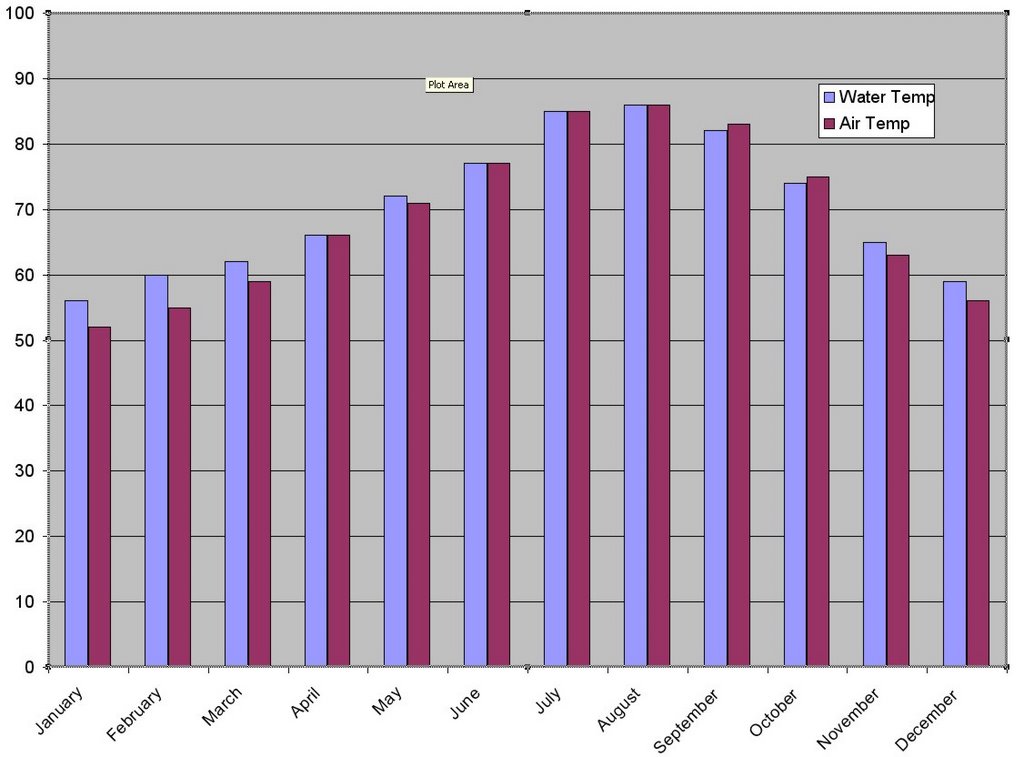
Rocky Point Water Temperature and the Failure of a Defintion of Rationality
 What is rationality? As good a definition as any I've heard is: someone who doesn't give away money.
 A preference set [A>B, B>C, and C>A] is not logical because you would pay money to trade C for A, B for C, and then A for B until you've spent all your money to end up no better than you began. Unfortunately, one of the first results of game theory is that exactly such a preference set can be expressed by groups of (at least three) voters, each of whom has an individually rational preference set. For example, in a recent election, voters preferred Gore to Bush, Bush to McCain, and McCain to Gore.
If the human mind is composed of parts that interact or "vote" to make decisions, with no Kantian Captain making a final logical check, individual actions would be just as irrational. And thanks to Nicole, I am now convinced that rationality is overrated -- it doesn't explain human actions. The reasons we give for our actions ARE important (we can't look just at actions for meaning) even if they're not logical. If our reasons are nonsensical, that itself is no reason (or at most, a reason on par with any other possibly countervailing "reason") to discount our words.
Furthermore, logic can be used to force certain responses, for example, giving 100 dollars away: True or false: you will either give me 100 dollars or you will answer false? If you say false, you are an irrational liar, no better than the man who trades A for B, then B for C, and (because he prefers C to A), C for A. But if you say true, you didn't say false, so you have to give me 100 dollars. To which Sanjay issued his infamous "f*ck you!!!!!!!!!!!!!".
How could it be rational to give away money?
Disease and pH

What is your pH?
"Whereas the median pH value in normal tissues is 7.5, in many tumor tissues the extracellular pH is more acidic, and may be as low as 5.8 (Tannock and Rotin, 1989).
"This is a consequence of a high rate of lactic acid production in tumors even under aerobic conditions (Tannock and Rotin, 1989; Boyer and Tannock, 1992; Gatenby and Gillies, 2004).
The intracellular pH of mammalian cells is normally maintained within a narrow range, i.e. from 7.1 to 7.3, and is tightly regulated by specific ion exchangers and this also holds for tumor cells (Moolenaar et al., 1984; Boyer and Tannock, 1992). As a consequence, tumor cells are exposed to a pH gradient, which can enhance the toxicity of certain weak acid drugs and impair the uptake of weak bases (Tannock and Rotin, 1989; Boyer and Tannock, 1992;
Kozin et al., 2001; Mahoney et al., 2003; Greijer et al., 2005). The idea that cancer is a disease of pH and anaerobic conditions was first proposed by Nobel laureate Otto Warburg, more than 50 years ago.
Different proteins have isoelectric points (are most stable) at different pHs. The near-neutral pI region has presumably been depleted by selective pressure -- cytoplasmic proteins are least soluble at their isoelectric point. Proteins may be evolutionarily trapped on one side of the valley or the other.
For example, human pepsin A has a pI of 3.4, consistent with its expression in the highly acidic stomach; human cytochrome c has a pI of 9.6 appropriate to binding negatively-charged membrane phospholipid.
A theory of diet related to the effects of foods on body pH:
In addition to testing bodily fluid pH, the doctor recommends: respiratory rate and breath holding ability as key indicators of the pH of body fluids. This has to with the role of CO2 in the acidification of blood. "A person with an acid imbalance will generally have a resting respiratory rate of 19 or more and if they take a deep breath will only be able to hold it for 40 seconds or less. Why? Because carbon dioxide is used by the
body to regulate pH."
Subscribe to:
Posts (Atom)