
Tuesday, January 31, 2012

Sunday, January 15, 2012
Ecosystem Art
Larry Eifert has created a number of murals for National Parks:

John Dawson is famous for his ecosystem postage stamps:


John Dawson is famous for his ecosystem postage stamps:

Charley Harper creates iconic abstract animal and ecosystem images:


Tuesday, January 10, 2012
Thursday, December 29, 2011
Canadian Tar Sands
While groping for words to describe mining tar sands in Alberta, Canada, I realized the only word I had was Hell. Humans are creating Hell. I don't know if that is a moralistic judgement or simply the most accurate description. I don't know how I feel about getting oil from the tar sands by strip mining the wilderness fens and forests, nor do I have a definitive "scientific" judgement of how bad for the environment this really is. I don't have a political opinion on the associated plans to haul 3-lane wide super-trucks across Lolo Pass and through Missoula, Montana; nor do I have a completely educated opinion of the necessity of building mega pipelines across the Oglalla Aquafer of Nebraska and through the primeival British Columbia "ghost bear" rainforest to transport the oil steamed out of the tar.
All I know is this:


From National Geographic
All I know is this:
BEFORE

AFTER

From National Geographic
Friday, November 04, 2011

Wednesday, November 02, 2011
Timber Harvest Effect on Soil
The overall effect is a small loss in total soil carbon; both total carbon content and concentration decrease in the "forest floor," but not in the surface or deep mineral soils.
 Black dots are total carbon; white dots are carbon concentration.
 The decrease in total forest floor carbon is greater in hardwood forests, although there is some evidence that it takes longer to rebound in conifer forests because of their lower litter production.
Citation:
Nave LE, Vance ED, Swanston CW, Curtis PS. Harvest impacts on soil carbon storage in temperate forests. Forest Ecology and Management. 2010;259(5):857–866.


Citation:
Nave LE, Vance ED, Swanston CW, Curtis PS. Harvest impacts on soil carbon storage in temperate forests. Forest Ecology and Management. 2010;259(5):857–866.
Tuesday, August 16, 2011
Drought and Heat, Summer 2011
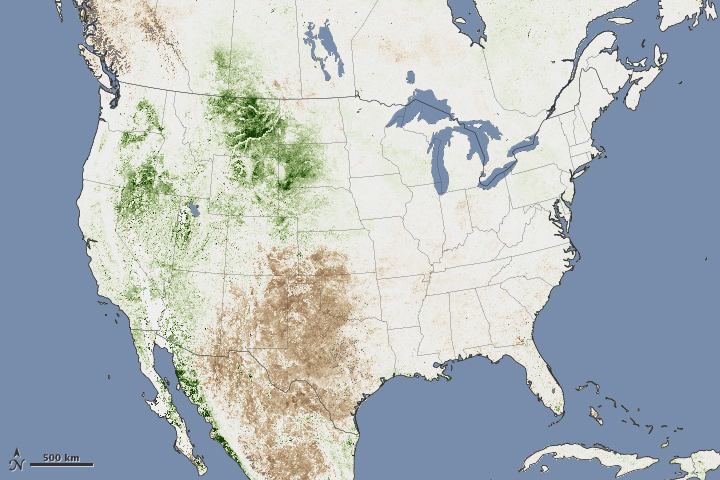
 Earth Observatory.
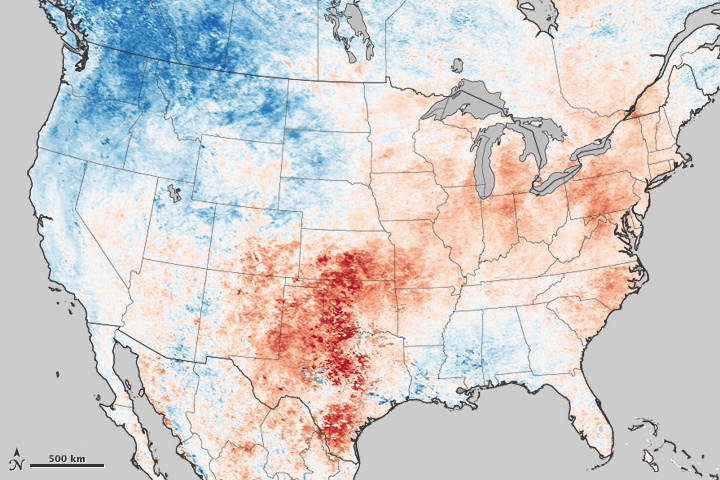
 Earth Observatory: Heat Wave July 20-27 2011.
Explanations: NWS
 Normal July pattern, which has been amplified by strong ridge, the opposite of the winter time "Aleutian Low" NWS.
Tuesday, August 09, 2011
Threatened Forests: a bug for every tree


US Forest Service Alien Pest Explorer Maps:
http://nrs.fs.fed.us/tools/afpe/maps/ Eastern Forest Environmental Threat Center:
Sudden Oak Death
Subscribe to:
Posts (Atom)