Sunday, October 24, 2010

Metabolic profiling


I don't understand this and can't access the original article, but wanted to mention it, nonetheless, because some of the compounds in this list are the same mentioned in Dr. Watson's pioneering work on metablic imbalances:

Watson, G.: Differences in Intermediary
Metabolism in Mental Illness, Psychol. Rep., 17:563-582, Oct., 1965


Natural Swimming Pools


Use of chlorine in swimming pools should be counted as the cost of not properly utilizing ecosystem services. Swimming pools can be biologically filtered for cleaner water, happier bathers, and less usage of chlorine.


Wednesday, October 13, 2010

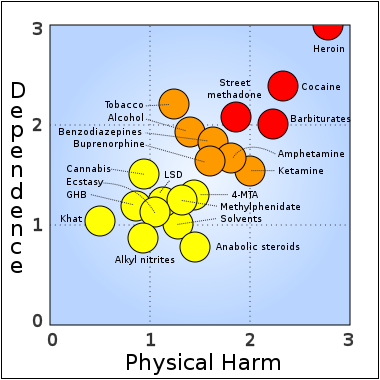
A rational scale to assess the harm of drugs.

A rational scale to assess the harm of drugs. Data source is the March 24, 2007 article: Nutt, David, Leslie A King, William Saulsbury, Colin Blakemore. "Development of a rational scale to assess the harm of drugs of potential misuse" The Lancet 2007; 369:1047-1053. (PMID 17382831; doi:10.1016/S0140-6736(07)60464-4) The data was first reported in appendix 14 of "Drug classification: making a hash of it?"

Thursday, September 30, 2010

Ecological responses to climate change in eastern forests

"Ecological responses to climate change in eastern forests: modeling distributional changes in tree and wildlife species." Dr. Stephen N. Matthews

http://www.nrs.fs.fed.us/atlas

Naturopathic metabolic typing

In order of importance:

  • Electrolyte balance: Thomas M. Riddick "Control of colloid stability through zeta potential"
  • Anabolic/catabolic: Dr Emanuel Revici “Research in Pathophysiology as the Basis for Guided Chemotherapy with Special Emphasis on Cancer
  • Glucogenic-ketogenic: George Watson "Nutrition and your mind: the psychochemical response"
  • Autonomic nervous system: Dr Francis Pottenger and Dr. Lowe
  • Acid-base balance Dr Guy Schenker


Summer 2010 (strong La Nina)


For a global perspective, see http://data.giss.nasa.gov/gistemp/2010summer/

Saturday, August 07, 2010

Fires in Borneo track El Nino


In the year 2000, about 36.8Mha of Kaliman-
tan were under timber concession licenses. Production
and conversion forests were generally more affected
than the limited production forests and also showed
much higher impacts during El Nin ˜o years with 10.0%
and 10.6%, respectively, in comparison with 2.8% for the
limited production forests. While 67.6% of the area of
Kalimantan is timber concession, about 77.4% of the
total fire-affected area over the whole period was
located in these concessions. This number rose to
80.9% in El Nin ˜o years.

LANGNER, ANDREAS; SIEGERT, FLORIAN Spatiotemporal fire occurrence in Borneo over a period of 10 years. Global Change Biology. 2009.

On track for increased solar activity


Earth Observatory.