
Monday, July 26, 2010

Sunday, July 04, 2010
How efficient are plants? (part II)
Insolation at Earth's surface (the total solar irradiance, in units of W/m2):

On sunny days, about 1 kilowatt of solar radiation bathes every square meter of the earth's surface every hour. Because of the seasons and weather, the annual average for much of the united states is between 1/2 and 1/3 of this ideal "clear sky" condition.

On sunny days, about 1 kilowatt of solar radiation bathes every square meter of the earth's surface every hour. Because of the seasons and weather, the annual average for much of the united states is between 1/2 and 1/3 of this ideal "clear sky" condition.
Photosynthetically Active Radiation, or PAR, is only ~40% of that total, depending on which chlorophyll molecules are present in the plant. Because of physiological requirements, plants actually use an order of magnitude less, usually about 2% of total solar insolation. Of that, orders of magnitude less are available for conversion into biomass. Contrast that with commercial solar arrays that can capture about 20% of the energy in solar radiation!
Either way, the rest of that kW is either reflected or converted to heat...and heat makes the wind blow. A 20mph wind contains enough energy to generate 1 kilowatt per square meter for every hour it blows.

Ship Pollution
Large ships continue to use old, polluting diesel engines, with disasterous health effects for people living close to the ocean. The EPA's proposed plan would greatly alleviate this largely unregulated source of pollution, which is currently equal to about 120 coal power plants running continuously in our nation's harbors and waterways. (source: President's Cancer Commission report, 2010)


Interestingly, ships also affect cloud formation: the soot in their exhaust creates nuclei for water droplets to condense and form clouds: http://earthobservatory.nasa.gov/IOTD/view.php?id=44517
Friday, July 02, 2010
Do Trees Pollute?

Plants produce VOCs as part of normal respiration. These, along with anthropogenic VOCs can produce ozone smog in the lower atmosphere.
In the South, pine plantations used for their fast-growing supplies of timber have proven to be havens for sweetgum trees, which are major producers of VOCs. Indeed, virtually every tree that grows fast -- a desirable quality for forestry production -- is a heavy emitter of VOCs.
"It's just one of those biological correlations," said Purves. "What you want is a fast-growing tree that doesn't produce a lot of VOCs, but that doesn't seem to exist."
http://www.princeton.edu/pr/news/04/q3/0927-trees.htm
The debate continues: "... trees were reported to contribute to ozone formation. This misleading fact contains only part of the truth. Most trees do emit biogenic VOCs such as isoprene and monoterpenes which can contribute to the formation of ozone and carbon monoxide. The other side of this story is that in areas with low nitrogen oxide concentrations, such as more rural areas, VOCs are believed to remove ozone. Additionally, since trees lower air temperature, the net effect of increased trees in urban areas is an overall lowering of VOC emissions and therefore ozone formation.
Trees in urban areas require energy inputs for planting, maintaining and removing. Because we burn fossil fuels (which emit CO2, SO2, N, CO and VOCs) in all these activities, we also need to factor that into the Trees + Air equation. In this case, it tips the scale a bit to the net loss side… but not for long!"
http://ecology.com/features/trees-air-quality/trees-clean-air.html
Wednesday, June 23, 2010
How efficient are plants? (part I)
Annual net primary production (g C m-2 yr-1) estimated as the average of all model estimates:

In order to answer how efficient plants are at converting solar energy into chemical energy, we can look at how much energy is in sunlight and how it is used in photosynthesis.

In order to answer how efficient plants are at converting solar energy into chemical energy, we can look at how much energy is in sunlight and how it is used in photosynthesis.
The surface of the Earth receives 8,000 to 10,000 kilocalories (kcal) of energy from the sun each day on each square meter of surface during the growing season.
sources: http://users.rcn.com/jkimball.ma.ultranet/BiologyPages/N/NetProductivity.html
note: these estimated values are different, though of the same magnitude, from other sources.
A kcal is what most people call a calorie (you're supposed to eat 2,000 a day) and is defined as the amount of heat needed to warm 1 kg of water 1 degree Celsius (°C). Indeed, most (~95%) of this solar energy is used up heating the surroundings and evaporating water, while a paltry ~2% is used for photosynthesis (3% is reflected).
So out of 10,000 kcal only 2% or 200 kcal are available to a one square meter plant per day. If the growing season is 150 days, Gross Primary Productivity should be on the order of 30,000 kCal per year. However, at least half of this is lost by cellular respiration as the plants run their own metabolism. Also, C3 plants respire CO2 at high temperature and sunlight because the protein machinery can "run backwards" (C4 plants minimize these losses to "photorespiration"). Because of other inefficiencies, the Net Productivity is always lower:
| Estimated Net Productivity of Certain Ecosystems (in kilocalories/m2/year) | |
|---|---|
| Temperate deciduous forest | 5,000 |
| Tropical rain forest | 15,000 |
| Tall-grass prairie | 2,000 |
| Desert | 500 |
| Coastal marsh | 12,000 |
| Ocean close to shore | 2,500 |
| Open ocean | 800 |
| Clear (oligotrophic) lake | 800 |
| Lake in advanced state of eutrophication | 2,400 |
| Silver Springs, Florida | 8,800 |
| Field of alfalfa (lucerne) | 15,000 |
| Corn (maize) field, U.S. | 4,500 |
| Rice paddies, Japan | 5,500 |
| Lawn, Washington, D.C. | 6,800 |
| Sugar cane, Hawaii | 25,000 |
Note that even the most efficient crops store about half of
At these efficiencies it would take 144 square meters of temperate forest to supply the 720,000 kcal an average adult needs to survive a year, but just 28 square meters of sugar cane in Hawaii, assuming we could eat all the calories produced in a forest or live entirely on sugar. These areas are about the size of a small house and a bedroom, respectively. (1 sq meter = 10.7 sq feet)
The graph at the top of this post shows that the average productivity is about 1 kg per square meter per year. This makes sense because a gram of whole plant biomass yields about 4.25 kcal, so 1kg of plant matter per square meter yields 4,250 kcals of energy.
sources: http://users.rcn.com/jkimball.ma.ultranet/BiologyPages/N/NetProductivity.html
note: these estimated values are different, though of the same magnitude, from other sources.
 |
| A map of which input is most limiting across terrestrial biomes: temperature, sunlight, or water. |
Monday, June 21, 2010
Tropical Agroecosystems
Tropical Agroecosystems: These habitats are misunderstood by the temperate zones, mismanaged by the tropics. Janzen 1973. Science.
What tropical countries so rarely grasp is the fact that agriculture in the temperate zone countries evolved (and is still evolving) from short-term exploitation to sustained-yield agriculture while operating off a much larger natural capital than the tropical countries possess.
...social rather than technological environment is at fault...(because of side-by-side comparisons)
The plea for technological advance gives the scientific community a perfect excuse to continue their reductionist and esoteric approaches rather than to put their efforts into the far more frustrating task of generating sustained-yield tropical agroecosystems...
...tropical people are no more interested in spending all their waking hours picking beetles of bean bushes and transplanting rice by hand than they are. High-yield tropical agriculture requires immense amounts of very accurate hand care or tremendous amounts of fossil fuel, or both...
Most of the lowland tropics would be classified as marginal farmland...there is no biological reason that the capacity to support human life should be evenly distributed over the earth's surface, nor why is should be correlated with the primary productivity of natural ecosystems or with the biomass (standing crop) of these ecosystems.
If one wishes a high yield from a particular site, year-0round warmth necessitates complex fallow systems to deal with the weeds and insects. However, it is possible that over large areas, a much lower yield per acre in fields under continuous cultivation could produce the same average yield per acre as fallow systems.
The complex biological systems of the tropical lowlands are very easily perturbed and cannot be easily reconstituted from roadside and woodlot plants and animals, as could many North American habitats.
A great variety of horticultural practices and strains of common tropical food plants have accumulated over the centuries. They are closely adjusted to local farming conditions and coevolved with the other dietary resources of the area. When high-yield hybrids are introduced, the local strains and practices are quickly abandoned. This later lead to (i) expensive and complex programs to reevolve these strains when adjusting hybrid monocultures to sustained yield tropical agriculture, (ii) increased dependence on pesticides and complex breeding programs to keep abreast of the pest problem in single-strain monocultures, and (iii) increased imbalance in the distribution of wealth among farmers.
Tropical insects appear to develop resistance to pesticides much quicker than temperate insects.
Argues that population has increased as a result of increased cash cropping, which rewards larger families and eliminates the feedback associated with subsistence agriculture.
Well-meaning persons are constantly injecting fragments of temperate zone agricultural technology into the tropics without realizing that much of the value of these fragments is intrinsic not to the technology, but rather to the society in which that technology evolved...That the tropical country "cannot resist" these gratuities is hardly justification for giving them. [as a consequence of "development"] the land deteriorates, deserts spread or become more barren, and a greater number of people end up worse off than they were before development of the area took place.
When an experiment station is centered around a major food crop, such as rice or maize, the goal becomes one of maximizing production per acre rather than per unit of resource spent...
Wednesday, June 16, 2010
Best Graph of 2009

source: http://www.dispatch.com/live/content/local_news/stories/extras/2009/2009-weather-table.html
Tuesday, June 15, 2010
Bus vs. Light Rail
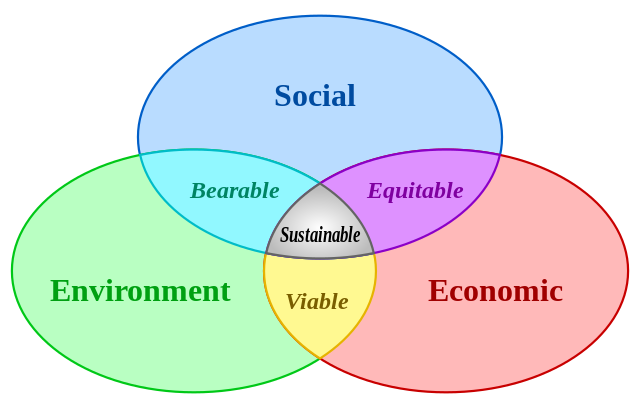
Here in Ohio, there is a debate over a proposed light rail corridor linking Cincinatti, Columbus, and Cleveland, the 3-C. Some are of the belief that "build it and the riders will come," while other point out flaws in the projected speed and cost of the project. In the latter camp, oddly enough, I might count the Federal Transit Authority Administrator Peter Rogoff. In a recent hard-hitting speech, he pointed to the irony and danger of building more infrastructure when we can't maintain what we have. Is it sustainable to expand infrastructure, even green infrastructure?
"Let's start with honesty:
...
"If you can't afford your current footprint, does expanding that underfunded footprint really advance the President's goals for cutting oil use and greenhouse gases? Does it really advance our economic goals in any sustainable way?"
"Let's start with honesty:
Supporters of public transit must be willing to share some simple truths that folks don't want to hear. One is this -- Paint is cheap, rails systems are extremely expensive.
Yes, transit riders often want to go by rail. But it turns out you can entice even diehard rail riders onto a bus, if you call it a "special" bus and just paint it a different color than the rest of the fleet.
Once you've got special buses, it turns out that busways are cheap. Take that paint can and paint a designated bus lane on the street system. Throw in signal preemption, and you can move a lot of people at very little cost compared to rail.
A little honesty about the differences between bus and rail can have some profound effects..."...
"If you can't afford your current footprint, does expanding that underfunded footprint really advance the President's goals for cutting oil use and greenhouse gases? Does it really advance our economic goals in any sustainable way?"
Thursday, June 10, 2010
Top-Down or Bottom-Up?

A number of science controversies surrounding trophic cascades are well-presented in William Stolzenburg's book, "Where the Wild Things Were: Life Death, and Ecological Wreckage in a Land of Vanishing Predators". 2008. The book deals with the 20th century history of population ecology and the struggle to understand whether populations of animals and plants are controlled from the top by large predators or from the bottom by primary productivity. From Elton's realization of the pyramid of biomass on Spitzbergen to Hairston, Smith, and Slobodkin's Green World Hypothesis, to Paine's experimental verification of top-down control in starfish and mussel systems, the book covers the origin and development of such key concepts in ecology and conservation as keystone species and trophic cascades.
In addition to covering classic work such as Paine's starfish and mussel studies, the book also delves into controversies over killer whales and sea otter populations. While the latter are controversial because the results are relatively new, other controversies such as those over the rise and collapse of deer herds on the Kaibab plateau after the removal of top predators are controversial because the data are so old.
I wish the book had covered more of the controversy surrounding the Yellowstone wolves-grazing story in Wicker 2003 . The classic story of the wolves restoring Yellowstone's ecosystem to equilibrium should be interrogated because of differing interpretations of top-down (predator controlled) or bottom-up (hydrology-controlled) factors. For example, Wolf, Cooper, and Hobbs (2007) call much of Wicker's simplistic assumptions into question. And Meyer and Persico (2009) question Wolf, Cooper, and Hobbs' climate assumptions for the Holocene. The latter are both good papers, coming from different paradigms, all illustrating some of the difficulties for assigning "cause" and "effect" in dynamic and contingently evolving ecosystems.
Stolzenburg writes that "while the fall of the great terrestrial predators can be summed up as a casualty of the agricultural age, the subsequent collapse of their marine counterparts owes itself to the coming of the technological age." The work concludes with an excellent analysis of the conservation biology idea of linked conservation reserves, and the human opposition to acceptance of large wild animals. In the end, whatever the ecological story, the human social story will always get the last word.
Subscribe to:
Posts (Atom)