Monday, November 20, 2006

Manduca sexta Head Man


Special Thanks to Gretchen Suding.
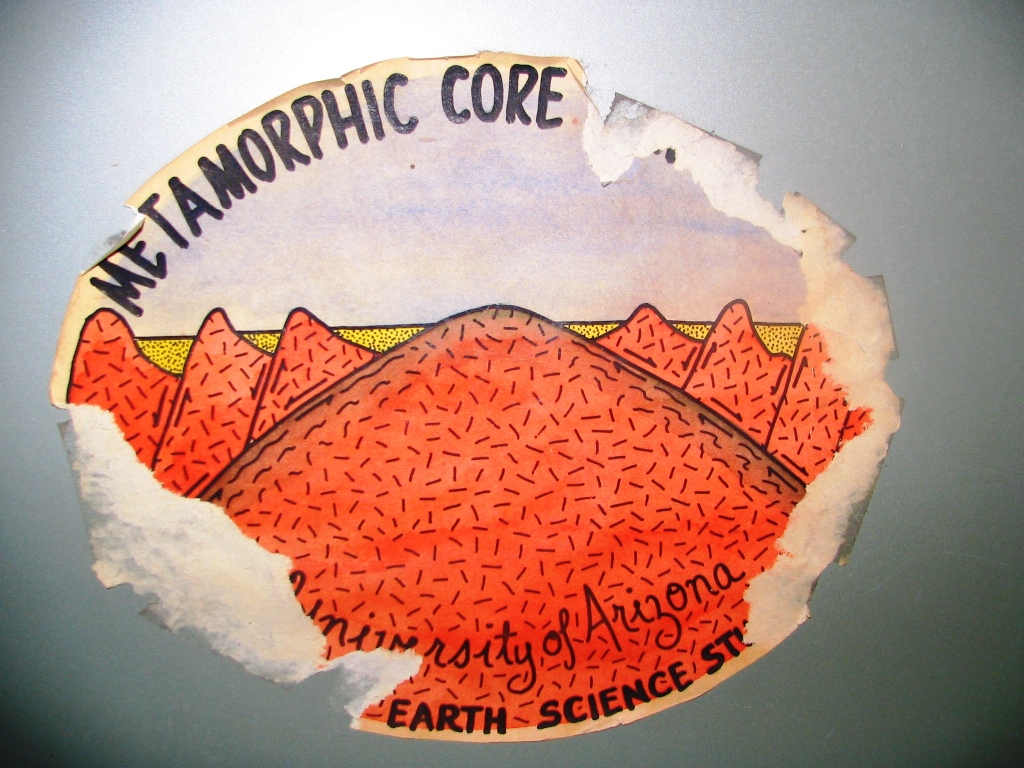
What's Inside the World?


A century ago people didn't know what the interior of the Earth looked like...but they had many ideas, extrapolated from what they did know: thousands of miles of jungle caves?? Feel free to contribute your own rendition of what's inside. The psychological importance of the Earth and our conception of it can be read off mind-maps like these. They say more about what is inside each of us than what is outside. But what is inside the Earth?

Light and Color in the Open Air

"Light and Color in the Open Air" by M. Minnaert is one of the best books ever, one of the few great classics, destined to be carried into innumerable bomb shelters and deserted desert island hermitages.

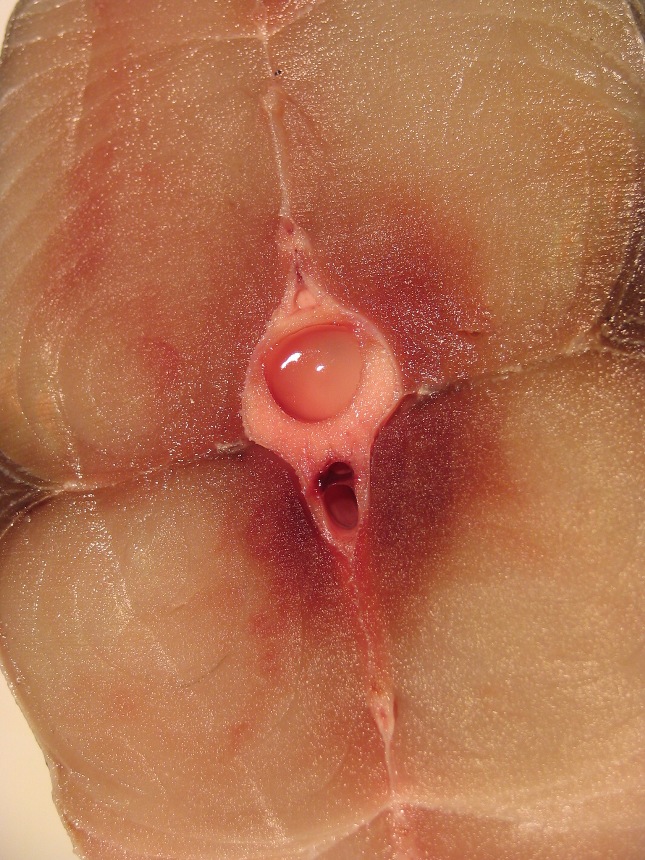
To the left is an image of the shadow and penumbra of Mt. Wrightson, 9500', at sunset. To the right is the diffraction pattern of a street light through a tree. Minnaaert explains:

"One sees at night, when a street-lamp is shining just behind a tree, that the light is reflected here and there by the twigs; these shining patches are, in reality, shorter or longer lines of light, and all these lines lie in concentric circles round the light-source. Owing to perspective we see branches that lie parallel to the plane of incidence greatly shortened, whereas those at right angles show their full length. Since there are as many branches to be found in either direction, we shall see light lines mainly at right angles to the plane of incidence. Each shining ring can be traced to a definite branch or twig. " [paraphrase]

This has some similarity to x-ray diffraction.

Raw Diet = Self Knowledge

People say if you knew how animals are slaughtered you wouldn't eat meat. But if you knew how margarine or soy milk were made you probably wouldn't eat those either.

Eating raw is about knowledge (self/other). Amazing how even the most basic things are a mystery -- like kinds of bananas, the origin of seedless grapes, or whether raw nuts are actually raw. What is raw? If a nut has to be flash-roasted to remove the shell, dried at 180 degrees, boiled in lye, and then washed in salt water and dried again, is it still raw? Simplify, simplify.

The difference between wild and feedlot animals is apparent in their ratios of fatty acids -- which are directly assimilated into your own cell membranes and axon sheaths. You have the same fatty acids as the food you eat. Free range cows have as much omega-3 as fish, more than twice as much as feedlot. And the difference between wild animals and feedlot is even more profound.

Being aware of your own body (the wonder!): maybe its not as simple as a fat/calorie 2nd order differential equation, that if you eat more than you excrete or burn as fuel you'll gain weight. Maybe there are more subtle mechanisms at work; maybe the human body is more complex than just needing fat, carbohydrate, protein, and a few vitamins. By eating raw, I believe that I've substituted the external art of cooking for the internal art of knowing my instincts.

What would caveman eat?

Heavy Metal Antibiotics: The Oligodynamic effect and Homeopathy


That silver, copper, and possibly germanium (and many other metals) have antibiotic properties is known as the oligodynamic effect, and is widely used in sterile gauze and other mainstream medical applications. Interestingly, these same toxic metals may have growth-stimulating effects in ultra-low doses; known as the Arndt-Schultz law ("small doses stimulate; medium doses inhibit; large doses kill"), from homeopathy.

On a related note, what is the shiny stuff on the new $20 bill? Copper? Gold? Plastic?

Old Truths Die Hard

An old, oft-repeated truism: The size of the finest detail that can be resolved is proportional to L/NA, where L is the wavelength of the light and NA is the numerical aperature (related inversely to f number (f/#)).

BUT: Confocal, I5M, and the new 4Pi can go far beyond this. 4Pi resolves detail below 100nm using a system of genius parallel high NA (~1.4) optics and deconvolution.

CF.
superlens
left-handed material, metamaterial

negative refractive index
"evanescent" waves
optical diffraction limit
deconvolution

Schlieren, shadowgraph and interferometric techniques have been used for many years to study the distribution of density gradients within a transparent medium.

Molecular Mechanism of Laser Wound Regeneration


The postulated molecular mechanism for the action of near-infrared lasers on wound healing and seed viability is photoactivation of enzymes: Primary photoacceptors, which are activated by laser, are thought to be flavins, cytochromes (pigments in the respiratory chain of cells) and porphyrins. These mitochondrial enzymes can convert laser energy into electro-chemical energy. The relevance of this to intra-protein electron transfer reactions?

During my summer internship with Dr. Hoopes' lab I decided to assay the absorbance spectra of proteins in order to discover which protein(s) were absorbing the near-infrared laser light. I assumed, as this review apparently does, that the coherent properties of the laser were or secondary importance, related only to the intensity of light delivered. I am still looking for a good reference work that charts protein absorbance spectra for a truly systematic analysis of the problem. Unfortunately, it appears likely that the color of proteins is determined by a number of factors, most notably the entire state of the cytoplasmic matrix.

I am also not sure what the relevance, if any, of autofluorescence or autolasing is to this.

On the clinical side, with the advent of cheap multi-spectra LEDs the range of this NASA-discovered therapy can only increase.

DETAILS: It is postulated that the following reaction is activated by laser (1): Low doses of laser stimulate ATP activation of the Ca++ pump in mitochondria. Ca++ enters the cytoplasm (via ion channels) and eventually(?) activates cell mitosis and cell proliferation. Higher doses of laser stimulate hyperactivity of the Ca++/ATPase pump and exhaust the ATP reserves of the cell, leading to inability to maintain osmotic pressure and apoptosis.

Tuesday, November 14, 2006

Architecture


I've been creating maximal strength sculptures using string dipped in glue. I tie the strings into a network and hang them from the underside of a table. It stretches into a perfect parabola that redistributes the weight equally onto all supports. This is a good tool to design buildings that use a minimum amount of materials while maximizing space. The glued strings are not very strong (you can easily bend them between thumb and forefinger) but because they are in perfect compression (everything in this model is in compression - my explorations of building with tensegrity haven't gone as well) along their length, they do not bend.

Note: because this structure was still wet when turned it over, this picture shows it slightly bent.

Two Species?

Will the human race split a la HG Well's Time Machine into two species, one pale (or artifically tanned), indistinguishable from the interconnected network of pipes, florescent-lit loading docks, tunnels and cages of industrial agriculture, the other wild and loose, roaming large on the fat of the land, eating nuts and berries running with the quick in their blood? One that maintains a sort-of-sanity with Prozac and Adderal and Viagra, the other with meditation, self-knowledge, and vitality?

I think someday we might remember laughing at the idea that we would ever live in a completely artificial/virtual environment, and, as we suckle contentedly from the omnipresent cacaphanous artificial teat, wonder that we thought we were free.