Wednesday, November 08, 2006

The Environment Creates the Organ

Lamarck Elaborated

The Greeks were wrong who said our eyes have rays;
Not from these sockets or these sparkling poles
Comes the illumination of our days.
It was the sun that bored these two blue holes.

It was the song of doves begot the ear
And not the ear that first conceived of sound:
That organ bloomed in vibrant atmosphere,
As music conjured Ilium from the ground.

The yielding water, the repugnant stone,
The poisoned berry and the flaring rose
Attired in sense the tactless finger-bone
And set the taste-buds and inspired the nose.

Out of our vivid ambiance came unsought
All sense but that most formidably dim.
The shell of balance rolls in seas of thought.
It was the mind that taught the head to swim.

Newtonian numbers set to cosmic lyres
Whelmed us in whirling worlds we could not know,
And by the imagined floods of our desires
The voices of Sirens gave us vertigo.
-Richard Wilbur. [thanks]


e.g.

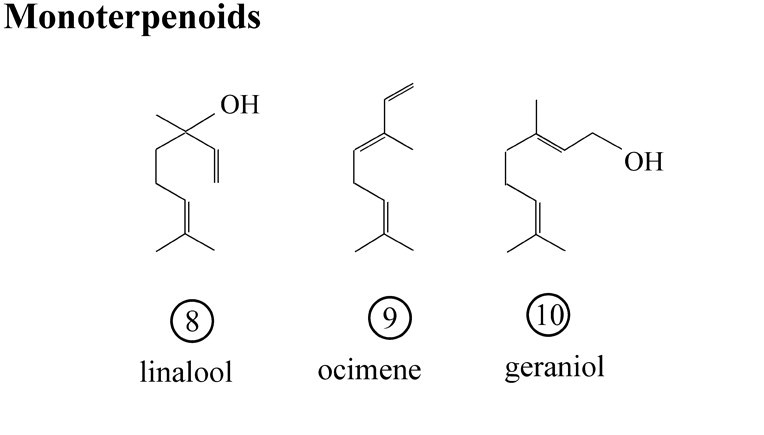
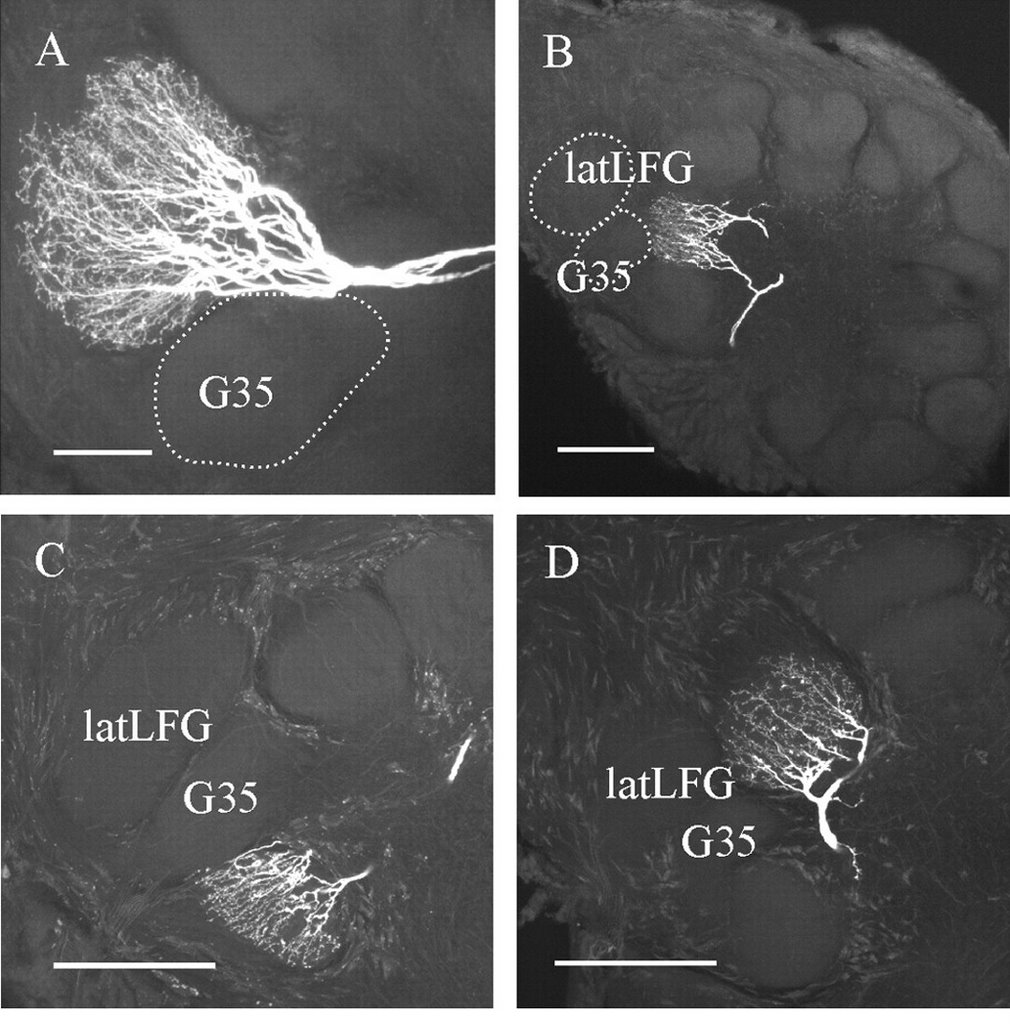
"Olfactory systems, unlike the visual, auditory, and somatosensory systems, encode stimuli with discontinuous features. Odorants are discriminated not by spatial wavelength, temporal frequency, or the topography of the receptors they activate, but primarily by discrete molecular attributes, such as carbon chain length and the presence and orientation of specific side-groups. This is reflected in the typically discontinuous, modular nature of the primary olfactory neuropils in both vertebrates and higher invertebrates"



Democracy ahead of Greed?

Arizona Proposition 200: Voter Reward Act would have paid up to $1 million in unclaimed lottery money to one randomly selected voter. We voted it down, in spite of the personal incentive, because apparently we value informed voters over those seeking a free lottery ticket.

But if we don't want uninformed, greedy voters, does that mean that we really want informed voters? Should we have an IQ test, or a voter competency test? My idea is an "entrance-exit poll"; voters are asked to recall their votes fifteen minutes after casting them: if they can't name the candidates and propositions they voted for, maybe those votes didn't matter very much to them and shouldn't matter very much to us. In this way the wheat (knowledgeable votes) would be separated from the chaff (random votes) with a minimum of hassle. The "random" votes could be subtracted from the significant votes in the final tally.

However, in the interests of honesty, I should mention that I cannot recall if I voted for or against Proposition 200...

Tuesday, November 07, 2006

I am an HISTOLOGIST: I seek to understand things.


Life is almost completely transparent. Histology has the goal of making it less transparent and hence more tractable. Why does 'transparent' mean obvious, easily understandable?

There are two parts to histology; fixatives and stains. Fixatives "freeze" the tissue by cross-linking proteins. Stains are dyes or inks, many borrowed from the textile industry. They work in sundry ways, but the idea is that each is only "sticky" to a certain substrate. I remember learning in O-Chem that even nitrile gloves are porous to some fluids, although latex is sufficient to stop them. And it turns out that the most useful glues and adhesives are those that are selectively sticky, not universally so. (The tape-stuck-on-the-hand syndrome). Antibodies are the most selectively-sticky glues, and in the past 30 years we figured out how to grab them with our dyes.

I wonder if any dyes ARE antibodies? A good candidate to investigate this would be tannins.

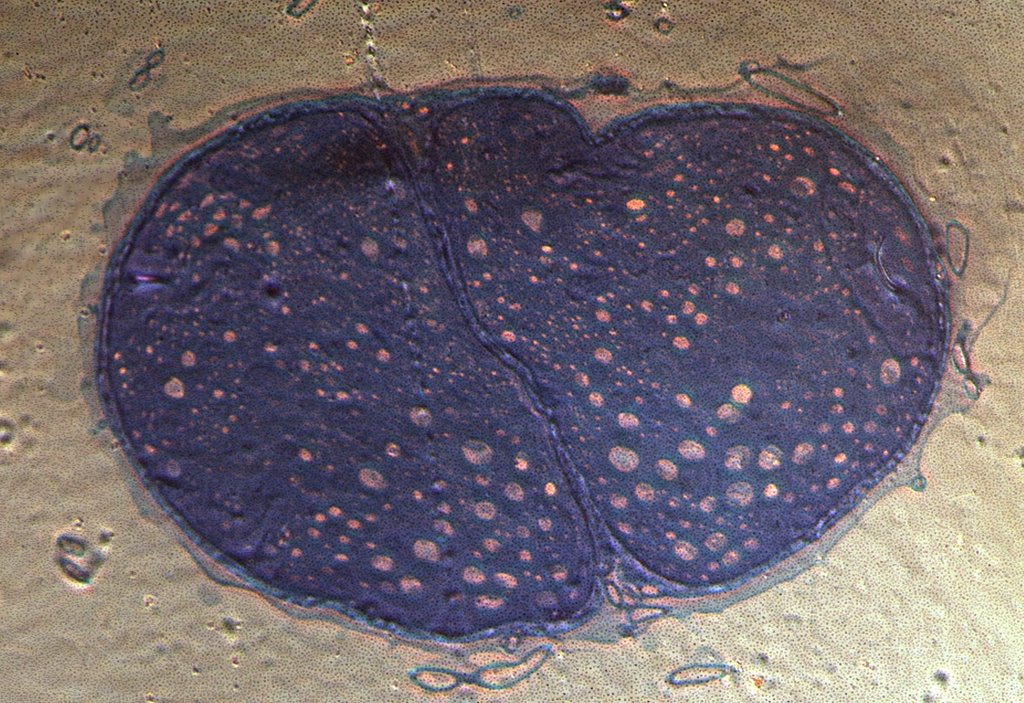
(Toluidine blue was used to dye the cervical connective in Manduca Sexta).

classification schemes and the limits of knowing


This is a great website on the computational side of logic rules in human and artificial intelligence

And of course they apply their method to poisonous mushrooms.

Growing forms, like mushrooms, show a complex morphologic system. Can you recognize these shapes?


Is the human brain complex enough to understand its own complexity? Are we smart enough to understand ourselves? Do these schemes, schemas, classes identify things in the world, or are they merely useful heuristics that may confuse us later? The apparent shape of crystals are classified in a wonderful schema, a schema that is a reflection of the underlying atomic structure. I hope to have an entry on x-ray crystallography as soon as I learn it.

What I am suggesting is that the eye was made to fit the world, just as the fish's fin was fit to the sea...[Richard Wilbur]

Should we analyze things based on rules or based on fuzzy logic?

Friday, November 03, 2006

Explain this, Mr. String Theorist


The Brazil Nut Problem, imaged with MRI. Why do the large nuts rise to the top in a shaken can of mixed nuts? This work shows that it is NOT because the small nuts squeeze under the big ones, with a net upward movement of the big ones bouncing on top. Instead, this shows that a convective flow develops and that ALL nuts move upward, while only the smaller ones are able to enter the corresponding downward flow (visible along the sides of the second image). See a nice review of theory and experiment.

This is still a very active area of research, and corresponding to the title, the results can not yet be explained based on first principles. This is an emergent property of nuts, people, and (often) beer.

Thursday, November 02, 2006

Movie Thoughts


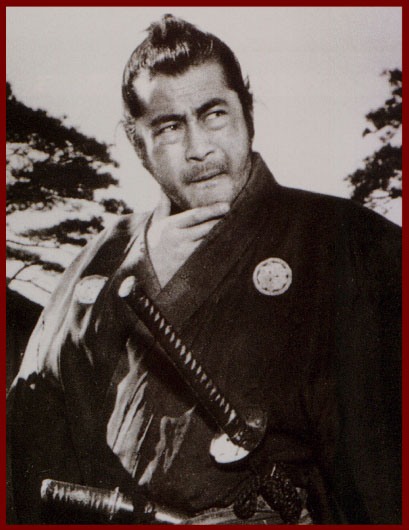
Yojimbo, (1970) by Kurosawa is a great film, with enough to mull over for days beyond the fantastic architecture of a japanese town (implicitly compared to the shanty fascades of a western town). Why does the great samurai hero who loves to drink and fight not enjoy women? Does he not thank the old man at the end because now "they are even", although that phrase was used interchangeably throughout the movie to mean, "I screwed you and there's nothing you can do about it".


A wallpaper.

Hidden Fortress by Kurosawa is also a great film.
And Rashomon (better than Waiting For Godot).

BBC vs. NPR and PBS

I remember staying awake to listen to the BBC radio program BBC World Service. I heard the intro trumpets blaring, and I was transported from my bed in dark and rainy and cold Washington State to far-off Africa, India, Malaysia. The accents were thick, the jungles steamy, and the news, well, completely new. I had never heard, let alone imaged, the wars and disasters that crackled from the tiny speakers. As far as I know, I was privy to information that wasn't fit to print in the New York Times, too messy for the local paper, and too polysyllabic for the nightly news.

...although Democracy Now is a worthy bearer of the American torch of journalism, and its surprising how many things are reported here that don't make the so-called 'liberal' NPR. What gives NPR?

I am actively looking for a conservative "balance" to Democracy Now, a show that combines intellectual honesty, in-depth reporting, and a conservative emphasis. Please let me know if you find something like this.

BBC is just better than American radio. (e.g. the Material World)

BBC is better than American [Reality] TV (e.g. Rough Science)

Airline Reservations -- an Information Arms Race


Some of the first supercomputers purchased by the private sector were used to calculate airline schedules and fares. Today, the customer is fighting back, first through search engines like Orbitz and Travelocity, then through meta search engines, and finally through some sweet AI.

Here's the website I'd always wanted to make, in beta of course: farecast.com

Once flyspace.com works for more cities it could be even better. Who knows? maybe the economists' models will someday be vindicated and the customer really will have access to "perfect information".

On the flip side, some airlines are giving up on the substantial overhead of algorithmic airfares and are offering unvarying flat rates.

Scientific Images

Art is science, and science art...that is all I know, and all I need to know.

Nikon and Olympus screen savers
http://www.microscopyu.com/software/screensavers/smallworld2006.html
http://www.mic-d.com/software/index.html
Scientific Image Contests


http://www.olympusbioscapes.com/
http://www.visions-of-science.co.uk/f-winners.htm
http://whyfiles.org/coolimages/archives.html%3Fcat=1.html

Please feel free to post your own favorite galleries.

Update: Math
http://myweb.cwpost.liu.edu/aburns/bridges06/bridges06.html

We're way up there, towards the top...


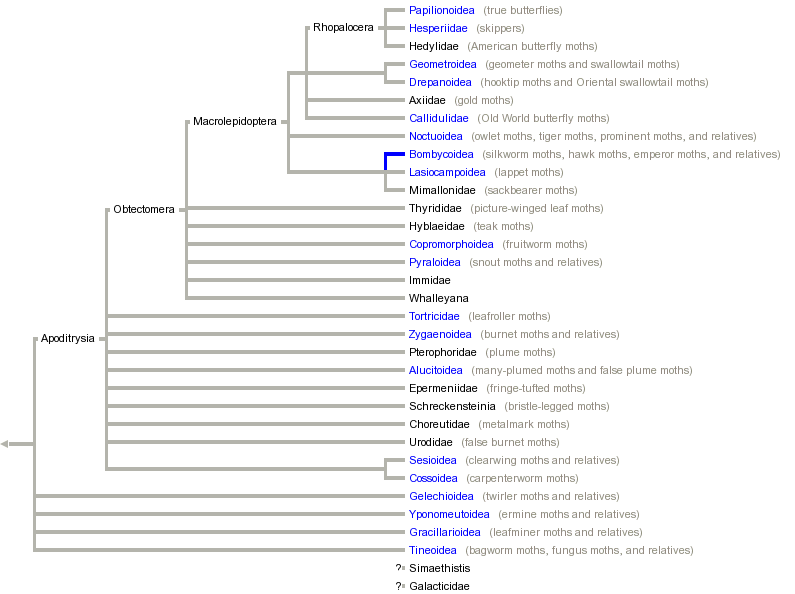
This is stolen from Tolweb. Try clicking up and down the tree to get an idea of the scale just of the butterfly family

Why study a particular model organism? Fruit Fly, Mouse, Rat, Chimp, Chinese Hamster, Barn Owls... most animals are chosen for convenience, rarely for the question being asked. Rather, the tool determines the sorts of questions the lab can ask. A bad example of this is a lab
studying olfaction in a species that is not known to use smell for any ecologically-relevant behavior. A good example of this was when Konishi used barn owls to study auditory processing.

Many jokes are made about whether scientists are studying mice or vice versa, but the truth is that learning the techniques, terminology, and temperament of an organism has a steep learning curve, and often the survival of the postdoc and his mice are yoked together.