Showing posts with label landscape. Show all posts

Wednesday, September 16, 2015

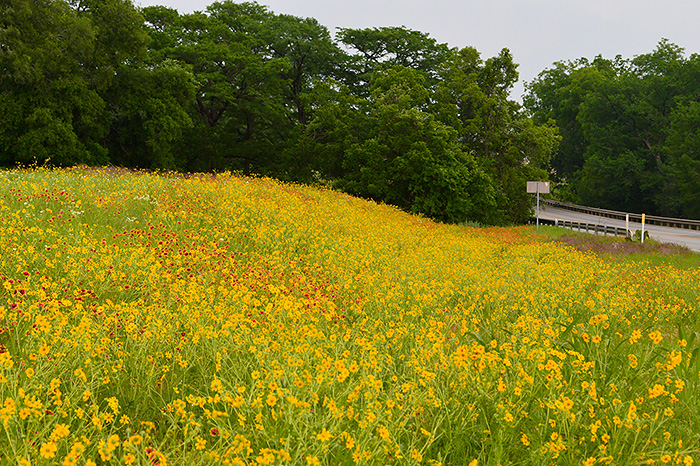
Roadsides Provide Critical Habitat for Pollinators


"Over the past 18 months, support for pollinators has undergone a seismic shift, led by President Obama, who called for a national Pollinator Task Force in the spring of 2014. Less than a year later, in a book-length "Strategy to Protect the Health of Honey Bees and Other Pollinators," the federal government set ambitious goals that include the restoration or enhancement of 7 million acres of land for pollinator habitat over the next five years. Roadsides will comprise a significant portion of that acreage..."
Read the rest of the article.

Thursday, September 10, 2015

Xenotopias

We lack –we need—a term for those places where one experiences a transition from a known landscape into new country or another world: somewhere we feel and think significantly differently.

 I have for some time been imagining such transitions as ‘border crossings’. These borders do not correspond to national boundaries, and papers and documents are unrequired at them. Their traverse is generally unbiddable, and no reliable map exists of their routes and outlines. They exist even in familiar landscapes: there where you cross a certain watershed, treeline or snowline, or enter rain, storm, or mist, or pass from boulder clay onto sand, or chalk onto greenstone.

 Such moments are rites of passage that reconfigure local geographies, leaving known places outlandish or quickened, revealing continents within countries.

What might we call such incidents and instances – or, rather, how to describe the lands that are found beyond these frontiers? I suggest the term ‘Xenotopias’, perhaps, meaning ‘foreign places’ or ‘out-of-place places’, a term to complement our ‘utopias’ and our ‘dystopias’.

[A quotation from Robert MacFarlane's The Old Ways]

Wednesday, October 15, 2014

Suburban Development Transect: Biodiverse Desert to Trash-filled Parking Lot

2000

2003

2008

2011
A transect walking a few miles from the indisturbed desert through new housing developments into the city looks like time played in fast-motion.  The ecologist's glasses allow us to see the moving picture of life rather than limiting our vision to the usual single frame.  By substituting space-for-time, we can put on time-travel goggles.  What do we see?

Normally we visit a site for a day, maybe once a year for intensive longitudinal studies, maybe never again.  With this transect we could see the changes in species composition from unique, biodiverse desert with its gnarled shrubs to fresh asphalt streets, planted landscaping and lawns, and a monoculture of weeds in the bladed 'empty patches' between houses and in right-of-ways.  The stream channels were all filled in and replaced with impoundments or concrete-lined ditches.

Eventually we ended up in the back lot behind a storage unit complex.  The slight depression there caught water and supported some of the tallest native flowering trees we'd seen.  The lot was also used, apparently, as a dumping ground and was filled with all kinds of trash.

Later that night, back in my home neighborhood, I saw dual-images of what the land looked like before and after development.  I saw the rocky ground thick with idiosyncratic cacti and weird four O'clock flowers.  And I saw wide asphalt streets, joggers, tall pine trees, oleander, and grass lawns.  It is so difficult to see the past, I felt that my dual-vision was a kind of X-ray superpower, a new found ability to see through reality to what might have been.  Reality has a way of erasing the possibility that things could have turned out differently.

A nice walk in the wilderness can sometimes substitute space for space, so that you can see your neighborhood space as the absence of native wildlife instead of the presence of cars, roads, and lawns.  I suppose some people see nature as empty, and even I see it this way sometimes too: some areas are devoid of active communal life.  For example, on this particular transect we saw no rabbits, no ground squirrels, and no other mammals in the wild.  I don't think we saw a lizard until we got to the rock walls of suburbia.  But I was amazed at the botanical emptiness of our developed landscapes: out of the more than 70 native species of wildflowers and Chihuahan desert shrubs, I saw less than 5 after we crossed the first freshly paved asphalt road.

Of course, there are a diverse mix of landscaping plants, many of them native somewhere, if not in the Chihuahan desert.  Interestingly, the mexican palo verde seems to have escaped cultivation and is now growing up into the wild watercourses that snake off the mountains.  Few other weeds seem able to invade intact ecosystems, although Russian thistle is omnipresent wherever the ground has been cleared.

I think, though, that if the transect had continued further into the past/future, through abandoned neighborhoods or restored areas, the native wildflowers and shrubs would reappear.  Especially with the rains this monsoon, they seem quite happy where they are, and old pipelines have a nice covering of desert marigold, creosote, and javalena bush.  I don't really feel that the desert is destroyed by development...maybe in the long-term view it just goes away for awhile, or changes shape for a spell.  Until the wave of bulldozers breaks and subsides, the desert remains as potential...

Wednesday, September 03, 2014

Smoke from Jemez Mountains Controlled Burn Impacts Albuquerque

The fire was caused by lightening in the foothills of the Jemez Mountains more than two weeks ago. Instead of suppressing the fire, managers have used the smoldering blaze to burn out undergrowth and unhealthy Ponderosa thickets. While the forest is moist enough to preclude any danger of catastrophic fire, that moisture may also increase the amount of smoke.


Last night smoke from the fire drained down the Jemez River valley and into the Albuquerque metro area. By this morning the smog was visible as a distinct haze in the valley. Clear skies and dry air probably helped establish an inversion that contained the smoke within the valley. The smoke quickly dissipated once daytime convection began.

ABQ Journal Photo
The Albuquerque branch of the National Weather Service noted that the "smoke event" this morning was "dense" and "impactful".  Some politicians have used the smoke to argue against this type of forest restoration.

 The NWS does not expect smoke to be as bad today as it was yesterday. But on a recent update to Inciweb, fire managers note that "hand and aerial ignitions will be used again today to direct the wildfire over an area similar in size to yesterday’s activity. Large columns of smoke from this ignition will be visible..."

Current air quality information can be found at http://www.nmenv.state.nm.us/aqb/PinoFireInformation.htm.


Wednesday, July 17, 2013

Tuesday, September 02, 2008

Observations of soil erosion and retention in a Colorado Pinon/Juniper woodland

watch where you step
moss grows on the ground, sheltered by the slim shadow of this dead juniper
Marked keypoint (this is where sediment slows down), breakpoint, and contour line in this micro-drainage. The primary force structuring this topography is erosion, but the plants are not pedistalled. The slope is 1-2%.

Saturday, June 14, 2008

Exploring the Rio Grande Headwaters: San Luis Valley

The Rio Grande drains the Southern Rocky Mountains and meanders more than 2,000 miles through the desert Southwest before reaching the Caribbean. Spanish explorers followed this river to its headwaters more than 400 years ago.
However, the Spanish were notoriously poor scientists, more interested in searching for the Seven Lost Cities of Gold than understanding native ecosystems. Even after the U.S. purchased this area in 1848, and despite more than a hundred years of U.S. exploration and documentation, much of this vast area remains unknown and (relatively) undisturbed by Homo industrialis.

I've set out this summer with Colorado's Natural Heritage Program to explore the Headwaters of the Rio Grande with a top-notch, interdisciplinary team of scientists from across the country.

The Rio Grand's headwaters drain from the San Juan Mountains and the Sangre de Christo Mountains into the vast alluvium of the San Luis Valley. This valley, the center of our research, can be thought of as either the southernmost Rocky Mountain park or the northernmost New Mexican valley.
At 7,500 feet this floodplain is a mix of alpine, wetlands, desert, and farmland. Coming from sea level it is continually astonishing to pause and gasp for breath in the center of an agricultural valley where the nearest mountains are 30 miles away. These high plains support a diverse and unique assemblage of plants and animals, with pronghorn antelope feeding in the alfalfa fields, buffalo competing with cows in the sagebrush rangeland, and elk and bear foraging along the periphery.
Our HQ is marked on these maps, a swanky cabin safely nestled in an out of the way canyon on the western rim of the valley. To get to this alpine oasis you first drive past the endless center-pivot irrigation systems of San Luis Valley, than upwards past La Garita through Sheep pass, where the rounded granite boulders shelter pinon and juniper. You are now entering Carnero Canyon, whose narrowings and widenings sequentially reveal a lush cottonwood bosque, then Ponderosa woodland and finally Aspen groves and mountain meadows.

The "Back 40" (square miles):

*Since the cabin is off the grid this post was beamed up via satellite.

Friday, May 02, 2008

New Mexico: Wolves, Telescopes, and Antelope

Nuevo Mexico lindo y Querido
Si me llego a morir navegando
Estira tus ala a traeme aqui
New Mexico beautiful and loved
If I should die while traveling

Strech out your wings and bring me back

Saturday, March 15, 2008

Insight of Landscape Architecture

To see placement, form, identity as intentional.

Give weight to each concrete arrangement of roots-on-rocks, moss&waterfall, blooming flowers and looming trees.

To swim in these origami arrangements of order without order: perfect, designed for some terrible purpose, full of trapdoors and hidden keys, rooms too big and too small and just right for humans.
To witness and accept and honor both what is done at the mercy of nature (man-made) and what is nature-made.

Monday, March 03, 2008

Quality of Light


There is something about the quality of light in New Mexico, its extraordinary luminosity. Its easy to see what the artists see: quotidian light that washes away the mundane, hundred-mile color that you can feel in the pit of your stomach.

Long Walk Home. Ed Sandoval. Oil. From Southwest Art magazine.


Long Walk Home. Conor Flynn. Photograph.

Saturday, March 01, 2008

Accommodating the Heart of the Land

Heart of the Land (1994, Vintage Books) collects 30 essays by some of the greatest living writers. The essays document their responses as they travel to The Nature Conservancy's "Last Great Places" in the U.S. and Mexico. This essay documents my response.

Barry Lopez
foreshadows many of the 30 answers as he attempts to understand the question:

"We are in a time of wakefulness about our relations with the land, reacting to an inattentive and sometimes abusive human past; each one of us, awakening, understands this shift of consciousness and the dilemmas it presents somewhat differently. And, whatever our efforts, they are all shot through...with enduring paradox and moral complexity....

"...if we are incapable of addressing these conundrums, which call on the courage inherent in abiding love, and upon social justice, then land conservation in our era will prove to have been only a fashion...

"...if our endeavor--the protection of natures other than our own--is to succeed, it will require more than mind and hand can bear....It will require that we reimagine our lives."
Terry Tempest Williams probes Lopez's "courage in acknowledging imperialized landscapes of the past for the battered remnants they are" by examining the psychological rift that opens in ourselves when we acknowledge the one we have created in Nature; "we are a tribe of fractured individuals who can now only celebrate remnants of wilderness". She argues that we must heal our souls in order to heal nature, but she quotes D.H. Lawrence to argue that, ironically, we must first embrace nature in order to heal our souls.

"What a maiming of love when it was made a personal, merely personal feeling, taken away from the magical connection of the solstice and equinox...We are bleeding at the roots"

From Moab Utah, on Winter solstice Williams is transported by the Nature Conservancy's preserve toward a new era of warmth and light. However,in contraposition, many of the authors reach back to their childhood traditions in mourning for what has already been lost. Rick Bass eulogizes the Texas hill country he knew as a youth and the holism of wilderness there that even, especially, children understood. He asks, "Must we break everything that is special to us, or sacred--unknown, and holy...What happens to us when all the sacred, all the whole is gone..." and wonders whether the only real, lasting ownership is through love: "it was ours because we loved it." Carl Hiaasen ponders why we still love degraded landscapes, or, love them even more; "why, after all, does one sit with a dying relative?"
Many of these writers find strength and courage in the slivers of preserved land, almost as if the Nature Conservancy had miraculously managed to save slivers of their own childhood memories. Others ponder the cause of the commonplace destruction of nature outside of select wilderness preserves. Joel Achenback asks whether our relation to land is really as stewards (as we tend to believe), or "perhaps the ultimate problem with the steward or farmer paradigms is that they imply that humans are apart from nature, superior to it, above it....Maybe that's why I sort of like the cancer model--because it is internal, part of the host. Because it destroys in a way that seems so senseless."
James Welch criticizes the attitude of farmers who still "feel it is their God-given right to dominate their particular landscapes." Thomas McGuane quotes Mike Lawson, fly-shop operator and outfitter at Last Chance on the Henry's Fork, ID, "If [the ranchers] don't learn to negotiate and compromise they're going to lose it all." William Kittredge, a former rancher himself, advises, "the people in my old homeland...[need to] work out some accommodation..." Teresa Jordan quotes Harvey Payne, the Nature Conservancy director of Tallgrass Prarie Preserve, OK, "On this preserve" he says with sadness rather than hubris "we play God." Jordan concludes that we believed "that the earth should bend to our will. Science made us arrogant; now, as we begin to understand the ways in which we have damaged the systems that sustain us, it is making us humble."
Gary Paul Nabhan points out that it is precisely the unpredictability and hence unmanageability of wilderness that marks it as wilderness. It can never be controlled; instead, it is the history of raw force, defiant of our will, that teaches us. But, for practical reasons, (if for no other reason) many farmers and ranchers will never come around to this conception of our place in the land. Indeed, as Payne admits, management, whether for cows, corn, or wildlife, forces us to attempt control.Philip Caputo also sees pedagogy in wilderness, but he suggests we look at microcosms such as Martha's Vineyard for proof if "we and our works can reach an accommodation with those of God." That accommodation, he finds, embodies basic contradictions within ourselves both as "romantics awed and enchanted" and "conquerors roused to possess and exploit". On Martha's Vineyard he finds wilderness, but "it is a tight little place on a tight little island" with, ironically, little room for either exploitation or enchantment. Bill McKibben celebrates the fractured landscape and the accommodation of people in the Adirondacks wilderness in upstate New York, "a wilderness with room for people." He thinks we should look to the Adirondacks as an experiment in managing sustainability. McKibben says of the Adirondacks wilderness, "this is what the world used to look like", but Caputo fears that all wilderness will someday tend toward "a tight little place" like Martha's Vineyard.
Heart of the Land is by far the best travel writing I've read and adds at least 30 places to my ever-growing list of places to visit. To paraphrase Barry Lopez, "the mere existence of such [places]...pulls us beyond ourselves."

This essay practically wrote itself thanks to Barry Lopez's ingenious ordering of the authors by common musings. I knew this was one of the 'Last Great Books' when I saw the list of writers, which includes many not mentioned above, such as Barbara Kingsolver, Peter Matthiessen, and Paul Theroux. But it is much bigger even than its pieces. It is a whole landscape, to quote Wallace Stegner from the frontispiece, a "geography of hope" .