Showing posts with label genetics. Show all posts

Sunday, April 10, 2016

The Problem with Nutrigenomics

"Personalized nutritional counseling is a burgeoning field. Several companies, including Vitagene, Nutrigenomix and DNAFit, are already offering individualized dietary counseling.  Their efforts are based mostly on genetic testing, but scientists have only just begun to explore the links between DNA and good nutrition. “I think companies offering personalized dietary advice are probably running ahead of the evidence,” said John Mathers, director of the Human Nutrition Research Center at Newcastle University in Britain." [NYTimes Blog]

Introduction

Science skeptics have recently reviewed these services, and found plenty of quackery. [Science Based Medicine] [Skeptical Raptor]

However, there is some research to back up the idea that genetic testing can provide insights into metabolic disorders.  There may be as many as 200 SNPs for which there are proven metabolic effects, and only a subset of these alter nutrient requirements in a significant portion of the population [e.g., the rs1801133 MTHFR SNP and folate requirement in 15–30% of the population (Solis et al., 2008) and the rs12325817 PEMT SNP and choline requirement in 20–45% of the population (da Costa et al., 2006)].

What do genetic testing services measure?

The human genome consists of about 3 billion nuceleotide bases, each of which is either A,C, T, or G.  A reference genome based on the similarities of all genotyped humans has been assembled, along with a corresponding reference database of all of the point "mutations" where individuals differ from that baseline.  So far, scientists have documented about 150 million of these single nucleotide polymorphisms, called SNPs.  The average person doesn't have all of these differences, however; most people have about 3 millions SNPs that differentiate them from the reference human genome.   Since 3 million is about 0.1% of the 3 billion base pairs, most humans differ from each other by about 0.1% of our DNA. Ancestry genomic testing services like 23andme test for a few hundred thousand SNPs for $100-$200.  For $1000-10,000 a complete genomic sequence can be obtained.  (there are about 3 billion bases total.  

Examples: MTHFR – metabolic pathways and nutrigenomics

In humans, SNPs in the gene MTHFD1 increase the demand for betaine as a methyl-donor, thereby increasing the dietary requirement for choline. Another SNP in the gene PEMT prevents the activation of this gene by estrogen, thereby decreasing endogenous production of phosphatidylcholine (a source of choline) in the liver and increasing the dietary requirement for choline. [Choline: Critical Role During Fetal Development and Dietary Requirements in Adults. Ziesel]

But note that it is not so simple.  There are several forms of the MTHFD1 gene, for example MTHFD1L and MTHFD2. If MTHFD1 is commonly mutated, it may be a pseudogene.

Complexities interpreting SNPs

No simple test can unravel the intricacies of the human genome, and consumers should be suspicious of anyone claiming to be able to interpret measurements of tens of thousands of genes, with millions of genetic variations, some of which have effects on hundreds or thousands of the small molecules of metabolism (and perhaps on thousands of peptides or proteins involved in metabolism).
[A grand challenge for nutrigenomics.  Steven Zeisel. 2010.]

Mistakes in genomics data

Note that 23andme data, like any large genome scan, can have mistakes in it.  For example, the Enlis genomics blog found more than 500 likely mistakes in a sample of 23andme raw data!  (Enlis)

Furthermore, many important nutritional SNPs are not testing by 23andme.

Solution: Metabolic Testing
There is a genetic test for MTHFR variations. But there’s also a cheaper and more accurate way to test for whetherMTHFR variations are causing disease. We simply check the levels of homocysteine in the blood...In other words, the homocysteine levels determine our actions, not the MTHFR test results.[Cleveland Clinic]

Monday, March 28, 2016

Metabolic Pathways

Say you want to know what the possible effects of taking a supplement might be.  You could research the supplement on the two high-quality websites that report supplement interactions based on human trials:

Examine.com

The Mayo Clinic - not as many supplements covered.

It would be great if there were reliable "trip reports" from patients on the effects and side-effects of drugs, but unfortunately side-effects are not reliably reported.

If you wanted more basic information, you could consult a metabolic pathway interaction diagram.  Note that the study of genetics and proteomics still has a long way to go:  we don't know what most of the essential genes even do, nor do we know the function of xx% of all genes.  No network diagram is complete....

SigmaAldrich offers a searchable poster:


According to this, NAC can increase glutathione, but also homocysteine. Important information from the network!


Biochemical-pathways.com has even more information.  Note that because the network diagram is again a poster, single compounds (e.g. cysteine) can occur in different places on the diagram.


Metacyc is the most detailed, but only shows one "pathway" at a time.


KEGG is another very good resource with drop-down menus to explore individual pathways.

A long list of other resources.

Friday, March 25, 2016

Testing a Relevant SNP?

A new study in Science Magazine by Simonti et al has linked this SNP to a rare condition known as protein-calorie malnutrition (PCM).  The study compared electronic health records (EHR) for 28,000 people with SNPs that are now known to derive from Neandertal DNA.

SNP rs12049593 is in an intron of SLC35F3, which means it does not change the actual structure of the protein, but instead alters the amount of protein produced.  SLC35F3 codes for a protein that helps transport vitamin B1 (thiamine) through the body to the mitochondria, where it can be used to generate and store energy from sugar. The linkage to PCM makes sense, because PCM is characterized by fatigue, malnutrition, and wasting even in the presence of adequate caloric intake.

"Humans depend on diet for their thiamine needs. Very little thiamine is stored in the body and depletion can occur within 14 days. Severe thiamine deficiency may lead to serious complications involving the nervous system, brain, muscles, heart, and stomach and intestines." (Mayoclinic)

"Thiamine is required for the assembly and proper functioning of several enzymes that are important for the breakdown, or metabolism, of sugar molecules into other types of molecules (i.e., in carbohydrate catabolism). Proper functioning of these thiamine–using enzymes is required for numerous critical biochemical reactions in the body, including the synthesis of certain brain chemicals (i.e., neurotransmitters); production of the molecules making up the cells’ genetic material (i.e., nucleic acids); and production of fatty acids, steroids, and certain complex sugar molecules.

Thiamine deficiency can lead to cell damage in the central nervous system through several mechanisms. First, the changes in carbohydrate metabolism, particularly the reduction in a–KGDH activity, can lead to damage to the mitochondria. Because the mitochondria produce by far the most energy required for cellular function, mitochondrial damage can result in cell death through a mechanism called necrosis. Altered carbohydrate metabolism can lead to oxidative stress, characterized by excess levels of highly reactive molecules such as free radicals and/or the presence of insufficient levels of compounds to eliminate those free radicals (i.e., antioxidants, such as glutathione). Oxidative stress can lead to various types of cell damage and even cell death."  (from Role of Thiamine Deficiency in Alcoholic Brain Disease)

Simonti et al state:
"Decreased expression of this transporter in the brain or GI tract could exacerbate malnutrition or its symptoms. It is possible that new dietary pressures may have caused changes in carbohydrate metabolism to be beneficial in early human migrants out of Africa; indeed, there is evidence suggesting that Neandertal-derived genes increase the efficiency of fat digestion. More recently, the reduction of thiamine present in foods from the grain-refining process, as well as an increased intake of simple carbohydrates, make this a potentially harmful allele, because it could reduce thiamine availability although modern diets increase demand."

I am homozygous for the recessive allele of SNP rs12049593.  I have a C where 95% of people have a G or T, courtesy of my Neandertal ancestry.  According to the Simnoti study, I may have some malnutrition symptoms if I do not express the B1 transporter gene.  According to my research, B1 can also passively diffuse if it is ingested at high enough concentrations.

I tested oral administration of 100mg/day of B1, which is more than 6000% of the US RDA but is the only size pill commercially available; apparently, this is a standard doze for supplementing B vitamins.  I weighed myself morning and night for 1 week and did not notice any change in weight.  Subjectively, I noticed some tiredness the first two times I took B1, then I noticed some energy, and after four or five days I do not notice any effect from supplementation.

UPDATE:  Figuring out what allele is variant and which is most common is difficult.  My information above was from 23andme raw data viewer, but when I loaded my data into the excellent Enlis Genome Personal software, I see that I actually have the reference allele, not the rare allele.  So that may explain why I don't respond to supplemental B1.

Wednesday, March 23, 2016

Complex Science: The Role of Vitamin D Receptor (VDR) Genotype Polymorphisms (SNPs)

Vitamin D regulates the expression of hundreds of genes, with widespread hormonal and immune effects.  But whether vitamin D is good for you may depend on your genes.  According to one hypothesis, supplemental vitamin D causes allergies and asthma.  [1]

But the biochemistry is complex.  The main circulating metabolite is 25-hydroxyvitamin D or 25(OH)D, a biomarker of vitamin D status.  The active vitamin D metabolite 1,25(OH)2D3 binds to nuclear vitamin D receptor (VDR), which exists from under 500 to over 25,000 copies per cell in many human tissues including thymus, bone marrow, B and T cells and lung alveolar cells.  Gene expression can be varied over a 100-fold range by subtle modifications of introns and promoter regions outside of the gene[1]

The SNPs that seem to affect VDR are not in the exon; they may affect RNA production in the promoter region. It is unlikely that increased or decreased vitamin D sensitivity is simply mediated by a genetic variation in the VDR. Vitamin D requires several enzymatic steps to be activated, transported and degraded; receptor signalling requires several co-factors and all of these may contribute additive or multiplicative effects on vitamin D sensitivity.

Possibly because of this complexity, progress in this field has been slow.  I reviewed several papers, most of which found very small or no effects from common SNPs.  For example, although most papers found insufficient or deficient levels of vitamin D throughout the population, a case-control study only found a small effect on circulating 25(OH)D from one of the SNPs tested. [2].  A randomized controlled trial found effects from more SNPs, but each contributed very small effect sizes. All SNPs tested had, at most, +/-5% effect on circulating 25(OH)D. : "Three SNPs had statistically significant interactions: rs10766197 near CYP2R1, rs6013897 near CYP24A1, and rs7968585 near VDR, with per allele effect sizes ranging from −4% to +3% differences in [25(OH)]."[3]

These complex and unimpressive results are representative of the difficulties inherent in assaying SNPs for clinically-relevant phenotypes.  Most SNPs slightly modify expression or binding of a protein, such that it takes the combination of dozens or hundreds of different SNPs to create any significant phenotype.  Biochemistry is complex, and it is always possible that other gene or protein interactions can ameliorate or exacerbate any small perturbation from any given SNP.

Citations:
[1] Variants in the vitamin D receptor gene and asthma.  2005.  

[2] Vitamin D levels and vitamin D receptor gene polymorphisms in asthmatic children: a case–control study.


Thursday, January 29, 2015

Can Patients Understand their Own Genome?

I just ran my 23andme SNP data (Single Nucleotide Polymorphism: basically, the distinct mutations that make my DNA unique) through geneticgenie.com, a website that puts the number and type of mutation in a handy table.  The website also provides nutritional recommendations based on the presumbed metabolic impact of my particular mutations.

However, after feverishly researching biochemistry I have some concerns with Dr. Yasko's conclusions cited on that site and others. These websites appear to make a number of biochemistry mistakes, and I'm not seeing a lot of citations to original research, just a lot of unpublished "physician observations".


A selection of results from G enetic Genie. There are two copies of most genes in our genomes (one from our father, one from our mother) and one or both may be mutated. The color-coded results show that I have two mutated copies of several important genes (colored red) involved in neurotransmitter metabolism and other core biochemical processes. I also have two genes with one bad copy (yellow),


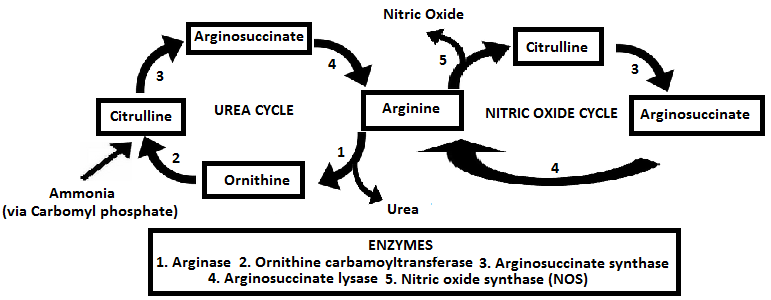
Some of the statements about, for example, BH4, appear to be incorrect. Genetic Genie states that impaired BH4 production or increased BH4 utilization can impact ammonia detoxification in the urea cycle, but BH4 is not directly involved as a cofactor in ammonia to urea conversion. Instead, BH4 is involved in one of at least two pathways for generating citrulline. (Citrulline is regenerated in the urea cycle to turn ammonia into urea.)


Not to say they're not doing good work, but you have to interpret biochemistry in context. For example, I am homozygous for a mutation in CBS, which they say would upregulate CBS activity and lead to increased cystathione, cysteine, and eventually to increased taurine and sulfite. But I also have a heterozygous mutation in CTH, which would limit the amount of cystathione converted into cysteine, effectively stopping that cascade at the starting line.

I hope we're just a short ways off from a website or interface that can actually map all of our unique (SNP-dependent) metabolic pathways, but I think we're still in the dark ages when it comes to interpretting SNP genome results. Promethease is the online tool that has replaced 23andme's health-specific genetic information, but the website only summarizes Pubmed results:


The Promethease website is great, but is based on observational studies with tiny effect sizes. Trying to infer causation from those correlational studies is a textbook example of how not to interpret statistics.

Faced with the complexity of ~20,000 SNPs and less-than-user-friendly professional tools like ENSEMBL, I don't think it is possible for individuals to understand how SNPs influence protein function to the extent necessary to make informed decisions about our biochemsitry.

Monday, February 03, 2014

Monarch Decline Blamed on Changing US Agriculture


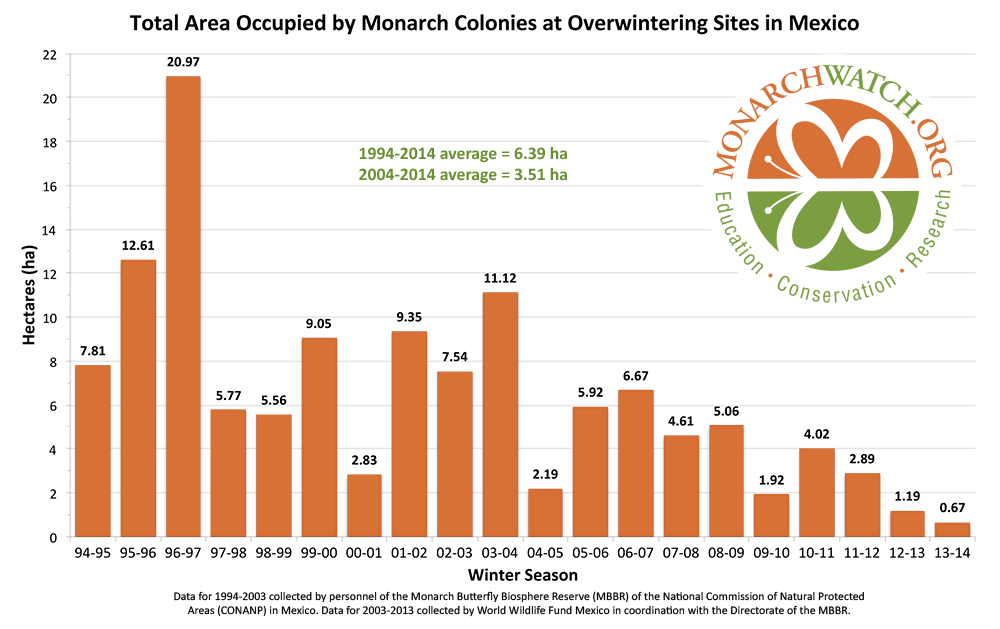
Graph of returning migration Monarch Butterflies from MonarchWatch.org


CBS quoted entymologist Lincoln Brower: "The main culprit," he wrote in an email, is now genetically modified "herbicide-resistant corn and soybean crops and herbicides in the USA," which "leads to the wholesale killing of the monarch's principal food plant, common milkweed."

The website MonarchWatch.org has the best in-depth analysis of the triple threat of habitat loss.  What to do?  Plant milkweed!

Wednesday, February 02, 2011

Open-source, DIY genomics

"You can't rely on the model of running everything through the historic, traditional research channels.” “..the locus of control is different and distributed. There are no principal investigators and subjects. Instead, there are organizers and participants, and both of those are collaborators.”
http://www.nature.com/nm/journal/v16/n9/full/nm0910-953.html

Thursday, April 05, 2007

Molecular Biology is either ahead of its time...

...or full of BS.

I just quit my graduate "genetics" course because it was just shape-filling protein models with a prof waving his hands at a Plato's Cave Powerpoint screen. He's a genetics guy but genetics isn't pretty enough for Powerpoint so he spent the whole semester talking about molecular genetics, which either a) he doesn't understand or b) nobody understands. Probably both, and they definitely don't know that they don't understand it. I have better things to do with my time than listen to Just So Stories (and then Regurgitate them on the midterms). I want to go on record pointing this out, so that when the Revolution comes I'll have bragging rights.

Wednesday, March 07, 2007

Are plasmids a new form of life different than viruses and bacteria?

Plasmids are like swap-out plug-in superpowers for bacteria. Bacteria can 'upload' them much like Neo in the Matrix uploads Kung Fu, only in bacteria it seems to be the plasmids that are in control: obligate parasites. They say this is the planet of the bacteria, but maybe they're just the metaphorical shells of the hermit crabs, the real kings of the planet, the plasmids. Listed below are a few of the common superpowers they confer on their mild-mannered hosts.

Fertility, ability to conjugate (tra)
Toxin production (Shiga, tabtoxin, Diptheria)
Symbiosis (pSYMin Rhizobiumspp.)
Restriction / Modification (enzymes)
Hydrocarbon metabolism (2,4-D, toluene)
Antibiotic-resistance (StrR, AmpR, TetR,ChlR)
Antibiotic production (Colicins, Agrocin)
Heavy metal resistance (Hg2+, Zn2+, Cu2+)
Virulence (vir, pili)
Tumorigenicity(in plants) (tmr, tms, iaa)