Showing posts with label insects. Show all posts

Tuesday, September 05, 2023

How Advocates Stopped Aerial Insecticide Spray in NM

APHIS (a U.S. Government agency) routinely broadcasts insecticides across millions of acres of the Western U.S., in an attempt to control populations of grasshoppers.  Climate change (warmer winters, drier summers) has led to an increase of grasshoppers over the last decade, and APHIS has tried to keep pace.  https://acis.cals.arizona.edu/community-ipm/home-and-school-ipm-newsletters/ipm-newsletter-view/ipm-newsletters/2023/06/07/grasshoppers

Unfortunately, broad-scape application of pesticides harms numerous other animals (and people).  

A recent attempt to use airplanes to spray pesticides over the Rio Chama watershed in New Mexico was protested and eventually cancelled: https://www.xerces.org/blog/how-advocates-stopped-aerial-insecticide-spray-on-25000-acres-of-new-mexico-natural-areas

More Info:

Overview of Program:  https://www.aphis.usda.gov/aphis/ourfocus/planthealth/plant-pest-and-disease-programs/pests-and-diseases/grasshopper-mormon-cricket/CT_Grasshopper_Mormon_Cricket

"Environmental Documents" opens a page with state-specific and site-specific Environmental Assessments.  This provides more info about areas in each state that have been treated.

In general, areas that show in red on aerial surveys will be treated in the following year. 

From:  https://www.aphis.usda.gov/plant_health/plant_pest_info/grasshopper/downloads/hazard.pdf

Annual grasshopper density surveys:  https://www.ars.usda.gov/plains-area/sidney-mt/northern-plains-agricultural-research-laboratory/pest-management-research/pmru-docs/grasshoppers-their-biology-identification-and-management/outbreak-and-survey-info/outbreak-and-survey-info/

APHIS has a large number of pest species with control programs: https://www.aphis.usda.gov/aphis/ourfocus/planthealth/plant-pest-and-disease-programs/ea


Thursday, November 10, 2022

Is measuring biodiversity possible for non-experts?

I’m trying to measure pollinator biodiversity using iNaturalist, but I’m having doubts as to whether this is even possible for a non-expert.

Over the last five years I’ve photographed insects on flowers in my area, with the goal of creating a summary of total pollinator species per plant species per month. I'm using an Observation Field to associate the plant species with the insect Observation:  https://www.inaturalist.org/observations?place_id=1823&user_id=conorflynn&verifiable=any&field:Nectar%20%2F%20Pollen%20delivering%20plant=

I knew from the beginning that this would not be a perfect research study because I’m not systematically sampling the flowers with equal effort and equal time, and I knew I wouldn’t be able to ID every insect, due to the quality of my photographs.

But I hadn’t considered that the level of taxonomic ID could bias the total species counts. Even if I could ID every photograph to Genus, some Genera have dozens of species while others only have a few. Even worse, some taxa have more people helping ID and therefore have more detailed IDs, whereas other taxa have less interest and are stuck at Family level IDs.  

I think this makes comparing pollinator diversity difficult or impossible on iNaturalist. At best I could say something about how many different Genera or Families visit a particular species of plant --  but I’m not sure how important genera- of family-level biodiversity is...

iNaturalist is a great platform for documenting species observations, but now I think the utility of the data is taxa-specific.  For example, I recently went to a talk about rare talussnails and springsnails in AZ, and the speaker advocated using iNaturalist to document observations.  But how could he ID the rare species from iNat photos?  He just does it based on geography.  There’s no way to discover new snail species or new locations on iNat; DNA studies are needed for new populations to ID whether they are a new or existing species. 

I’d also hoped that I might be able to document new specialist pollinator-plant interactions, but I learned in The Bees in Your Backyard (the definitive bee ID book for North America) that even pollen specialists can be nectar generalists, so I don’t know how one would discover specialist interactions from photographs?  Do researchers have to analyze pollen grains on collected bee specimens??

Sunday, September 25, 2022

Where is most biodiverse?

 iNaturalist can be used to compare biodiversity in different locations.  

To do this, it is important to allow for different search effort in different areas: for example, a search of the middle of the Amazon might not return many species, not because there aren't many, but because people haven't observed them.

For the U.S., we will assume that search effort is at least somewhat comparable.  We will also look at total observations and divide them by total species to get some idea of the effort required to document a new species in that area.

We decided to investigate my home town in Washington State, Alexandra's home town in Ohio, one of our favorite places: Maui, and our current home in Arizona.

Port Orchard, WA

A 100 km search radius includes most of Puget Sound, the Olympic mountains, and Seattle.

Dublin, OH

A 100 km search radius includes most of central Ohio creeks, woodlands, agricultural lands, and all of Columbus OH.

Prescott, AZ

A 100 km search radius includes canyons and mountains between Flagstaff and Phoenix.


Maui, HI

A 100 km search radius includes all of Maui as well as ocean channels and nearby islands.


Summary Table


According to this analysis, Washington is most biodiverse, followed by Ohio, then Arizona, and in last place is the island paradise of Maui.  

Island biogeography teaches that islands, although unique for their level of endemic plants and animals, should be deficient in overall biodiversity if there hasn't been enough time for biodiverse taxa to colonize or evolve on the island.  This seems to be the case with Maui, which is especially depauperate in insects, given its tropical location.

Arizona, despite its diverse environments, is significantly lacking in Fungal diversity, which could be due to the arid climate.

The American Midwest, with its perfect seasonal growing climate, is remarkably biodiverse, and would probably surpass Washington if this search had included a more varied part of the Midwest with more mountains and/or rivers and lakes.

Washington tops the list as most biodiverse, probably because of the presence of diverse environments, with everything from alpine mountain tops to ocean kelp forests, and everything in between.  This is despite the lower number of insect species compared to a lower latitude place like Ohio.

A caveat to this entire analysis is revealed by the Total Observations in each area and the resulting Observations per Species.  While I had assumed that search effort would be equivalent across the US, it is evident that many more people are using iNaturalist around major cities like Seattle and Columbus.  Arizona is more sparsely populated and has many less observations, and Maui, despite the huge numbers of tourists, is even less populated.  This means that is only takes 20 or 27 new observations (on average) to observe a new species in Maui and Arizona, respectively, while it takes 47 or 72 new observations in Ohio and Washington, respectively, to observe a new species.  So even though Washington has the most observed biodiversity in iNaturalist, it may be easier to find new, previously-unobserved biodiversity in Maui or Arizona.


Wednesday, July 10, 2019

Bark Beetles

The Threat

Records dating back as far as 1750 indicate a consistent record of intermittent outbreaks of aggressive bark beetles in various forest types across the West. Over the past 10-15 years, however, the frequency, severity, and extent of bark beetle outbreaks have increased.

The current bark beetle outbreaks differ from previously recorded infestations because of:
Their intensity — bark beetles are killing trees in larger numbers, at a faster pace, and over longer time periods
Their extent — bark beetle outbreaks are occurring in numerous ecosystems from Alaska to northern Mexico
Their synchroneity — bark beetle outbreaks are occurring concurrently across western North America


The Characters: all beetles in the subfamily Scolytinae

Figure from Bentz, 2005.

Dendroctonus sp (Bark beetles) Outbreaks are usually associated with drought (Page, 1981). The beetle also responds to fire-damaged trees, but not those killed by fire.

Ips sp. (Pine engraver beetles): Species within the genus Ips, such as the piñon ips and
Arizona fivespined ips, also can kill their hosts, although typically they are not considered major disturbance agents. In recent years, however, elevated population levels of a number of Ips species have coincided with drought, resulting in large areas of mortality, particularly in piñon and ponderosa pine forests of the southwestern U.S.

The above beetles are distinguished from Ambrosia beetles as they only attack and consume live trees, whereas Ambrosia beetles can bore into heartwood even after a tree is dead and dry.

Ambrosia beetles (several species): Classed as wood borer beetles that attack weakened, dying, and
recently cut or killed trees. They can attack freshly cut lumber and lumber in decks before it is dried, and they can cause pinhole defects and dark staining in the outer wood. Galleries are formed in the sapwood or heartwood and damage the wood. Because ambrosia beetles tunnel into the wood, they are considered wood borers rather than bark beetles.


Management Considerations

When live trees are blown down, their phloem can remain suitable for bark beetle development up to a year later.  Stressed pine trees emit volatile compounds (terpenes). Bark beetles have evolved to detect these compounds and use them to identify suitable host trees. 

Bark beetles are also attracted to freshly cut wood.  Freshly processed chips emit the same volatile compounds (terpenes) as susceptible host trees. These chips will attract bark beetles during their active periods. The bark beetles cannot utilize the chips as a food source, but the attracted bark beetles may then colonize suitable host trees adjacent to the chips piles.

Fresh dead and down material (slash) can be a refuge for bark beetles, allowing them to breed, and possibly colonize nearby healthy trees. Lop and scatter can let slash dry out, killing any beetles in the bark and preventing new beetles from feeding on it.

Wood that has been debarked is not suitable for colonization by bark beetles. Only freshly cut, logs or slabs that have not been debarked are at risk of colonization.

Dead trees that do not have bark beetles in them and that do not pose a safety hazard can be left in the forest to be used by wildlife.  Dead trees do not necessarily pose more of a fire hazard than live trees.

Figure from Bentz, 2005.


Additional Resources

Diana L. Six, Ryan Bracewell, Bark Beetles, 2015


Wednesday, September 16, 2015

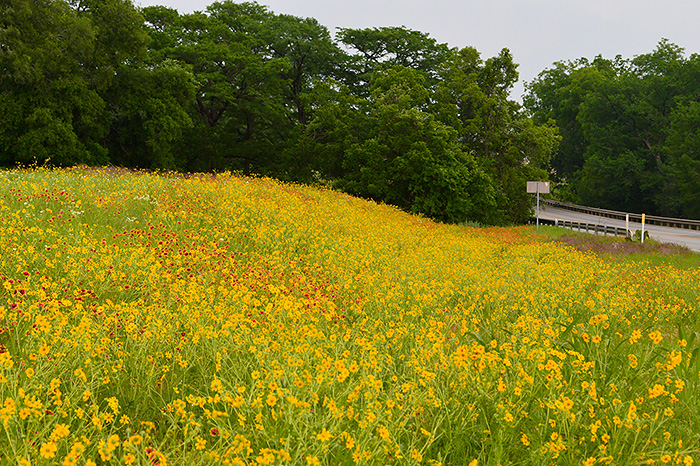
Roadsides Provide Critical Habitat for Pollinators


"Over the past 18 months, support for pollinators has undergone a seismic shift, led by President Obama, who called for a national Pollinator Task Force in the spring of 2014. Less than a year later, in a book-length "Strategy to Protect the Health of Honey Bees and Other Pollinators," the federal government set ambitious goals that include the restoration or enhancement of 7 million acres of land for pollinator habitat over the next five years. Roadsides will comprise a significant portion of that acreage..."
Read the rest of the article.

Tuesday, February 26, 2013

Spittle Bugs

We have been seeing spittle bubbling out of trees, especially in today's rain.  Might be a spittlebug.
"a fat little dark-eyed green creature about the size of a sesame seed called a froghopper nymph, so named for the adult insect's squat shape, pop eyes and leaping ability. The nymph stage is better known as a spittlebug. Froghoppers/spittlebugs insert their "beak" & suck sap through their bodies, extracting nutrients. As the liquid comes out the other end, mixed with soapy abdominal secretions, the insect puffs air into it through a special organ, blowing bubbles. The froth flows down and around the nymph (they feed facing head down), keeping it cool, moist and hidden from you (unless you look)."