Showing posts with label flowers. Show all posts

Thursday, April 18, 2024

Spring Update: NDVI Differences

Last September, I wrote about Finding the Greenest Place in AZ.  This Spring, we have continued to compare and evaluate the different NDVI difference mapping applications and compare them to the actual growth of wildflowers and grasses we see when we go out hiking.  

Methods

I conduct pre-field research to identify predicted greenness/moisture from UA's Droughtview, USGS VegDRI, and NWS Accumulated Precipitation.  I take a screenshot of each product and assign the proposed site a scale from 1 (driest) to 10 (greenest).  We then visit the area and evaluate the plant production, recording example photos of overall landscape greenness, as well as assigning a score.  The data are organized in a OneNote table.  I then compare the numerical scores in an excel table, adding up the differences between each model and the observations.  


Results

So far, the UA model seems to slightly overestimate greenness, the USGS model greatly underestimates greenness, and the NWS precipitation record comes out closest to observation.

For the UA model, I think it might be helpful to have a difference from maximum, instead of the difference from period. The latter overestimates early spring greenness when the denominator NDVI is very small, so any amount of NDVI in the numerator saturates the index.  Using the maximum NDVI for that pixel could help with this phenology issue.  Plus, % of maximum NDVI may be more intuitive than “difference from average”.

The USGS VegDRI index consistently estimates pre-drought to severe drought in areas that have above average precipitation this water year and have an NDVI above average.  This leads me to think that VegDRI 7-Day eVIIRS is either not well calibrated to the desert southwest, or perhaps that it is better used as a predictive index – perhaps these areas are drying out even though they currently appear green?  However, SWCC does not show significant vegetation drying yet in the areas I assessed.  


Examples

Wingfield Mesa:  UA Droughtview shows this area at maximum NDVI (for this time of year)(=10/10), USGS showed it as pre-drought to moderate drought (4/10) , and NWS shows 125-200% of normal year to date precipitation (9/10).  It is quite green, but it is still early in the growing season and the mesquite have not leafed out yet.  We rated it 6 out of 10.  


Dugas Rd:  UA shows above average (8/10), while USGS showed Moderate drought (3.5/10) and NWS showed slightly below average precipitation (75-90%) (3.5/10).  It is quite green right now, but again not quite at maximum greenness production.  We rated it 8 out of 10.   

Tuesday, January 02, 2024

UV Florescence

 iNat has a great project dedicated to UV florescence.  


Fluorescence generally means you’re absorbing one wavelength and emitting another. most UV flashlights emit light that is mostly invisible to humans, except for maybe a little that folks would describe as purple or pale blue.

So if you shine a UV light on something and see other colors emerge, you’ve almost certainly got fluorescence. but if you see the same purple or pale blue that your flashlight emits, then it’s possible that’s just reflection.

From left to right: visible light, UVIVF, and UV reflected light.  From: https://www.wildflower.org/magazine/native-plants/a-different-light


This article with beautiful UV and visible light photos helped me understand the difference between UV reflective and UV-induced fluorescence (UVIVF) images. However, I think many people, including the author of that article, are still confused about the biological meaning of UVIVF. For example, the False Gromwell writeup implies that insects can see UVIVF to help find flowers that are otherwise inconspicuous.

But UVIVF is never normally visible…except maybe as an added glow. The best example is laundry detergent that makes whites brighter. By adding a UVIVF chemical to the detergent, clothes actually slightly glow in any UV light, making them appear brighter.  

Meme by apermar.  Veritaseum explains more on Youtube.

Photographs of UVIVF in darkness show the extra brightness we see in sunlight, but usually don’t notice.  However, UVIVF may be biologically important to some animals, such as scorpions, frogs, and flying squirrels.  Taboada et al. (2017) documented biofluorescence in response to UV light can contribute between 18 and 29% of the total light emitted from some species of tree frogs under natural, dimly lit conditions.  

Flying squirrels fluorescence is hypothesized to aid in camouflage against a backdrop of lichens emitting similar fluorescent spectra, or potentially in Batesian mimicry of co-occurring predatory owls with similar biofluorescent profiles.

Biofluorescence could be a useful tool to document amphibians where the small, cryptically colored, and/or nocturnally active species can be hard to locate among leaf litter or dense vegetation. 

The study of UV florescence is relatively new, with new discoveries being made every year.  For example, 2017 was the first documentation (published paper) of an amphibian with natural fluorescence. A 2020 paper then found fluorescence widespread among amphibians.  iNat users had documented fluorescent amphibian from frogs starting in 2018 and salamanders in 2021.

A photo I took with a 390-405 nm (just barely UV) blacklight.  Most UV photographers use a 365nm (UV-A) flashlight, sometimes with extra filters to block all of the blue and violet light. 


More discussion of florescence can be found on the iNat forum.  

Taboada, Carlos; Brunetti, Andrés E.; Pedron, Federico N.; Neto, Fausto Carnevale; Estrin, Darío A.; Bari, Sara E.; Chemes, Lucía B.; Lopes, Norberto Peporine; Lagorio, María G.; Faivovich, Julián (2017-03-13). "Naturally occurring fluorescence in frogs". Proceedings of the National Academy of Sciences. 114 (14)

Lamb, J.Y.; M.P. Davis (2020). "Salamanders and other amphibians are aglow with biofluorescence". Scientific Reports. 10 (1): 2821.


Wednesday, October 23, 2013

Four of my Favorite Characteristic New Mexico Shrubs

Chilopsis linearis, Desert Willow.  In landscaping, this large-flowered shrub will flower for almost half the year.  It is a dependable riparian tree that can survive in washes that are too hot and dry for cottonwood.

Forestiera pubescens.  New Mexico Privet.  Native shrub in the Olive family can form thickets at the base of canyon walls and along upper benches above rivers.  Birds prize the berries almost as much as the non-native Russian Olive.

Lycium pallidum.  Pale Wolfberry.  Lyciums are widespread in the Southwestern deserts, and Lycium pallidum is the most widespread.  Goji berries are Lycium barbarum (nonnative), and Lycium pallidum has been cultivated for its fruit for 1,000s of years.  The trumpet-shaped flowers attract Sphyngid Hawkmoths and Hummingbirds.  

Robinia neomexicana.  New Mexico Robinia, Fabaceae.  Despite its rapacious thorns, this plant made my list for its tenacity and abundance across a range of habitats.  From riparian area in the South to Ponderosa hillsides in the North, Robinia provides abundant pink blossoms and herbaceous cover. 

Thursday, June 11, 2009

First Wildflowers of the Southern Rockies (for my sister)

This post is about a month late, but here goes...The First Wildflowers of the Spring! (as observed in the Sangre de Christos of Northern New Mexico)

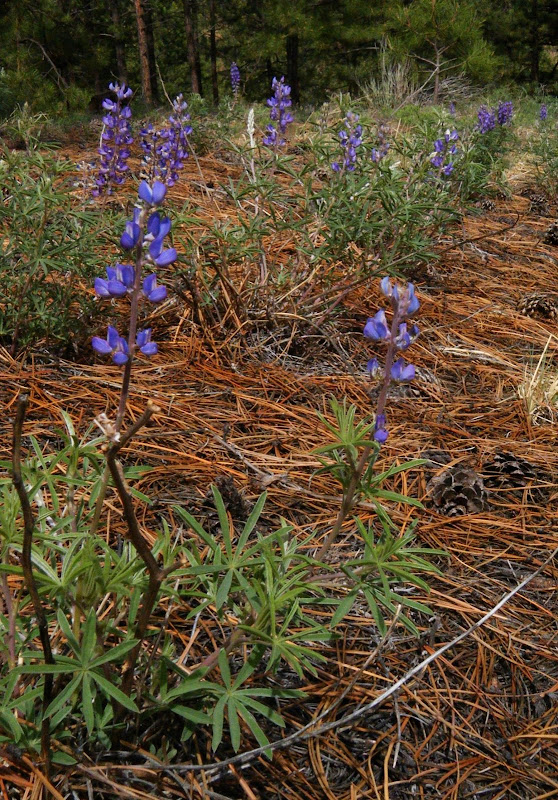
Lupine (Lupinus)
From Botanizing in New Mexico


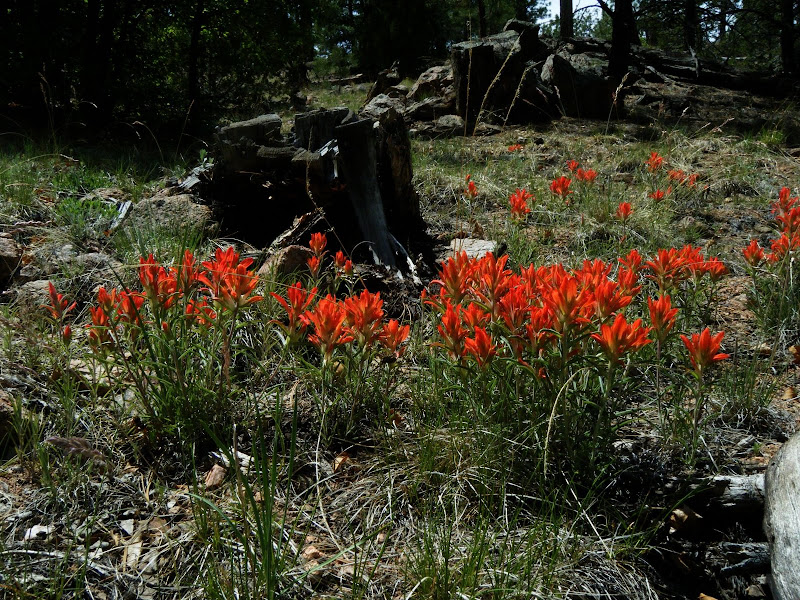
Paintbrush (Castilleja)
From Botanizing in New Mexico


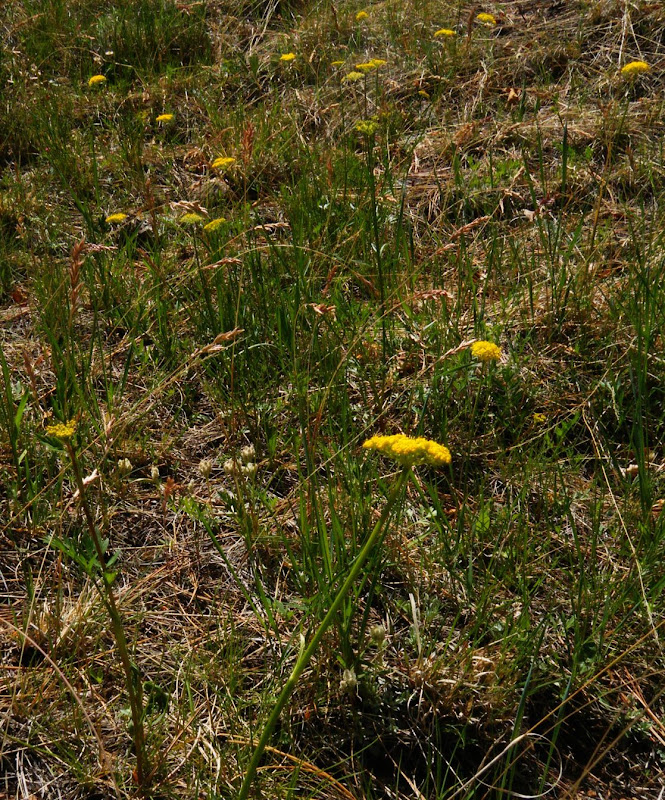
Yellow Carrot (Pseudocymopterus)
From Botanizing in New Mexico


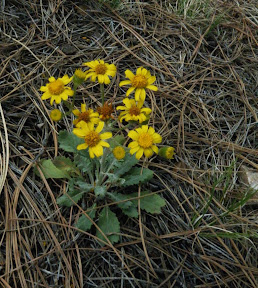
Daisy
From Botanizing in New Mexico


Draba
From Botanizing in New Mexico


Strawberry (Fragaria virginiatus)
From Botanizing in New Mexico


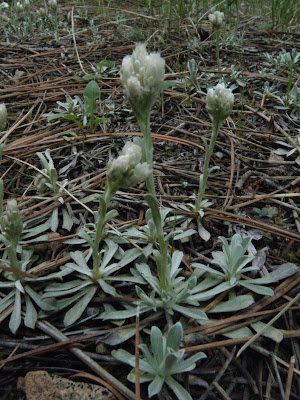
Pussytoes (Antennaria spp)
From Botanizing in New Mexico


Violet
From Botanizing in New Mexico


Clematis
From Botanizing in New Mexico


Frillary (Erodium)
From Botanizing in New Mexico


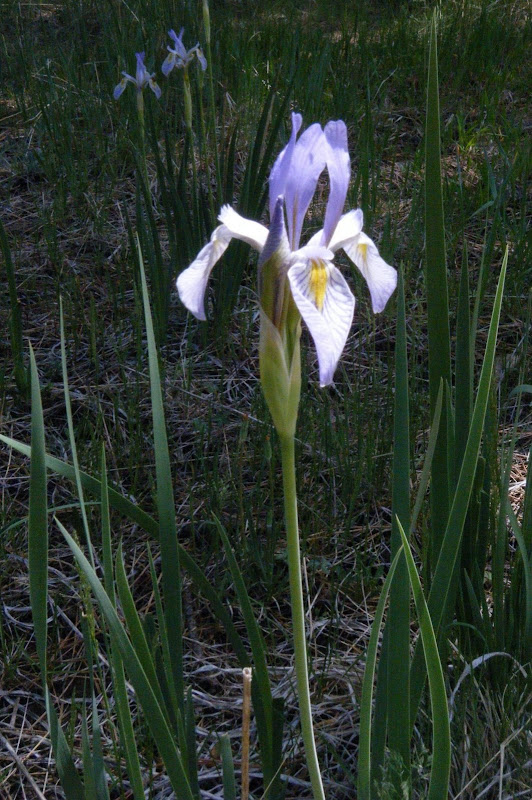
Iris
From Botanizing in New Mexico


Not pictured: Dandylion, Valerian, Senecio, thistles, Thermopsis (yellow wild pea), bluebells/chimingbells (Mertensia), orchids. Any other suggestions? How different are yours (if you live in another part of the country...)?

Tuesday, May 19, 2009

Big Tesuque Creek Hike -- Spring Wildflowers!


As one of the Southernmost perennial streams in the Sangre de Christo Range, Big Tesuque Creek, just minutes outside Santa Fe, is a hotspot of biodiversity and a popular hike/bike/equestrian trail. We visited the area a week ago, on the 12th, but came back again this week because we ran out of daylight last time. On a 3.5 mile hike along the Rosgen Class "B" (controlled by colluvial processes) we crossed the creek almost a dozen times and identified more than 40 species. There are several we could not identify, and photos of these are included first. Click on the images to view the full size.


From Big Tesuque Creek Hike -- Spring Wildflowers!


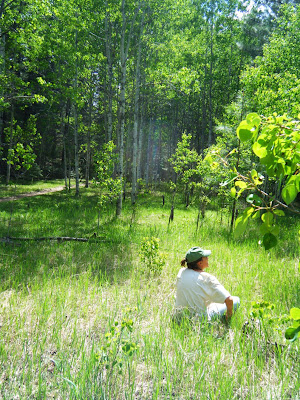
Enjoying the meadow at the upper trail junction. Since there was not much more than a couple violets, Thermopsis, Dandylions, and Mertensia (Chiming Bells), we decided to head down.

From Big Tesuque Creek Hike -- Spring Wildflowers!

Hydrophyllum.

From Big Tesuque Creek Hike -- Spring Wildflowers!

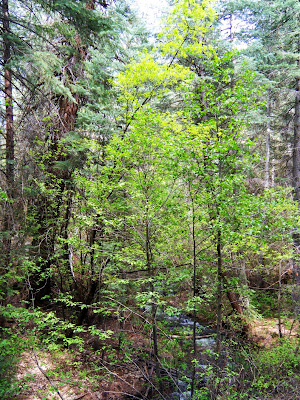
Habitat, showing mid canopy of Alder under Douglas Fir overstory.

From Big Tesuque Creek Hike -- Spring Wildflowers!
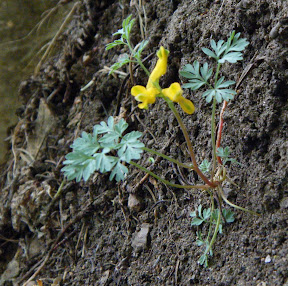
Corydalis.

From Big Tesuque Creek Hike -- Spring Wildflowers!
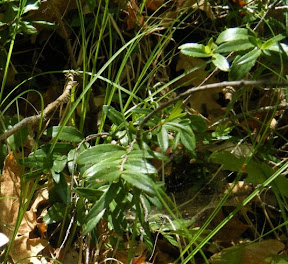
Mountain lover.


Species List

Ponderosa upland -- alder and box elder are prominent, Douglas Fir more so further up the canyon. We counted more than 40 species in flower (designated by an *)

*Tragopogon pratensis - Yellow Salsify
*Clematis columbiana - Rocky Mountain Clematis
*Lathyrus eucosmus - Wild Sweetpea
*Lupinus caudatus ssp. argophyllus - Spurred Lupine
*Many daisies
*Ash??
*Cherry
*Mertensia lanceolata - Lanceleaf Bluebells (some with white, some with blue flowers)
Heracleum maximum - Cow Parsnip
*Viola canadensis - Canada Violet
*Viola nephrophylla - Kidney-leaved Violet
*Cardamine cordifolia - Bittercress
*Valeriana arizonica
*Verbena spp?
*Androsace septentrionalis - Northern Rock Jasmine
*Aquilegia elegantula - Elegant Columbine
*Sambucus recemosa - Red Elderberry
*Actaea rubra - Baneberry
Cercocarpous montanus - Mountain Mahogany
Potentilla anserina
*Geum macrophyllum - Cut-leaves Avens
Geranium spp.
*Erysimum capitatum - Western Wallflower
*Fragaria vesca ssp. americana - Wild Strawberry
*Moehringia/Stellaria spp?
*Maianthemum racemosum - False Solomon's Seal
*Quercus spp.
*Besseya plantaginea - Kitttentails
Vaccinium myrtillus(?)
*Berberis fenleri - Fendler Barberry or Mahonia
*Acer glabrum - Rocky Mountain Maple
Plantago major - Common Plantain
*Taraxacum officinale - Dandylion
*Trollius laxus (?) Globe flower, Ranunculaceae
*Ranunculus ssp. - Buttercup
*Utah Serviceberry
*Alder
Thalictrum
*Several kinds of carrot
Gallium
*Oregon Grape
*Astragalus
*Penstemon
*Indian Paintbrush
Delphinium spp.
*Thermopsis
Wax currant
Gooseberry
*Antennaria spp.
Equisetum spp.
Box elder

I would write more but I am completely exhausted from hiking and botanizing all day.

Thursday, February 28, 2008

Dead Flowers and the Giant Juicer

As someone who's known the value of compost, I can appreciate the value of detritus in nature, especially in the desert where organic carbon is often the limiting factor in vegetative growth.
Are plants worth more dead or alive? Where does all the detritus go? Why do some ecosystems produce more dead standing matter than others? What does this say about ecosystem health or productivity? To answer these and many other fascinating ecological conundrums, ecologists would like to measure and compare the efficiency of different systems. Efficiency is conceived as the ratio of production (new tissue) to biomass (existing tissue). But,

"...there is another way of looking at the figures of productivity in relation to biomass. This is to say that biomass as we define it is a quite unrealistic way of measuring the standing crop of a community. For example, is it justifiable to treat the dead wood and bark of a tree as if they were in any direct way causally determining the rate at which that tree makes new dry matter (or fixes energy?) Nearly all the differences in community productivity that we see between community types arise because we choose to define biomass in this way. It might be much more sensible to define biomass in terms of weight of living tissue (if we could find a way to measure it)." p.720 Ecology. Begon, Harper, and Townsend.


To better compare measures of productivity the authors want to separate structural and detritus from actual living tissue. I suggest using a Giant Juicer (GJ) to strain out all the structural fibers...of course, their proposal begs the question of what it means to be "living" versus nonliving, because to measure dry weight they would evaporate the juice, leaving, at the bare minimum, most of the intracellular structural components. Are proteins alive? Maybe they should just measure the weight of DNA and RNA?


Measuring an accurate ratio of production to biomass (P:B) is useful for figuring out all kinds of stuff, e.g. how ecological succession affects productivity and whether natives or invasives sequester more carbon (i.e. are more productive). NB: since cropland productivity has been measured at utilizing nearly 10% of the available solar flux it is certain that native flora are usually suboptimal. (Limiting nutrients are the cause of suboptimal production.) But that judgement of "suboptimal" might only point to a flaw in our measurements: perhaps a long-term measure of the sustainable productivity would yield different results (organic farming?)...or perhaps this simply reiterates the hope of the Panglossian Paradigm in ecology, that natural systems are somehow "better" than man-made systems. Indeed, this does appear to be part of the assumptions of Permaculture (taking natural ecosystems as the model for our own human habitats).

It does seem that most living organisms in natural ecosystems create more habitat for other organisms simply as a side-effect of building their own tissues (parasites, detrivores) and homes (e.g. burrows, beaver dams). Humans appear to be the glaring exception to this logic, in that we more frequently destroy habitat (antibiotics, monocultures, cities) than create it.


But all these speculations must remain entirely philosophical and equivocal until my Giant Juicer can provide quantitative certainty...