Showing posts with label pollinators. Show all posts

Friday, January 05, 2024

Land Development Releases Greenhouse Gases

Land use change releases stored carbon and should be counted under Greenhouse Gas (GHG) reporting.  


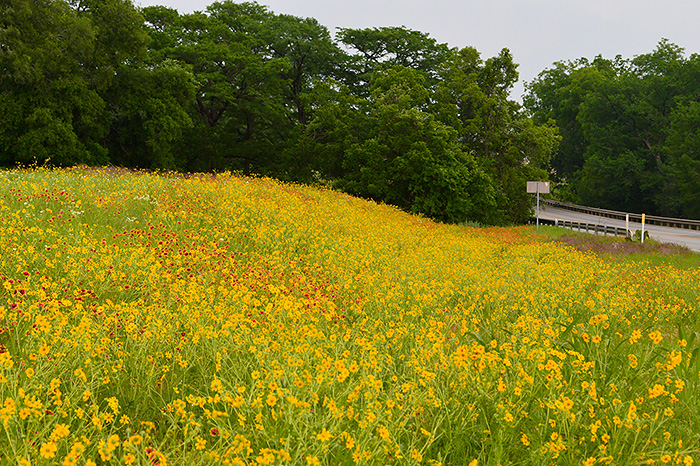
Example of a wildflower meadow (left) that was bulldozed to create a parking lot (right). This land use change results in direct emissions of stored soil carbon and plant biomass, as well as continuing opportunity costs: the meadow can no longer accumulate sequestered carbon. If this land is owned by the developing company, this would count as Scope 1 Emissions under GHG reporting requirements.

New GHG reporting standards for land use change are due to be finalized in 2024. According to these new standards,

"Companies shall:

-Account for land use change emissions from land carbon stock decreases across all carbon pools (biomass, soil organic carbon and dead organic matter).

-Account for and report direct land use change (dLUC) emissions or statistical land use change (sLUC) emissions in scope 1, scope 2, and scope 3."

This is important because, according to the IPCC AR6 (2023), land use change accounts for approximately 15% of anthropogenic emissions.  Interestingly, the parts of the land and ocean that have not been developed by humans still absorb 30% of our emissions.  As we degrade more and more land and water, the Earth loses this buffering capacity, in addition to the extra emissions created from land use change.

Tuesday, January 02, 2024

UV Florescence

 iNat has a great project dedicated to UV florescence.  


Fluorescence generally means you’re absorbing one wavelength and emitting another. most UV flashlights emit light that is mostly invisible to humans, except for maybe a little that folks would describe as purple or pale blue.

So if you shine a UV light on something and see other colors emerge, you’ve almost certainly got fluorescence. but if you see the same purple or pale blue that your flashlight emits, then it’s possible that’s just reflection.

From left to right: visible light, UVIVF, and UV reflected light.  From: https://www.wildflower.org/magazine/native-plants/a-different-light


This article with beautiful UV and visible light photos helped me understand the difference between UV reflective and UV-induced fluorescence (UVIVF) images. However, I think many people, including the author of that article, are still confused about the biological meaning of UVIVF. For example, the False Gromwell writeup implies that insects can see UVIVF to help find flowers that are otherwise inconspicuous.

But UVIVF is never normally visible…except maybe as an added glow. The best example is laundry detergent that makes whites brighter. By adding a UVIVF chemical to the detergent, clothes actually slightly glow in any UV light, making them appear brighter.  

Meme by apermar.  Veritaseum explains more on Youtube.

Photographs of UVIVF in darkness show the extra brightness we see in sunlight, but usually don’t notice.  However, UVIVF may be biologically important to some animals, such as scorpions, frogs, and flying squirrels.  Taboada et al. (2017) documented biofluorescence in response to UV light can contribute between 18 and 29% of the total light emitted from some species of tree frogs under natural, dimly lit conditions.  

Flying squirrels fluorescence is hypothesized to aid in camouflage against a backdrop of lichens emitting similar fluorescent spectra, or potentially in Batesian mimicry of co-occurring predatory owls with similar biofluorescent profiles.

Biofluorescence could be a useful tool to document amphibians where the small, cryptically colored, and/or nocturnally active species can be hard to locate among leaf litter or dense vegetation. 

The study of UV florescence is relatively new, with new discoveries being made every year.  For example, 2017 was the first documentation (published paper) of an amphibian with natural fluorescence. A 2020 paper then found fluorescence widespread among amphibians.  iNat users had documented fluorescent amphibian from frogs starting in 2018 and salamanders in 2021.

A photo I took with a 390-405 nm (just barely UV) blacklight.  Most UV photographers use a 365nm (UV-A) flashlight, sometimes with extra filters to block all of the blue and violet light. 


More discussion of florescence can be found on the iNat forum.  

Taboada, Carlos; Brunetti, Andrés E.; Pedron, Federico N.; Neto, Fausto Carnevale; Estrin, Darío A.; Bari, Sara E.; Chemes, Lucía B.; Lopes, Norberto Peporine; Lagorio, María G.; Faivovich, Julián (2017-03-13). "Naturally occurring fluorescence in frogs". Proceedings of the National Academy of Sciences. 114 (14)

Lamb, J.Y.; M.P. Davis (2020). "Salamanders and other amphibians are aglow with biofluorescence". Scientific Reports. 10 (1): 2821.


Tuesday, July 11, 2023

Xeriscaping or Zero-scaping?

 Xeriscaping is a low-water user landscaping practice in the desert Southwest.  Typically gravel or rock is used as the major groundcover, with desert-adapted plants interspersed.  Herbicides are generally used to control unsightly weeds in the gravel areas. 

Zero-scaping is when landowners skip all of the landscaping and just use herbicides to maintain dirt lots.  Unsurprisingly, the result is often phenomenally ugly.  However, this technique is extremely popular.  Why?

Herbicide-maintained zero-scaping.  The property is listed on one of the popular home-rental websites, so it has to look "presentable"!


Property line contrast.  The owner on the right has elected to let their grass grow tall, creating habitat for wildflowers and pollinators.  They usually mow it once or twice a year.

Close-up of herbicide area.  Not what I would call "presentable".


Another property owner trying to make their yard look nice.  The lush growth on the right shows what they are fighting against.

Some zero-scaping is counter-productive.  Here coir logs were used to try to control erosion.  The slope may even have been seeded.  But the over-zealous (or under-caring) landscaping company tasked with controlling weeds on the property has been very thorough in killing everything.  The result is continuing erosion into the waterway.


Monday, July 10, 2023

Are Pollinators Necessary for Food Production?

Pollinator enthusiasts claim that "1 in 3 bites of food are dependent on pollinators", but the reality is that many crops have been bred to self-pollinate.  For example, soybeans produce bean-like flowers, and many wild beans do require insect pollinators, but soybean flowers never open; they self-pollinate.  

In the wild, 70-90% of flowering plant species (angiosperms) do require an animal (usually an insect, bird, or mammal) to move pollen from one flower to another. Source. Only a few species have evolved to become self-reliant or to rely on wind.  But in human agriculture, we've selected for species that "breed true", which often means selecting for self-pollination. 

Many flowering agricultural crops would appear to need pollinators, but don't.  Or at most the pollination is optional: it doesn't hurt for insects to visit the flowers, and sometimes they help to fertilize and hence set more fruit, but they aren't strictly needed.  Although about three-quarters of crops benefit in some way from animal pollination, only about 10 % depend fully on pollinators to produce the seeds or fruits we consume, and they collectively account for only 2 % of global agricultural production. Source.

I created this table to show the AZ crops that require pollinators.


Data from Our World in Data: https://ourworldindata.org/pollinator-dependence

More information: https://en.wikipedia.org/wiki/List_of_crop_plants_pollinated_by_bees

Thursday, December 22, 2022

Plant-Pollinator Interactions in Yavapai County, AZ

 Introduction

Pollinators visit plants seeking nectar and/or pollen. Pollinators include insects (e.g. butterflies, moths, beetles, bees, wasps, flies), bats, and birds. In any geographic region, native and non-native pollinators visit native and non-native plants.

Pollinators may be specialists and/or generalists who visit plants for different reasons. For example, some pollinators specialize on the pollen of certain plant species such that they visit only certain plants to harvest pollen from them. These pollen-seeking specialists may be nectar-seeking generalists to the extent that they indiscriminately harvest nectar from any plant species.

Pollinator-plant interactions are a subject of ongoing study. In North America alone there are more than 3,600 bee species. Ecologists document pollinator-plant interactions to understand which pollinators visit which plant species and why.


Methods

We use iNaturalist—a citizen science computer application—to document our observations of pollinators and plants in the places we visit. We have five years of non-systematic observation data from Yavapai County, AZ that we use for our analysis. We looked at which plant species are most frequently visited by pollinators across different taxa. This will help us better understand which local plant species are popular amongst pollinators.

We annotated five years of pollinator observation records from Yavapai County, AZ with the scientific name of the plant species each pollinator is visiting. Our database includes a total of 265 distinct counts of pollinator-plant interactions (note this is different from the number of observations).

Here is a link to our current plant-pollinator interactions in iNat.

There are some notable issues that exist with our data:

·        We did not systematically collect the data. We did not employ ecological sampling methods, we did not sample data at regular intervals of time, and we did not take measures to ensure we systematically sought observations of pollinators across distinct plant taxa in unbiased ways. Therefore, our dataset contains bias.

·        We are analyzing our dataset for fun. Since the data contain unintentional bias, we do not intend for the results of our analysis to be reliable for landscape or species management decisions.

·        Our data contain blank fields (unknowns) at the level of insect taxon family, genus, and species. Because we cannot fill in the blanks with reliable data, we conduct our analysis at the level of insect taxon (e.g. insect family, genus, or species).

·        Our database’s plant records contain plant taxa information at the level of genus and species.

See this post for more thoughts on the limitations of this type of analysis.


Total insect taxa associated with plant genera


Count of distinct insect taxa associated with the top ten plant genera by month

This graph reflects the top ten plant genera ranked according to the counts of distinct insect taxa associated with them. In our database, we have data for many more plant genera than those shown.

The top ten plant genera include Asclepias, Baccharis, Ceanothus, Cirsium, Dalea, Ericameria, Helianthus, Hymenothrix, Machaeranthera, and Opuntia. 

There may be more associations between distinct insect taxa and plant genera during the summer months of June, July, and August but they are not reflected in this graph because we didn’t observe them due to extreme heat and/or monsoon rains.


This project and data analysis were a collaboration between Conor Flynn and Alexandra Permar.  

Sunday, December 11, 2022

High Mowing's 2023 Organic Seed Catalog

 Things I learned from High Mowing Organic Seeds's 2023 Catalog

Grafting: in vegetables, only used for tomatoes. Instead of transplanting, graft onto established roots.

I remember hearing some drivel about how tomatoes aren't vegetables, they're a fruit.  But, botanically, half of the vegetables are fruits.  Beans, cucumbers, eggplant, melons, okra, peppers, pumpkins, squash, tomatoes, watermelon, zucchini.  I don't hear anyone proclaiming "green beans are fruits!"

Most category-consistent omission:  strawberry seeds. It’s a berry, not a vegetable!  Even though they are often grown as annuals, maybe they are marketed under the category of fruit trees and perennial fruit bushes...

Spinosad and Bt are popular organic insect pest controls and are non toxic to humans and, if used correctly, mostly harmless to beneficial insects. 

Most surprising omission: sweet potatoes seeds.  Maybe because HM are mostly focused on northern crops?  Also surprisingly limited selection of collard greens, okra and swiss chard.   I noticed on the HM website that all of the conference/expos they attend are in Northern-tier states.

Least surprising omission:  cannabis seeds.  Cash crop anyone?

Most interesting omission:  mushroom seeds.   Inoculant is very popular in some areas, but with mixed success.  Is the omission a sign of lack of interest?

Most organic omission:  Imperator-type carrots.  The main type sold commercially (even "baby carrots" are whittled from these), and HM has all of the other types:  Nantes, Danvers, Chantenay… the catalog sometimes references mainstream conventional varieties of other vegetables (e.g. "Payday") but doesn't include them.  Seems organic breeders have mostly focused outside the mainstream.

Interesting which vegetables don't have disease resistance traits.  Do they not need it or has it not been selected yet?

Most confusing "seeds":  potatoes.  Apparently no one grows potatoes from seed.

Lowest-common denominator certification:  Non-GMO Project.  Is this the cheapest certification or just the best marketing logo?  Either way this seems to be the go-to certification for everything.  I have friends who say they won't buy GMO.  But organic?  Regenerative?  Bee Better?  Too expensive, what, what?  I guess it does make sense for High Mowing since they sell corn and soy. 

Pollinators

I was surprised there wasn't more mention of pollinator requirements.  Which vegetables need pollinators?  All of the fruits… 

But peas and soy can self-pollinate.  Corn should be planted in blocks so it can be wind-pollinated.

Gynoecious and monoecious cucumbers need to be planted with another variety for pollination. Parthenocarpic cucumbers don't need pollinators (= good for greenhouses). 

Seedless watermelons :  one variety needs pollination from a different variety. 

The insect apocalypse is real.  This summer I heard from people in different parts of the country who had to hand-pollinate their squash because they couldn't get any fruit otherwise.  I visited a remnant prairie patch in Ohio in July that was in full flower, but completely silent and devoid of insect life.  All blooming and no buzzing.

Hybrid vs OP vs Heirloom

Seed saving controversy:  Advocates like Bill McDorman make hybrid seeds seem almost immoral.  He claims seed-saving as an inalienable right of indigenous and small-holder farmers everywhere.  But its hard.  His very interesting book* gives detailed specifications for how far apart you have to plant different varieties to avoid cross-pollinating, in-breeding depression, or outbreeding depression.  I wonder how many farmers save seed?

Descriptions in HM imply that hybrids are better than OP.  Also interesting how many varieties are protected (from seed-saving) by UP or PVP. 

References

Bill McDoman. Basic Seed Saving: Easy step by step instructions for 18 popular vegetables. 

 Attachments

Excerpt from a conventional seed catalog.

SeedGenetics2023.png

Friday, November 11, 2022

Popular plants for Monarch butterflies in Northern Arizona

**Updated 11/16/2022 


As of November, 2022, there were 260 observations on iNaturalist of monarch butterflies in the northern half of Arizona - basically everything north of Phoenix.  I analyzed these observations to try to identify which plants are most important nectar food sources.


iNat link.


I filled in the Life Stage annotation for all larva and pupa.  There are 62 observations of larva (caterpillars), 1 observation of a pupa, and 197 observations of adult butterflies.

The number of monarchs photographed each year has declined from a high of 75 observations in 2015 to an average of 55 a year in 2021 and 2022.  Since the number of iNat users and observations has increased more than 100x since 2014, it seems that the last 2 years represent more effort with less observations, indicating a possible decline in abundance.


For the adults, I annotated the observations using the Observation Field "Nectar / Pollen delivering plant" when I could ID the flower the monarch was observed on.  In some cases, the adult could be observed drinking nectar; in many other cases I assumed that a monarch adult resting on a flower was obtaining nectar.

In total, 71 adult monarchs appear to be drinking nectar from flowers that are identifiable to species or genus.  I documented 27 different plant species being used as nectar resources by monarchs.  This is a large diversity of plant species, considering that this data set included only 71 total observations of monarchs on flowers.

iNat link.

By far the most common plant species was Asclepias subverticillata, the common weedy milkweed species of northern AZ, and also a great plant for monarch caterpillars.  It is possible that some adults were just resting on the milkweed flowers in the process of depositing eggs on the plants, rather than drinking nectar.  Either way, clearly milkweed are important to monarchs.  This species is also popular with a diverse group of other pollinating insects.

Several aster species were also common nectaring plants, as well as butterfly bush (Buddleja), a planted ornamental that apparently lives up to its name!


Monarch presence in Northern Arizona is strongly seasonal, with most adults observed in late summer (August-September), so it is not surprising that some of the late summer Asteraceae such as Ericameria, Helianthus, Bidens and Heliomeris are popular nectar sources.  Since monarchs are generalist pollinators, this data could be consistent with opportunistic (no preference) nectaring.

However, there are many other common plant species flowering during September (such as Gutierrezia sarothrae, Dieteria canescens, Datura wrightii, Purshia stansburyana, Verbascum thapsus, Geranium caespitosum, Achillea millefolium), and no monarchs in this data set were observed nectaring on them. This suggests that monarchs do prefer certain species over others.


Also, there is the question whether the adults observed on flowers during August--October are migrating adults, mating adults, or newly metamorphosed adults.  Given that we do see caterpillars in September, and it takes about 30 days for a monarch egg to grow into an adult, it is likely that all three types of adults are making use of nectar resources in Northern Arizona.  


Caveats and Conclusions

Any mistakes or omissions are my own. I may have misidentified some flower species, but I don't think that would change the overall conclusions.

The small sample size limits the conclusions that can be drawn; more observations are urgently needed to better establish monarch plant preferences.  

Also, this data is subject to the biases of  the "citizen scientists" who use iNaturalist to document biodiversity.  They may be more likely to photograph monarchs on showy flowers, in areas near their homes (landscaped yards and ruderal/disturbed natural environments), and at convenient times of day.

Therefore, this study might be best used to help guide planting decisions to support monarchs in areas near where people live.


Acknowledgements

Thanks to iNaturalist user jdmore who created an excellent wiki explaining how to use the iNat search URLs to filter results, which was a crucial step to analyze this data.

Also, thanks to all of the iNaturalist community, including the 107 people who observed monarchs in the study area, and the 123 people who helped identify them.

Thursday, November 10, 2022

Is measuring biodiversity possible for non-experts?

I’m trying to measure pollinator biodiversity using iNaturalist, but I’m having doubts as to whether this is even possible for a non-expert.

Over the last five years I’ve photographed insects on flowers in my area, with the goal of creating a summary of total pollinator species per plant species per month. I'm using an Observation Field to associate the plant species with the insect Observation:  https://www.inaturalist.org/observations?place_id=1823&user_id=conorflynn&verifiable=any&field:Nectar%20%2F%20Pollen%20delivering%20plant=

I knew from the beginning that this would not be a perfect research study because I’m not systematically sampling the flowers with equal effort and equal time, and I knew I wouldn’t be able to ID every insect, due to the quality of my photographs.

But I hadn’t considered that the level of taxonomic ID could bias the total species counts. Even if I could ID every photograph to Genus, some Genera have dozens of species while others only have a few. Even worse, some taxa have more people helping ID and therefore have more detailed IDs, whereas other taxa have less interest and are stuck at Family level IDs.  

I think this makes comparing pollinator diversity difficult or impossible on iNaturalist. At best I could say something about how many different Genera or Families visit a particular species of plant --  but I’m not sure how important genera- of family-level biodiversity is...

iNaturalist is a great platform for documenting species observations, but now I think the utility of the data is taxa-specific.  For example, I recently went to a talk about rare talussnails and springsnails in AZ, and the speaker advocated using iNaturalist to document observations.  But how could he ID the rare species from iNat photos?  He just does it based on geography.  There’s no way to discover new snail species or new locations on iNat; DNA studies are needed for new populations to ID whether they are a new or existing species. 

I’d also hoped that I might be able to document new specialist pollinator-plant interactions, but I learned in The Bees in Your Backyard (the definitive bee ID book for North America) that even pollen specialists can be nectar generalists, so I don’t know how one would discover specialist interactions from photographs?  Do researchers have to analyze pollen grains on collected bee specimens??

Wednesday, November 02, 2022

Arizona Monarchs Visit California and Mexico

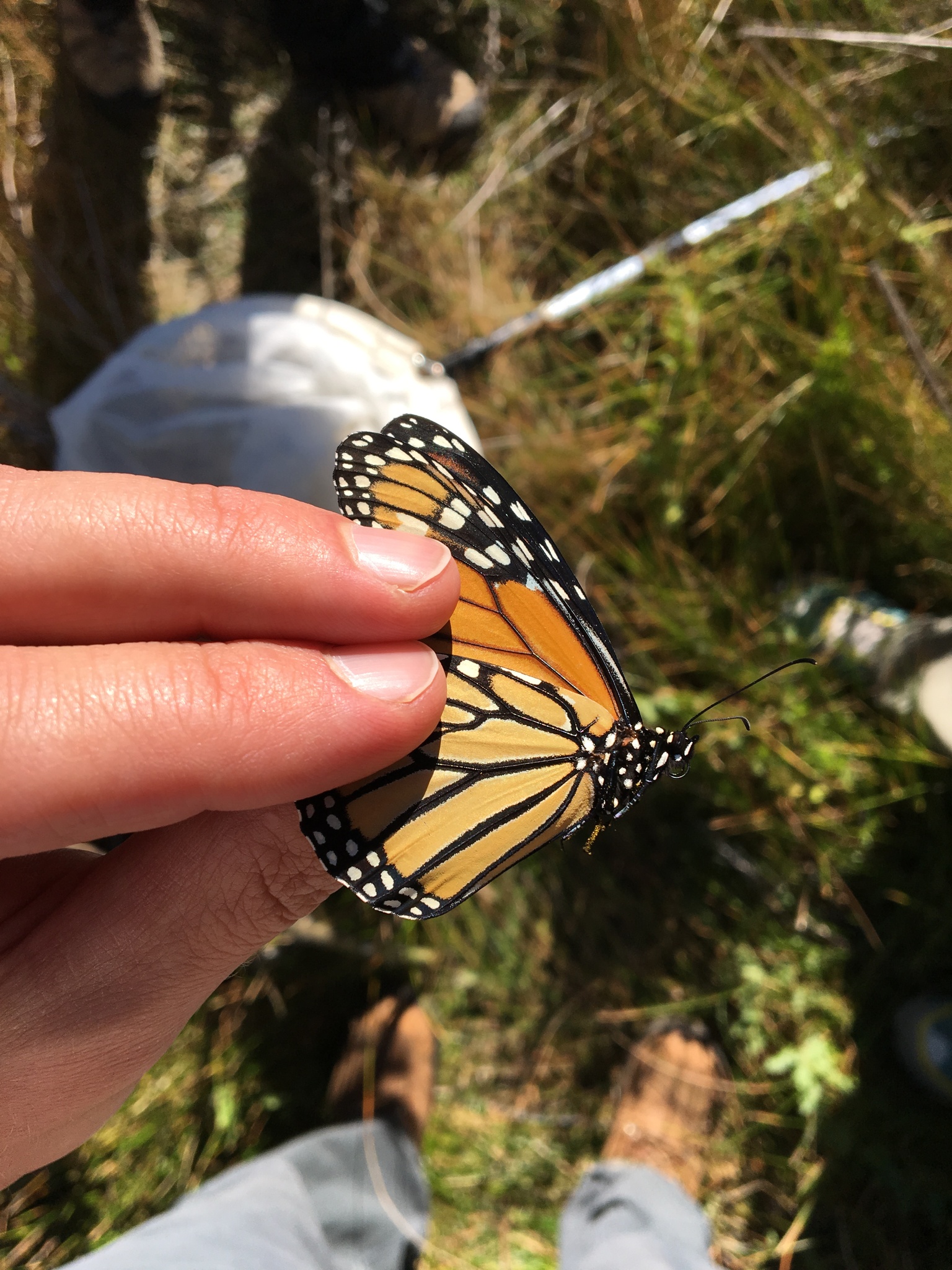
 Five years ago my wife and I joined other local citizen scientists at Willow Lake for an enjoyable afternoon catching and tagging monarch butterflies.  The tags are small stickers with ID numbers.  They  don't impair the butterfly's ability to fly, but they do let us humans track where they fly to!


A monarch in the hand.

 The Southwest Monarch Study group recently updated their map showing the location of recovered tags.  The straight lines indicate starting and ending locations, not necessarily the meandering paths monarchs take to migrate across the landscape. 

Image from Southwest Monarch Study.  

  Over the ensuing years, those tagged butterflies have turned up as far away as the monarch's overwintering grounds in Mexico. Interestingly, they also visit California overwintering sites.  Most monarch populations can be neatly divided into Eastern and Western populations based on where they spend the winter; Eastern go to Mexico and Western go to California.  But it seems AZ monarchs can go to either, which raises the fascinating question: how do they decide where to go?  Is AZ a meeting spot for different populations, and each return to their home wintering sites, or is AZ a melting pot, a single population where individuals decide each year where to overwinter?

Hopefully this citizen science research will help resolve some of the question marks on monarch migration maps.

Monarch migration map from Xerces.


Monarch migration map from Monarch Watch. 


Monday, September 19, 2022

Rusty Patched Bumble Bee Critical Habitat


Rusty patched bumble bee range map.

USFWS listed the rusty patched bumble bee (Bombus affinis) as Endangered in 2017 due to a marked decrease in the range and size of populations across the Eastern U.S.  

As one of the first insect species to be listed under the Endangered Species Act, it offers an interesting case study for the way USFWS may approach other insects proposed for listing, including the Monarch butterfly, and numerous other bumble bee species.

From Xerces Society Listing Petition, 2016.

The listing petition states that "the rusty patched bumble bee probably needs floral resources to be located in relative close proximity to its nest sites, as studies of other bumble bee species indicate that they routinely forage within less than one kilometer from their nests ... although in some cases nearly two kilometers ... [It] is likely dependent upon woodland spring ephemeral flowers, since this bumble bee emerges early in the year and is associated with woodland habitats.....Rusty patched bumble bee queens are one of the earliest species to emerge, with observations as early as March and April."

Interestingly, rather than designate critical habitat based on the habitat needs of the species, USFWS chose to designate "High Potential" zones (e.g. critical habitat) as 1 mile buffers, and "Low Potential" zones as 4 mile buffers, around known (since 2006) sightings of the rusty patched bumble bee:


USFWS Map showing "High Potential" and "Low Potential" zones.  


Detail showing example 2x2 mile rusty patched bumble bee "High Priority" habitat in DeKalb, IL from USFWS map.  The buffered area seems to be based on a sighting at Prairie Park, and includes residential and industrial developments.  The only habitat in the area is within Prairie Park.  


USFWS has issued the guidance on whether consultation is required.  For vegetation management activities within the High Potential zones, the guidance provides the following test questions:
  • Is there habitat for nesting, foraging, and/or overwintering for the rusty patched bumble bee in the action area or will the proposed action restore habitat for the species in the action area? 
  • Will the action cause effects to vegetation in rusty patched bumble bee habitat in the High Potential Zone during the nesting period? Effects could occur as a result of mowing, cutting, grazing, prescribed fire, tree removal, spot-application of herbicide, tree clearing, and/or other activities. 

Based on this case example, it seems likely that USFWS will take a similar approach when listing other bumble bee species.  Specifically, it seems likely USFWS will only designate habitat immediately surrounding recently documented sightings, as opposed to using a general habitat model across the species' range.  Then, Section 7 consultation will be required for any activities that disturb habitat during the nesting period (i.e. growing season).

This seems to be the assumption underlying this Story Map, which shows small polygons of habitat as buffers around representative observations.  Note that the actual locations in this map are not accurate because the underlying observation data has been randomized to protect populations of rare species. 

This map of rusty patched bumble bee habitat around DeKalb, IL schematically shows the kind of habitat USFWS designated (i.e. buffered polygons around point observations) but does not show the accurate locations of the habitat because the data used for the map (GBIF) is randomized within 0.2 by 0.2 latitude/longitude rectangles.  

Wednesday, September 16, 2015

Roadsides Provide Critical Habitat for Pollinators


"Over the past 18 months, support for pollinators has undergone a seismic shift, led by President Obama, who called for a national Pollinator Task Force in the spring of 2014. Less than a year later, in a book-length "Strategy to Protect the Health of Honey Bees and Other Pollinators," the federal government set ambitious goals that include the restoration or enhancement of 7 million acres of land for pollinator habitat over the next five years. Roadsides will comprise a significant portion of that acreage..."
Read the rest of the article.

Wednesday, October 23, 2013

Four of my Favorite Characteristic New Mexico Shrubs

Chilopsis linearis, Desert Willow.  In landscaping, this large-flowered shrub will flower for almost half the year.  It is a dependable riparian tree that can survive in washes that are too hot and dry for cottonwood.

Forestiera pubescens.  New Mexico Privet.  Native shrub in the Olive family can form thickets at the base of canyon walls and along upper benches above rivers.  Birds prize the berries almost as much as the non-native Russian Olive.

Lycium pallidum.  Pale Wolfberry.  Lyciums are widespread in the Southwestern deserts, and Lycium pallidum is the most widespread.  Goji berries are Lycium barbarum (nonnative), and Lycium pallidum has been cultivated for its fruit for 1,000s of years.  The trumpet-shaped flowers attract Sphyngid Hawkmoths and Hummingbirds.  

Robinia neomexicana.  New Mexico Robinia, Fabaceae.  Despite its rapacious thorns, this plant made my list for its tenacity and abundance across a range of habitats.  From riparian area in the South to Ponderosa hillsides in the North, Robinia provides abundant pink blossoms and herbaceous cover.