But before I get ahead of myself, why is BH4 so important?
Tetrahydrobiopterin (BH4) has five major responsibilities as a cofactor. It is needed to work with:
Tryptophan hydroxylase (TPH) for the conversion of L-tryptophan (TRP) to 5-hydroxytryptophan (5-HTP)
Phenylalanine hydroxylase (PAH) for conversion of L-phenylalanine (PHE) to L-tyrosine (TYR)
Tyrosine hydroxylase (TH) for the conversion of L-tyrosine to L-DOPA (DOPA)
Nitric oxide synthase (NOS) for conversion of a guanidino nitrogen of L-arginine (L-Arg) to nitric oxide (NO) in the Urea Cycle
and
Alkylglycerol monooxygenase (AGMO) for the conversion of 1-alkyl-sn-glycerol to 1-hydroxyalkyl-sn-glycerol
The first three reactions are critical to producing adequate levels of serotonin and dopamine. Low levels of BH4 can impair neurotransmitter production and lead to the build up of toxic intermediates, like phenylalanine.

This chart shows that without BH4 phenylalanine (found in all foods) is not converted to tyrosine. Tyrosine one of the 22 amino acids used to build protein and is normally non-essential. It is found in most foods.
BH4 is synthesized in four ways:

BH4 is involved in the major biochemical cycles:

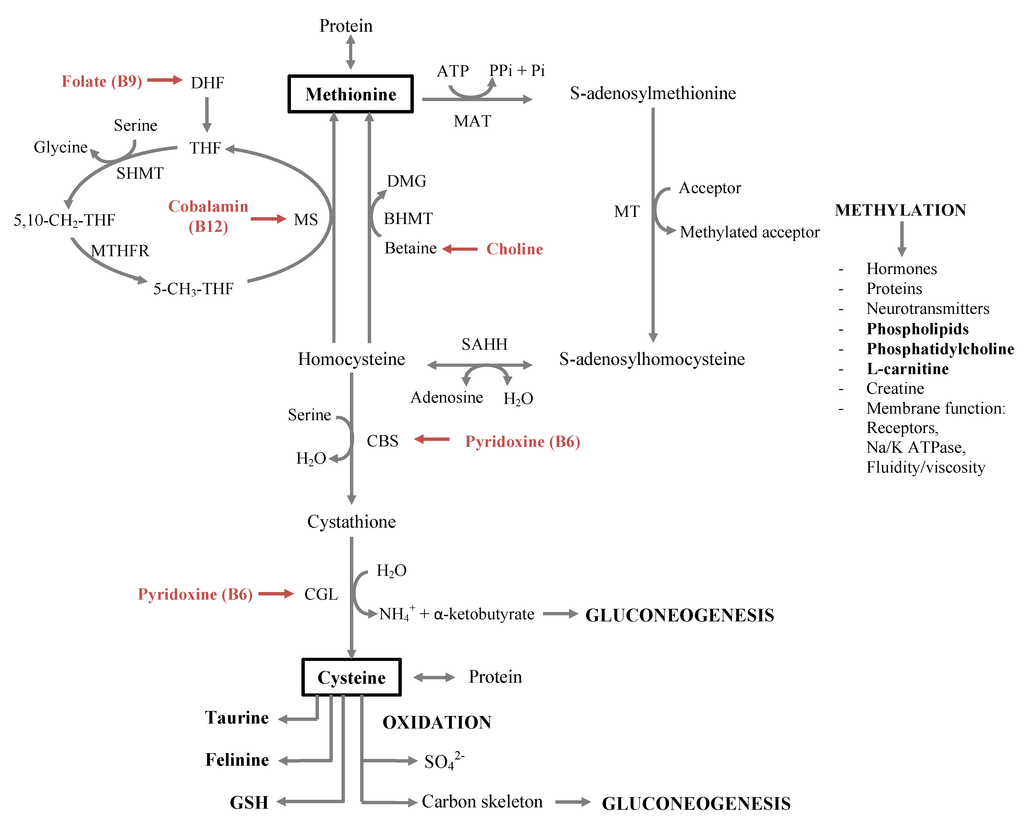
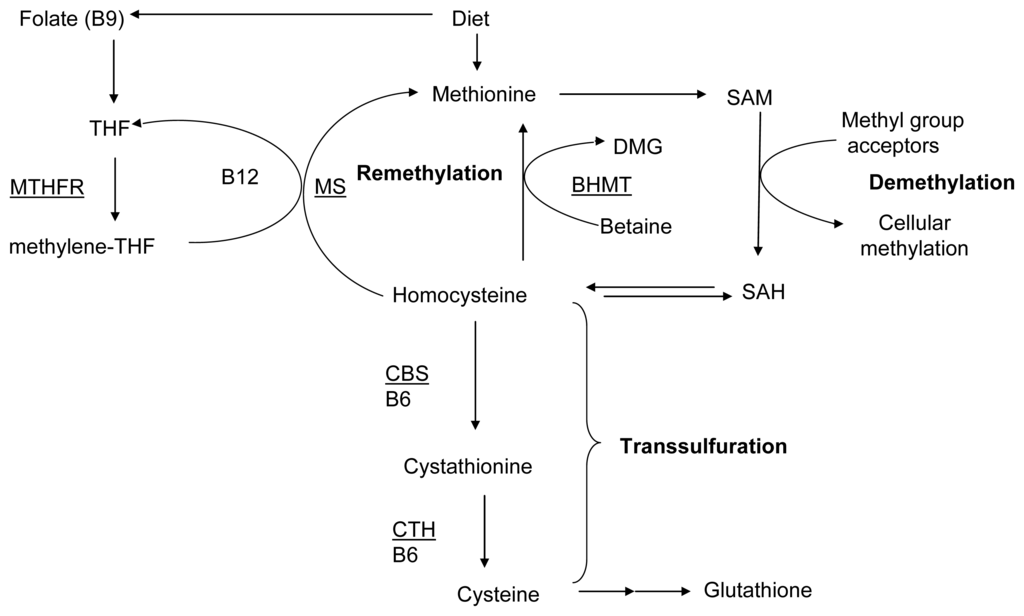
Methionine is a major source of sulfur groups in the diet, so limiting methionine-rich foods helps limit problems from an overactive transulfuration pathway (i.e. overactive CBS enzyme). Other sulfur rich foods include crucifer vegetables and onions and garlic.
BH4 is tangentially involved in both the urea cycle and the folate cycle.
The urea cycle in detail: Arginine from our diet or from protein metabolism is converted to ornithine and urea by the enzyme Arginase. Ornithine is then converted to citrulline by ornithine transcabamoylase (OTC). Citrulline is converted back to arginine. This cycling of Arginine through the various intermediates is what converts ammonia to urea. (More info)

Source.
Arginine is also required for the production of Nitric Oxide (NO) by the enzyme nitric oxide synthase (NOS or eNOS). This reaction is dependent on the levels of BH4 available from the BH4 cycle. Remember two molecules of BH4 are needed to generate Citrulline and NO. One molecule of BH4 will in turn generate peroxynitrite and if there is no BH4, super oxide is formed. (Source. )
The Urea Cycle and the Nitric Oxide Cycle are interconnected by arginine as follows: Citrulline, made from ammonia (and ornithine), is recycled to arginine in the Urea Cycle. That arginine can then enter the Nitric Oxide Cycle where it is converted to nitric oxide by nitric oxide synthase using tetrahydrobiopterin (BH4). (Note that citrulline is also generated during the formation of nitric oxide from arginine.)
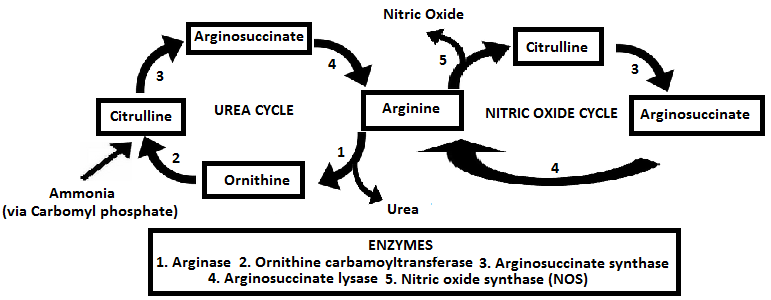
From this we can conclude that a deficiency in BH4 does not impact ammonia detoxification in the urea cycle.
Tryptophan hydroxylase (TPH) for the conversion of L-tryptophan (TRP) to 5-hydroxytryptophan (5-HTP)
Phenylalanine hydroxylase (PAH) for conversion of L-phenylalanine (PHE) to L-tyrosine (TYR)
Tyrosine hydroxylase (TH) for the conversion of L-tyrosine to L-DOPA (DOPA)
Nitric oxide synthase (NOS) for conversion of a guanidino nitrogen of L-arginine (L-Arg) to nitric oxide (NO) in the Urea Cycle
and
Alkylglycerol monooxygenase (AGMO) for the conversion of 1-alkyl-sn-glycerol to 1-hydroxyalkyl-sn-glycerol
The first three reactions are critical to producing adequate levels of serotonin and dopamine. Low levels of BH4 can impair neurotransmitter production and lead to the build up of toxic intermediates, like phenylalanine.
This chart shows that without BH4 phenylalanine (found in all foods) is not converted to tyrosine. Tyrosine one of the 22 amino acids used to build protein and is normally non-essential. It is found in most foods.
BH4 is synthesized in four ways:
BH4 is involved in the major biochemical cycles:
Methionine is a major source of sulfur groups in the diet, so limiting methionine-rich foods helps limit problems from an overactive transulfuration pathway (i.e. overactive CBS enzyme). Other sulfur rich foods include crucifer vegetables and onions and garlic.
BH4 is tangentially involved in both the urea cycle and the folate cycle.
The urea cycle in detail: Arginine from our diet or from protein metabolism is converted to ornithine and urea by the enzyme Arginase. Ornithine is then converted to citrulline by ornithine transcabamoylase (OTC). Citrulline is converted back to arginine. This cycling of Arginine through the various intermediates is what converts ammonia to urea. (More info)
Source.
Arginine is also required for the production of Nitric Oxide (NO) by the enzyme nitric oxide synthase (NOS or eNOS). This reaction is dependent on the levels of BH4 available from the BH4 cycle. Remember two molecules of BH4 are needed to generate Citrulline and NO. One molecule of BH4 will in turn generate peroxynitrite and if there is no BH4, super oxide is formed. (Source. )
The Urea Cycle and the Nitric Oxide Cycle are interconnected by arginine as follows: Citrulline, made from ammonia (and ornithine), is recycled to arginine in the Urea Cycle. That arginine can then enter the Nitric Oxide Cycle where it is converted to nitric oxide by nitric oxide synthase using tetrahydrobiopterin (BH4). (Note that citrulline is also generated during the formation of nitric oxide from arginine.)
From this we can conclude that a deficiency in BH4 does not impact ammonia detoxification in the urea cycle.


.jpg)
