Friday, January 28, 2011

Mark W. Moffett


Mark W. Moffett, who has been called "The Indiana Jones of Entomology," delivered the Museum of Biological Diversity's Annual Pubic Lecture, at 7 p.m. Friday (1/28). Moffett has penned more than 20 articles for National Geographic, which has featured nearly 500 of his images. The lecture was titled "Adventures Among Ants: One Man's Remote Explorations to Chart an Alien Social World," and dealt with how ant civilization parallels human civilization. He also has a new book out.

Explanations of Diversity in Amazonia

Dr. William Balée, Professor of Anthropology at Tulane University combined ecological and anthropological research to show that biological diversity in Amazonia is tied to prehistoric and continuing native agricultural and cultural practices. Great species lists! Intriguing idea: that humans can live in harmony with nature and anthropogenic landscapes can add to ecological diversity.

Wednesday, January 26, 2011

Dreamlines

http://www.solaas.com.ar/dreamlines/

Evolving Positive and Negative Affect?

In Don Norman's book, Emotional Design: Why We Love or Hate Everyday Objects, he lists some of the factors that Decision Science implicates as innately predisposing humans to either positive or negative affect:

"What are people genetically programmed for? Those situations and
objects that, throughout evolutionary history, offer food, warmth, or protection
give rise to positive affect. These conditions include:

warm, comfortably lit places,
temperate climate,
sweet tastes and smells,
bright, highly saturated hues,
“soothing” sounds and simple melodies and rhythms,
harmonious music and sounds,
caresses,
smiling faces,
rhythmic beats,
“attractive” people,
symmetrical objects,
rounded, smooth objects
“sensuous” feelings, sounds, and shapes.

Similarly, here are some of the conditions that appear to produce automatic
negative affect:

heights,
sudden, unexpected loud sounds or bright lights,
“looming” objects (objects that appear to be about to hit the observer),
extreme hot or cold,
darkness,
extremely bright lights or loud sounds,
empty, flat terrain (deserts),
crowded dense terrain (jungles or forests),
crowds of people,
rotting smells, decaying foods
bitter tastes,
sharp objects,
harsh, abrupt sounds,
grating and discordant sounds,
misshapen human bodies,
snakes and spiders,
human feces (and its smell),
other people’s body fluids,
vomit. "

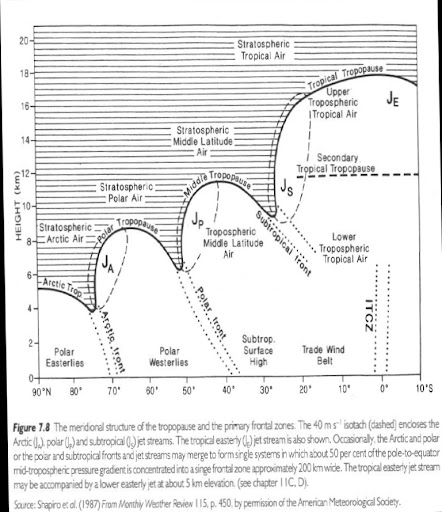
Maps of the Upper Atmosphere


Google Ngrams


ngrams

Saturday, January 22, 2011

Climatology Indicators: PDO, ENSO, etc

Warm Phase Cool Phase

Pacific Decadal Oscillation. We are likely moving into the cool phase of this oscillation, when sea surface temperatures along the West Coast are, on average, a bit cooler than normal.
PDO: http://cses.washington.edu/cig/pnwc/aboutpdo.shtml

For watching changes in ENSO, MJO, blocking, and teleconnections like the AO and NAO:
http://www.cpc.ncep.noaa.gov/products/precip/CWlink/MJO/climwx.shtml

Patterns in 500mb height
http://www.cpc.ncep.noaa.gov/products/intraseasonal/z500_nh_anim.shtml

Microbiome and Disease: Experimentation, Gulf War Syndrome, and Mycoplasma


Humans are host to a large number of bacteria which may influence health and disease. Whether or not any given microorganism, such as E coli, becomes pathogenic is not understood. What is becoming increasingly clear is that, in addition to exogenous influences such as diet and exercise, endogenous factors such as bacteria (and genetics!) are crucial determinants of human health. Carl Zimmer, science writer, has proclaimed: "I, for one, welcome our microbial overlords!" after reviewing recent research establishing that certain bacteria can lead to obesity. His famous New York Times fecal transplant article is here.

In the absence of scientific certainty, groups of concerned citizens have begun moving forward, experimenting with antibiotics and probiotics to try to nudge the population dynamics of their microbiome toward healthier states. This emerging field, combined with the failure of the medical community to communicate and collaborate with patients who are sick and aren't being helped by currently available diagnosis or treatment has created fertile ground for web-based DIY experimentation. The community of Chronic Fatigue Syndrome sufferers in particular have latched onto research examining possible links between a tiny gram-negative bacterium called Mycoplasma fermentans and Gulf War Syndrome. The bacteria, which can apparently be a member of normal human microbial flora, is implicated in the vague symptoms of GWS, and by extension, CFS. A definitive book on GWS found little evidence to suggest such a link, but the initiator the research, Dr. Nicholson, has forged ahead nonetheless, starting a nonprofit research lab to investigate and link between Mycoplasma fermentans and health problems.

It is unfortunate that so much of the information available online is anecdotal. If these types of alternative medical practices could keep better data it may be possible to scientifically evaluate them. However, in the absence of peer-reviewed double blind trials, it appears many people are simply grasping for any treatment that offers hope, no matter how unsupported. Indeed, the scientific jury is still out, and this developing field may see fringe transformed into mainstream.

Research into M. fermentans is certainly controversial, but continuing: see, for example:


Kawahito et al. Mycoplasma fermentans glycolipid-antigen as a pathogen of rheumatoid arthritis. Biochemical and Biophysical Research Communications. 2008;369(2):561-566.

Thursday, January 20, 2011

Economic Incentives and Water Quality in Ohio

Brent Sohngen, a professor in Ohio State University’s Department of Agricultural, Environmental and Development Economics, presented “Economic Incentives and Water Quality in Ohio”, an interesting talk about paying farmers for the reductions in runoff pollution they deliver. This economics-inspired approach differs from that typical of Soil and Water Conservation grants that pays for specific installations like riparian buffer strips, containment ponds for sewage, and conservation research program fallow fields.

Dr. Sohngen experimentally signed a contract that would pay farmers for pollution reductions in a small watershed in West Ohio. Unfortunately pollution increased when one of the farmers in the watershed decided to double his hog production. Still, Dr. Sohngen thinks the technique has promise, given that the farmers were responsible for more pollution than a nearby town's wastewater treatment plant. Given what we are willing to pay to upgrade the plant, shouldn't we be willing to pay a similar amount to the farmers?

I like the idea, but the economic logic seems to falter because it is based only on what society is willing to pay, not the cost to the farmer. I would have liked to ask about how much money, given the farmer's decision to invest in additional hogs, it would actually take for the farmer to pollute less. What is the opportunity cost of reduced pollution?

Tuesday, January 18, 2011

20th Century Weather Data


It is possible to graphically plot weather data from any point on the Earth from any date over the last 100-or so years using GrADS software and data from NOAA's NOMADS data access platform. Or see a summary of other data sources.