Saturday, July 25, 2009

Welcome to the Jungle (Western Washington Temperate)

the maritime pacific northwest, the land of giant-sized plants, everything flowering, 16 hours of sunlight, 2 hour sunsets, and all the beer and meat I can eat. Our explorations today included an investigation of the lowest tide (-3 feet) this month, and a trans-estuary hike to a small creek where the old brick factory used to be. Beautiful wetland!

Through the blackberries. A machete is helpful.

Wild plum. Invasive English Ivy sheathes most of the Big Leaf Maples, and 6-ft Urtica is common understory. Nutka Rose and Sitka Brome announce that this is Cascadia.

The jungle beckons. Roses and Blackberries and Fireweed occupy the drying gradient rim. The history, hydrology, and area are heavily impacted by humans.
This is a protected sanctuary, rimmed by 200 ft douglas fir and dominated by a grass-leaved Luzula (?), Salicornia, Distichlis spicata, and a fleshy leaved Asteraceae.
In the center of the stream's meander through the intertidal zone.


Entering the estuary, we decided to take a shortcut across the muck-filled intertidal zone.


Eggshell casting: these cast-off sand collars are rubbery and fun to tear. The snails leave them behind when they dive under the sand to evade the sun.

We saw red, white, and transparent worms, some with tubular casings, snails, geoducks, and many, many dead crabs. (not sure why).

Poking the seasnail.


Thursday, June 11, 2009

First Wildflowers of the Southern Rockies (for my sister)

This post is about a month late, but here goes...The First Wildflowers of the Spring! (as observed in the Sangre de Christos of Northern New Mexico)

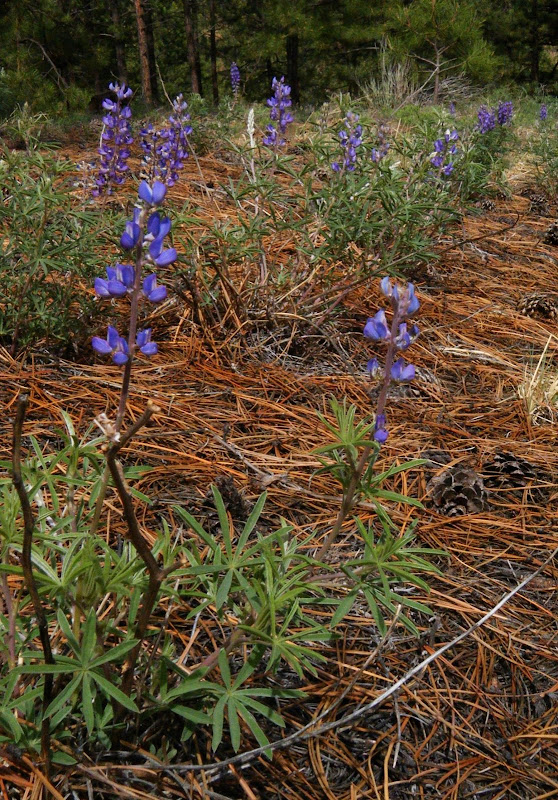
Lupine (Lupinus)
From Botanizing in New Mexico


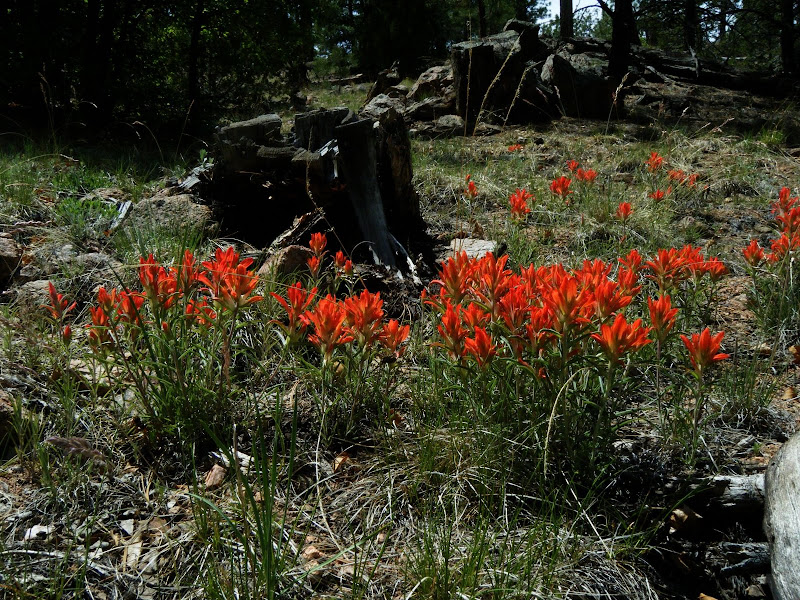
Paintbrush (Castilleja)
From Botanizing in New Mexico


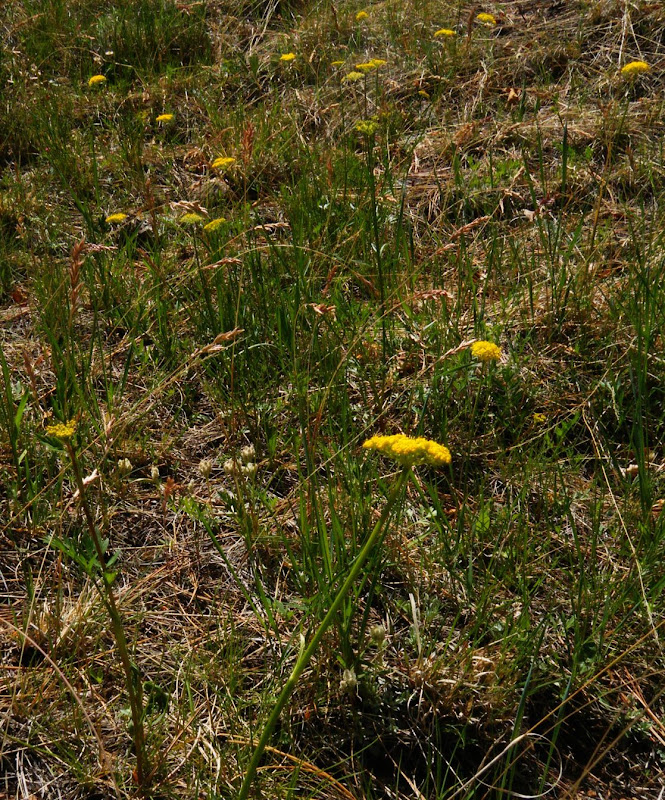
Yellow Carrot (Pseudocymopterus)
From Botanizing in New Mexico


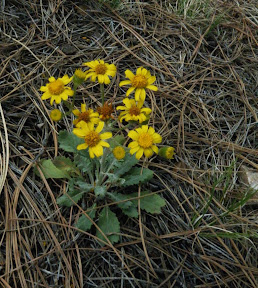
Daisy
From Botanizing in New Mexico


Draba
From Botanizing in New Mexico


Strawberry (Fragaria virginiatus)
From Botanizing in New Mexico


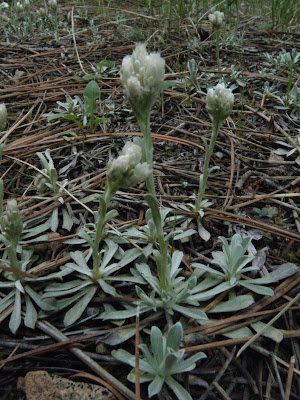
Pussytoes (Antennaria spp)
From Botanizing in New Mexico


Violet
From Botanizing in New Mexico


Clematis
From Botanizing in New Mexico


Frillary (Erodium)
From Botanizing in New Mexico


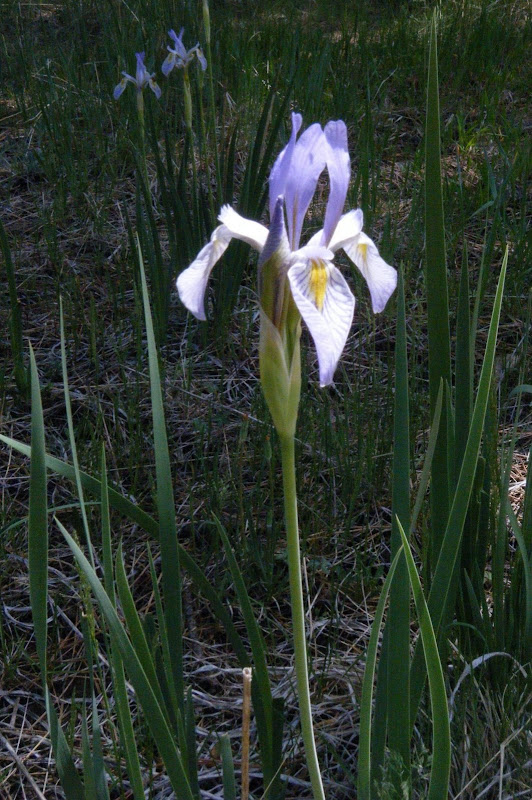
Iris
From Botanizing in New Mexico


Not pictured: Dandylion, Valerian, Senecio, thistles, Thermopsis (yellow wild pea), bluebells/chimingbells (Mertensia), orchids. Any other suggestions? How different are yours (if you live in another part of the country...)?

Can you name this Bug?

beetle on rush in alpine Colorado fen
From Flora and Fauna


beetle found on gravel bar, middle Verde River, AZ
From Verde River


caterpillar found in Sonoita Valley grass/mesquite woodland
From Sonoita Valley Grasslands


dragonfly found in Sonoita Valley grass/mesquite woodland
From Sonoita Valley Grasslands


mating "space cadet" grasshoppers, found in Sonoita Valley grass/mesquite woodland
From Sonoita Valley Grasslands


cool spider in saguaro east
From Saguaro National Park


butterfly and spider, Gila national forest, NM (ponderosa pine forest)
From Gila National Forest

Tuesday, May 19, 2009

Big Tesuque Creek Hike -- Spring Wildflowers!


As one of the Southernmost perennial streams in the Sangre de Christo Range, Big Tesuque Creek, just minutes outside Santa Fe, is a hotspot of biodiversity and a popular hike/bike/equestrian trail. We visited the area a week ago, on the 12th, but came back again this week because we ran out of daylight last time. On a 3.5 mile hike along the Rosgen Class "B" (controlled by colluvial processes) we crossed the creek almost a dozen times and identified more than 40 species. There are several we could not identify, and photos of these are included first. Click on the images to view the full size.


From Big Tesuque Creek Hike -- Spring Wildflowers!


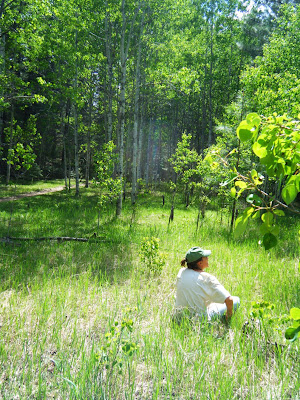
Enjoying the meadow at the upper trail junction. Since there was not much more than a couple violets, Thermopsis, Dandylions, and Mertensia (Chiming Bells), we decided to head down.

From Big Tesuque Creek Hike -- Spring Wildflowers!

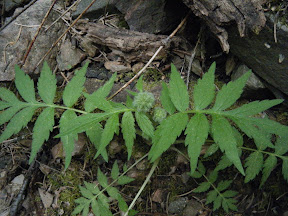
Hydrophyllum.

From Big Tesuque Creek Hike -- Spring Wildflowers!

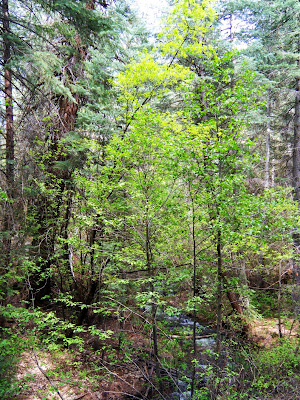
Habitat, showing mid canopy of Alder under Douglas Fir overstory.

From Big Tesuque Creek Hike -- Spring Wildflowers!
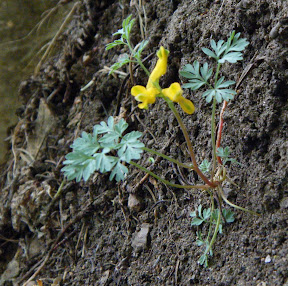
Corydalis.

From Big Tesuque Creek Hike -- Spring Wildflowers!
Mountain lover.


Species List

Ponderosa upland -- alder and box elder are prominent, Douglas Fir more so further up the canyon. We counted more than 40 species in flower (designated by an *)

*Tragopogon pratensis - Yellow Salsify
*Clematis columbiana - Rocky Mountain Clematis
*Lathyrus eucosmus - Wild Sweetpea
*Lupinus caudatus ssp. argophyllus - Spurred Lupine
*Many daisies
*Ash??
*Cherry
*Mertensia lanceolata - Lanceleaf Bluebells (some with white, some with blue flowers)
Heracleum maximum - Cow Parsnip
*Viola canadensis - Canada Violet
*Viola nephrophylla - Kidney-leaved Violet
*Cardamine cordifolia - Bittercress
*Valeriana arizonica
*Verbena spp?
*Androsace septentrionalis - Northern Rock Jasmine
*Aquilegia elegantula - Elegant Columbine
*Sambucus recemosa - Red Elderberry
*Actaea rubra - Baneberry
Cercocarpous montanus - Mountain Mahogany
Potentilla anserina
*Geum macrophyllum - Cut-leaves Avens
Geranium spp.
*Erysimum capitatum - Western Wallflower
*Fragaria vesca ssp. americana - Wild Strawberry
*Moehringia/Stellaria spp?
*Maianthemum racemosum - False Solomon's Seal
*Quercus spp.
*Besseya plantaginea - Kitttentails
Vaccinium myrtillus(?)
*Berberis fenleri - Fendler Barberry or Mahonia
*Acer glabrum - Rocky Mountain Maple
Plantago major - Common Plantain
*Taraxacum officinale - Dandylion
*Trollius laxus (?) Globe flower, Ranunculaceae
*Ranunculus ssp. - Buttercup
*Utah Serviceberry
*Alder
Thalictrum
*Several kinds of carrot
Gallium
*Oregon Grape
*Astragalus
*Penstemon
*Indian Paintbrush
Delphinium spp.
*Thermopsis
Wax currant
Gooseberry
*Antennaria spp.
Equisetum spp.
Box elder

I would write more but I am completely exhausted from hiking and botanizing all day.

Thursday, May 14, 2009

RSRA: San Pedro Creek upstream of SR14 Overpass

San Pedro Creek flows out of the San Pedro Mountains, located between the Ortiz and the Sandia Mountains in New Mexico. It may be impacted by current and historic mining in its headwaters, and is currently heavily grazed in this reach. We did notice many small fish, tadpoles, dragonflies, and mayflies, however.

Water Quality: 2,2 = 2
Hydrogeomorphology: 4,5,3,1,1 = 2.8
Fish / Aquatic Habitat: 3,3,5,4,1,2 = 3
Riparian Vegetation: 4,4,2,2,3,2,1,3 = 2.6
Terrestrial Wildlife Habitat: 4,2,1,2 = 1.75

Overall Average: 2.4

The stream radically changes downstream of the highway overpass, where it is managed as a conservation area and supports a rich growth of willow and cottonwood. It goes from a braided channel upstream to a deepened and narrowed channel with plenty of over and underbank cover. It is likely that the grazing regime in our study reach is not condusive to the establishment and growth of woody vegetation.

Monday, May 04, 2009

RSRA: Cebolla Creek Restoration Project

For more information on RSRA's.

RSRA note: we counted all restoration features as if they were natural. For example, recently planted willow were counted as the dominant shrub, in-stream structures were counted as scour pools and riffles, and even supplied the cobble for macroinvertebrates to live under. Because this system is so heavily impacted by erosion, it is unclear which, if any, of these features could be expected to occur under a natural hydrogeomorphology. For example, the valley alluvium may not normally supply cobble for riffles and macroinvertebrate habitat.

Bedrock helps bring subsurface flow to the surface in this area throughout the year, although the stream is spatially intermittent through this reach. The creek is cutting a new floodplain at the bottom of a canyon that has incised through the historic floodplain, and we used the new floodplain to measure hydrogeomorphology because the historic floodplain has been abandoned. This system is currently heavily impacted by grazing, yet, ironically, does not support excessive algae. Perhaps the water is too often disturbed? There are some willows, but they do not shade the stream. Beaver have been recently reintroduced, but they are not doing well in the complete absence of any kind of trees. All

Water Quality: 5,3 = 4
Hydrogeomorphology: 3,5,3,1,3 = 3
Fish Aquatic Habitat: 2,1,N/A,1,1,2 = 1.4
Riparian Vegetation: 1,1,2,1,2,2,1,1 = 1.375
Terrestrial / Wildlife Habitat: 3,1,1,1 = 1.5

Average of averages: 2.255

Selected species list:

Atriplex canescens (Fourwing Saltbush)
Artemesia tridentata (Big Sagebrush)
Fallugia paradoxa (Apache Plume)
Forestiera neomexicana (New Mexico Olive or Privet)
Rosa woodsii (Woods Rose)
Salix exigua (Coyote Willow)
Tamarix spp. (Salt Cedar).

Sunday, May 03, 2009

Bluewater upstream of 2008/2009 Restoration Work

Comments: Beaver Dams (current and historic), as well as rock slide debris creaet riffle pool complexes, overbank (not channelized) flow and side channels.

Heavily vegetated banks, but no/few deciduous woodies. Some bluestem and coyote willow further up (becoming more common/denser the further up the reach). Browsing : 100% explains lack of woodies. Good underbank cover, and possibly better overbank cover at the end of the growing season. Poor shading is cause of listing 404-d Temperature Impairment. Lots of mallards, but is there nesting habitat? Stable cutbanks. Rock ledges in this canyon create enhanced moisture habitats.

Water Q: 5,2 = 3.5
Hydrogeomorphology: 5,5,5,5,5 = 5
Fish Aquatic Habitat: 4,4,1,5,5,5 = 4
Riparian Vegetation: 5,5,4,5,5,5,3,1 = 33/8 = 4.125
Terrestrial Wildlife Habitat: 2,2,2,5 = 2.75

Average = 3.875


Species List and Notes:

2 Species of Juniper (Utah (osteosperma) and One-Seed (monosperma) taking over remnants of old floodplane from derelict relict cottonwood. dead cottonwoods perched on historic floodplain, but not really that much higher than the new, active floodplane.
Old Gooding Willow

stubby skink in high diversty meso wet meadow with cottonwood (many branched/browsed) sprouting, lots of digging (mole?). Tons of potato bugs. Lupine, Viola nephrophylla, Stellaria, horehound, Oenothera, Horsetail, Clematis, Thalictrum.

Patch-nosed snake (Thamnophis hammondii)
oak gambell.
maiden hair fern.
new mexico olive.
red spiney unknown
jeff reports others
cherry
rose
Borage= lapula, mustard, stellaria, rose, cherry with catkin berries (not open yet)
3 species of aquatic plants plus sedge and rush
wax currant
orange gooseberry
skunkbush sumac currant

Saturday, May 02, 2009

Example RSRA's from the Verde Valley, AZ

Examples RSRA's:
(Indicator scores are 1 - 5; 5 is highest)

--------------
Lower Camp Verde SRP

Water Quality
1.Algal Growth: 1
2.Channel Shading, Solar Exposure: 2

= 1.5

Hydrogeomorphology (Stream Form)
3.Floodplain Connection and Inundation: 1
4.Vertical Bank Stability: 4
5.Hydraulic Habitat Diversity:5
6.Riparian Area Soil Integrity: 5
7.Beaver Activity: 4

= 3.8

Fish/Aquatic Habitat
8.Riffle-Pool Distribution: 2
9.Underbank Cover: 2
10.Cobble Embeddedness: 2
11.Aquatic Macro-invertebrate Diversity: 5
12.Large Woody Debris: 2
13.Overbank Cover and Terrestrial Invertebrate Habitat: 5

= 3

Riparian Vegetation
14. Lower Riparian Zone Plant Community Structure and Cover: 3
15. Upper Riparian Zone Plant Community Structure and Cover: 3
16. Shrub Demography and Recruitment: 3
17. Tree Demography and Recruitment: 4
18. Non-native Herbaceous Plant Species: 2
19. Non-native Woody Plant Species: 4
20. Mammalian Herbivory (Grazing) Impacts on Ground Cover: 5
21. Mammalian Herbivory (Browsing) Impacts on Shrubs and Small Trees: 1

= 3.125

Terrestrial Wildlife Habitat
22. Shrub Patch Density: 3
23. Mid-Canopy Patch Density: 4
24. Upper Canopy Patch Density: 3
25. Fluvial Habitat Diversity: 4

=3.5

Overall Average: 3.0
---------

Agua Fria River Below Horseshoe Ranch
Water Quality: 2, 2 = 2
Hydrogeomorphology: 1,4,5,4,1 = 3
Fish/Aquatic Habitat: 3,2,3,5,2,4 = 3.17
Riparian Vegetation: 2,3,3,3,1,5,5,5 = 3.375
Terrestrial Wildlife Habitat: 2,4,2,3 = 2.75

Overall Average: 2.8

------------
Lower Clear Creek

Water Quality: 1,2 = 1.5
Hydrogeomorphology: 1,4,5,5,4 = 3.8
Fish/Aquatic Habitat: 2,2,2,5,2,5 = 3
Riparian Vegetation: 3,3,3,4,2,4,5,1 = 3.1
Terrestrial Wildlife Habitat: 3,4,3,5 = 3.75

Overall Average: 3.0