High Country News, a biweekly newspaper "for people who care about the west" seems to be covering my life. No less than four front-page articles over the past five months have reported on major activities in my life in the Southwest.
I'd like to comment on some of these articles, grouping them into three major subjects: the "toilet-to-tap" furor in Tucson, fighting invasive species, and tracking Jaguars.
Saturday, February 16, 2008

Friday, February 15, 2008
I. Toilet to Tap
comment on Facing the yuck factor. How has the west embraced water recycling? Very (gulp) cautiously. Peter Friederici. HCN p.10 September 17, 2007
Americans are different from most people on the planet. We have indoor plumbing and can turn on fresh, drinkable water any time we want. But the combination of the two may be our undoing. We don't pay a quarter of our salaries and spend hours waiting in line to get potable water, and maybe because of that we have abused our privilege. Now that the rivers are drying up in the West, cities are looking to new sources of fresh water. But where?
Ironically, "San Diego has both a water-supply and a water-disposal problem." Why not use the water in need of disposal as a new supply? Maybe because the slogan is "Toilet to tap"?? Sustainability advocates in Tucson (myself included), recently tried to pass a ballot initiative (Prop.200) with just such a slogan. Our reasoning: if Tucson doesn't want "toilet-to-tap" we had better start limiting growth now, before that's our only option. The opponents of the measure (ie proponents of growth such as developers) argued that Tucson would never need to divert wastewater into drinking water. But, just weeks after Prop.200 went down in flames (after mafia-style threats from the developers), amid reports of more drought, the Tucson papers began suggesting that perhaps Tucson really does need to start looking into the idea, after all.
Of course, all water is recycled eventually. Tucson is currently "recharging" its aquifer with wastewater. As the wastewater seeps through hundreds of feet of sand the hydrologists claim it will be cleaned enough to draw back up a well for drinking water. Las Vegas uses an even more direct filtration approach: "Los Vegas alone discharges roughly 60 billion gallons of wastewater a year some miles upstream of its own water intake -- a feat of urban engineering that would seem to prove that most of what happens in Vegas really does stay there."
All of which just points up the rationale San Diego used in its (failed) attempt to utilize wastewater: "We can have a lot more monitoring and control if we oversee our own reclamation than if we're relying on a river with a billion gallons of recharge [in the Colorado River] from other sources every day." Bruce Reznik, executive director of San Diego Coastkeeper. Just as no place is truly a wilderness "untrammeled by man" anymore, so too no source of "clear mountain springwater" is truly without some contamination, e.g. some "clear mountain streams" high in Colorado have enough man-made chemical estrogen mimics to feminize fish.
Friederici, a journalism professor, has written a great article that touches on some very deep issues in the interplay of science, technology, and society; E.g. the trust ordinary citizens place in their own biased perceptions versus the scientific analysis of professionals. The article suggests that that "perceptual shortfalls" in ordinary citizens might in fact be a reasonable, precautionary reaction to the belated discovery of the harms of rGBH in milk and endocrine disruptors in plastics. Without the ability to "see" contaminants that affect them ordinary people may have to rely on the history (story, narrative) of their water to determine quality rather than the quantitation (appeal to authority) of scientists.
-
A simple solution the article overlooked: *abandoning our water-treatment infrastructure* and giving in to the bottled water craze. This water crisis is caused by the average American household sending 150 gallons of fresh, drinkable water down the drain every day. If we could use untreated or sub-potable treated water for most domestic needs and bottled water for drinking and eating we would eliminate the source of the dilemma: overconsumption. However, if, in the end, the punishment for being spoiled Americans is drinking our own toilet water, perhaps there is some justice in this crazy universe after all.
Americans are different from most people on the planet. We have indoor plumbing and can turn on fresh, drinkable water any time we want. But the combination of the two may be our undoing. We don't pay a quarter of our salaries and spend hours waiting in line to get potable water, and maybe because of that we have abused our privilege. Now that the rivers are drying up in the West, cities are looking to new sources of fresh water. But where?
Ironically, "San Diego has both a water-supply and a water-disposal problem." Why not use the water in need of disposal as a new supply? Maybe because the slogan is "Toilet to tap"?? Sustainability advocates in Tucson (myself included), recently tried to pass a ballot initiative (Prop.200) with just such a slogan. Our reasoning: if Tucson doesn't want "toilet-to-tap" we had better start limiting growth now, before that's our only option. The opponents of the measure (ie proponents of growth such as developers) argued that Tucson would never need to divert wastewater into drinking water. But, just weeks after Prop.200 went down in flames (after mafia-style threats from the developers), amid reports of more drought, the Tucson papers began suggesting that perhaps Tucson really does need to start looking into the idea, after all.
Of course, all water is recycled eventually. Tucson is currently "recharging" its aquifer with wastewater. As the wastewater seeps through hundreds of feet of sand the hydrologists claim it will be cleaned enough to draw back up a well for drinking water. Las Vegas uses an even more direct filtration approach: "Los Vegas alone discharges roughly 60 billion gallons of wastewater a year some miles upstream of its own water intake -- a feat of urban engineering that would seem to prove that most of what happens in Vegas really does stay there."
All of which just points up the rationale San Diego used in its (failed) attempt to utilize wastewater: "We can have a lot more monitoring and control if we oversee our own reclamation than if we're relying on a river with a billion gallons of recharge [in the Colorado River] from other sources every day." Bruce Reznik, executive director of San Diego Coastkeeper. Just as no place is truly a wilderness "untrammeled by man" anymore, so too no source of "clear mountain springwater" is truly without some contamination, e.g. some "clear mountain streams" high in Colorado have enough man-made chemical estrogen mimics to feminize fish.
Friederici, a journalism professor, has written a great article that touches on some very deep issues in the interplay of science, technology, and society; E.g. the trust ordinary citizens place in their own biased perceptions versus the scientific analysis of professionals. The article suggests that that "perceptual shortfalls" in ordinary citizens might in fact be a reasonable, precautionary reaction to the belated discovery of the harms of rGBH in milk and endocrine disruptors in plastics. Without the ability to "see" contaminants that affect them ordinary people may have to rely on the history (story, narrative) of their water to determine quality rather than the quantitation (appeal to authority) of scientists.
-
A simple solution the article overlooked: *abandoning our water-treatment infrastructure* and giving in to the bottled water craze. This water crisis is caused by the average American household sending 150 gallons of fresh, drinkable water down the drain every day. If we could use untreated or sub-potable treated water for most domestic needs and bottled water for drinking and eating we would eliminate the source of the dilemma: overconsumption. However, if, in the end, the punishment for being spoiled Americans is drinking our own toilet water, perhaps there is some justice in this crazy universe after all.
Thursday, February 14, 2008
II. The War on Invasive Species
comment on Bonfire of the Superweeds. In the Sonoran Desert, good intentions combust. FEATURE ARTICLE - August 20, 2007
...and A dustup over weed control. The BLM's plans to spray nearly a million acres with herbicides have some environmentalists fuming, but many biologists and land managers welcome the policy. WESTERN ROUNDUP - September 3, 2007
...and Beetle Warfare. What happens when an exotic bug is brought in to fight an exotic weed?
Invasive species are a huge problem in the Southwest and these articles highlight a number of the major culprits: Buffelgrass, Lovegrass, Cheatgrass, and Tamarisk. These interlopers cause upwards of $120 billion dollars of damage a year and are reason almost half of the species on the Endangered Species List are endangered (Pimentel, 2004).
In the Sonoran desert around Tucson, particularly the front range of the Santa Catalinas, I have witnessed the utter devastation that a climax-changing invasive can bring to native ecosystems. Where Buffelgrass grows it chokes out native Saguaros, and worse still, creates conditions perfect for wildfires. Since the grass is adapted to fire and the native Sonoran plants are not, this feedback cycle creates exponential growth of Buffelgrass at the expense of the former ecosystem.
I have also been witness to the seeming-futility of manual removal of Buffelgrass as a member of the Tucson chapter of the Arizona Native Plant Society. But what are the alternatives? The second article points up the contradictions of spraying herbicides to try to save the native ecosystem in a kind of logic akin to the Vietnam war's "It became necessary to destroy the village in order to save it." There are certainly many benefits to chemical treatments, and it is not clear how to interpret the Precautionary Principle in this case of "damned-if-you-do, damn't-if-you-don't".
I am again confronted with the enormity and seeming-futility of manual removal in my work with Forest Guardians removing Tamarisk, a large tree that dries up rivers throughout the West, choking the native riparian ecosystem. We exhaust ourselves pulling up every piece of a plant that can propogate from bits of root just a few inches long. But what are the alternatives? I for one am personally glad Forest Guardians doesn't use chemical treatment, and there are many indications that chemicals, especially one-time applications, are not effective, either. The third and last article in this comment suggest the use of another invasive species. Invasive species are, by definition, species that have escaped the natural checks and balances of their native ecosystem. So why no bring some of those naturally evolved checks to give the Tamarisk a taste of their own medicine? But Jim Matison of Forest Guardians explains: 'Two species do not an ecosystem make.' According to Jim, introducing another non-native is just another example of our hubris replaying the same old mistake; believing that Science can predict all possible interactions and ramifications. In other words, playing God.
But, maybe, aren't we already playing at judge and jury when we decide which ecosystem (Buffelgrass vs. Sonoran, Tamarisk vs. Riparian) is good and which is bad, which plant lives and which plant dies?
...and A dustup over weed control. The BLM's plans to spray nearly a million acres with herbicides have some environmentalists fuming, but many biologists and land managers welcome the policy. WESTERN ROUNDUP - September 3, 2007
...and Beetle Warfare. What happens when an exotic bug is brought in to fight an exotic weed?
FEATURE ARTICLE - November 26, 2007
Invasive species are a huge problem in the Southwest and these articles highlight a number of the major culprits: Buffelgrass, Lovegrass, Cheatgrass, and Tamarisk. These interlopers cause upwards of $120 billion dollars of damage a year and are reason almost half of the species on the Endangered Species List are endangered (Pimentel, 2004).
In the Sonoran desert around Tucson, particularly the front range of the Santa Catalinas, I have witnessed the utter devastation that a climax-changing invasive can bring to native ecosystems. Where Buffelgrass grows it chokes out native Saguaros, and worse still, creates conditions perfect for wildfires. Since the grass is adapted to fire and the native Sonoran plants are not, this feedback cycle creates exponential growth of Buffelgrass at the expense of the former ecosystem.
I have also been witness to the seeming-futility of manual removal of Buffelgrass as a member of the Tucson chapter of the Arizona Native Plant Society. But what are the alternatives? The second article points up the contradictions of spraying herbicides to try to save the native ecosystem in a kind of logic akin to the Vietnam war's "It became necessary to destroy the village in order to save it." There are certainly many benefits to chemical treatments, and it is not clear how to interpret the Precautionary Principle in this case of "damned-if-you-do, damn't-if-you-don't".
I am again confronted with the enormity and seeming-futility of manual removal in my work with Forest Guardians removing Tamarisk, a large tree that dries up rivers throughout the West, choking the native riparian ecosystem. We exhaust ourselves pulling up every piece of a plant that can propogate from bits of root just a few inches long. But what are the alternatives? I for one am personally glad Forest Guardians doesn't use chemical treatment, and there are many indications that chemicals, especially one-time applications, are not effective, either. The third and last article in this comment suggest the use of another invasive species. Invasive species are, by definition, species that have escaped the natural checks and balances of their native ecosystem. So why no bring some of those naturally evolved checks to give the Tamarisk a taste of their own medicine? But Jim Matison of Forest Guardians explains: 'Two species do not an ecosystem make.' According to Jim, introducing another non-native is just another example of our hubris replaying the same old mistake; believing that Science can predict all possible interactions and ramifications. In other words, playing God.
But, maybe, aren't we already playing at judge and jury when we decide which ecosystem (Buffelgrass vs. Sonoran, Tamarisk vs. Riparian) is good and which is bad, which plant lives and which plant dies?
Wednesday, February 13, 2008
III. Tracking Jaguars
comment on Cat Fight on the Border. Will homeland security concerns keep jaguars from returning to their native U.S. range? Maybe. p.9 October 15 2007 HCN Jeremy Voas.

The Jaguar is what is known as "charismatic megafauna" in conservation circles. This animal prowled the mountains overlooking Tucson less than 100 years ago, before it was exterminated by government predator control efforts. Today, its natural migration back into the Southwest is being hailed as a confirmation of improving ecosystems and attitudes. The network of wilderness preserves and conservation practices have begun to recreate the habitat these keystone species need. But they need more than land: they also need human understanding. Indeed, we would not even know about their return if not for the enlightened response of certain ranchers who chose to photograph, rather than shoot, these "illegal aliens".
The Border Patrol has also weighed in on the cat's fate, forging ahead and building a wall along the border without any kind of environmental impact research. The crisis of (human) migration across the border is dire and the idea of building a wall is understandably attractive, but many believe it will end up more effectively blocking wildlife migration than human.
Voas goes beyond merely reporting the facts in this article to unearth the complicated melange-a-trois politics between the conservationists, the ranchers, and the Border Patrol. If conservationists are going to save the Jaguar in the American Southwest, it may mean working, and yes, even accommodating, "multiple use". For example, most conservation organizations would like to expand wilderness areas, or develop other restrictions on land use such as Critical Habitat Designation (CHD) for the Jaguar. While these conservation "gold standards" are arguably best for the recovery of the Jaguar they may end up being "counterproductive by imposing limits on land usage, including grazing....[which would] enrage ranchers."
According to Emil McCain, a biologist for the Borderlands Jaguar Detection Project, "A CHD is going to do far more harm than good for habitat...It makes enemies of the people you need to rely on." Michael Robinson, of the local conservation group Center for Biological Diversity is undeterred: "Our stance on grazing is that it should not preclude the presence of any native species, that it should not pollute waterways, and it should not cost the public any money. If the livestock industry is going to step up and meet those standards, it's OK with us."
But making such demands risks offending the owners of the very land Jaguars need. This is the old paradox of the Endangered Species Act, a paradox that is especially relevant in the almost lawless borderlands: CHD might encourage ranchers to kill an endangered animal rather than report it and face more rigorous regulation of their land or grazing allotment.
A similar dilemma for conservationists concerns the Border Patrol (BP) and the wall: whether to work with the BP and suffer the slings and arrows of their outrageous ecosystem disruptions, or to takes arms against what seems to be a rising sea of misplaced government intervention and lose any hope of compromise. As it stands the BP are cooperating with conservationists by maintaining and sharing open records of Jaguar sightings. Their cameras may play an important role in the badly-needed work determining Jaguar migration routes.
Of course, conservation organizations like the Sky Island Alliance, while working with all concerned parties, are also pursuing their own independent monitoring program. As a graduate of their Wildlife Tracking program I have helped monitor charismatic megafauna throughout the Southwest, and remain hopeful that the Jaguar will bring the different human tribes together, rather than tear us apart...

The Jaguar is what is known as "charismatic megafauna" in conservation circles. This animal prowled the mountains overlooking Tucson less than 100 years ago, before it was exterminated by government predator control efforts. Today, its natural migration back into the Southwest is being hailed as a confirmation of improving ecosystems and attitudes. The network of wilderness preserves and conservation practices have begun to recreate the habitat these keystone species need. But they need more than land: they also need human understanding. Indeed, we would not even know about their return if not for the enlightened response of certain ranchers who chose to photograph, rather than shoot, these "illegal aliens".
The Border Patrol has also weighed in on the cat's fate, forging ahead and building a wall along the border without any kind of environmental impact research. The crisis of (human) migration across the border is dire and the idea of building a wall is understandably attractive, but many believe it will end up more effectively blocking wildlife migration than human.
Voas goes beyond merely reporting the facts in this article to unearth the complicated melange-a-trois politics between the conservationists, the ranchers, and the Border Patrol. If conservationists are going to save the Jaguar in the American Southwest, it may mean working, and yes, even accommodating, "multiple use". For example, most conservation organizations would like to expand wilderness areas, or develop other restrictions on land use such as Critical Habitat Designation (CHD) for the Jaguar. While these conservation "gold standards" are arguably best for the recovery of the Jaguar they may end up being "counterproductive by imposing limits on land usage, including grazing....[which would] enrage ranchers."
According to Emil McCain, a biologist for the Borderlands Jaguar Detection Project, "A CHD is going to do far more harm than good for habitat...It makes enemies of the people you need to rely on." Michael Robinson, of the local conservation group Center for Biological Diversity is undeterred: "Our stance on grazing is that it should not preclude the presence of any native species, that it should not pollute waterways, and it should not cost the public any money. If the livestock industry is going to step up and meet those standards, it's OK with us."
But making such demands risks offending the owners of the very land Jaguars need. This is the old paradox of the Endangered Species Act, a paradox that is especially relevant in the almost lawless borderlands: CHD might encourage ranchers to kill an endangered animal rather than report it and face more rigorous regulation of their land or grazing allotment.
A similar dilemma for conservationists concerns the Border Patrol (BP) and the wall: whether to work with the BP and suffer the slings and arrows of their outrageous ecosystem disruptions, or to takes arms against what seems to be a rising sea of misplaced government intervention and lose any hope of compromise. As it stands the BP are cooperating with conservationists by maintaining and sharing open records of Jaguar sightings. Their cameras may play an important role in the badly-needed work determining Jaguar migration routes.
Of course, conservation organizations like the Sky Island Alliance, while working with all concerned parties, are also pursuing their own independent monitoring program. As a graduate of their Wildlife Tracking program I have helped monitor charismatic megafauna throughout the Southwest, and remain hopeful that the Jaguar will bring the different human tribes together, rather than tear us apart...
Tuesday, February 12, 2008
Tucson

0.
Even the great amoeba cities, clutching each other, skewered on their endless myopic highways, shrink in comparison to the vastness of the landscape in the West. These desert cities, surmounted and circumscribed by wondrous mountains wink small and lonely in the dark night, lost in all-encompassing wilderness. We live that we may be worthy of this landscape.

I.
Tucson, loud city of impolite dogs and cars, planted with inedible fruit and painted with bland colors, at least you are ringed by mountains for every mood. The humble-yet-graceful hump of the Rincons, huge on the Eastern horizon. The jagged charismatic physiognomy of the Santa Catalinas looming in the North, dominant, heroic, common. The austerely lush, picturesque Tucson mountains, dry yet creative, flowering along the West. And finally the distant-beyond-estimation Santa Ritas, spooky at a distance, foreign and strange and Southerly.

II.
Santa fe, quiet city of streamlined roads twisting past close-set fences...[unfinished]
Hiking Barefoot?

"The Barefoot Hiker" A Book About Bare Feet
by Richard Frazine, BD [Bachelor of Divinity?]
1993, Ten-Speed Press, ISBN: 0-89815-525-8
Read the book. Join the club.
This is an excellent and well-written book full of irreverent spunk and practical advice for hikers who habitually go barefoot. It is also an interesting addition to my "What would caveman do" bookshelf (see: Anopsology and my analysis). But, this book is written by Easterners, and I must humbly take exception to the application of their advice to the west, particularly Tucson.
The authors would sore regret hazarding a single barefoot footfall, let alone an entire cavalcade of such vulnerable events, in the Sonoran Desert, a Desert incomparably well-equipped to puncture the inflated expectations of innocent trespassers. The rapacious wit and perspicacious criticism embodied in the hard reality of the Sonoran desert would soon render the author's philosophy moot as he became a human dumpling skewered on the spines of cholla, saguaro, fish hook, and porcupine cactus, not to mention the infinitely small, sharp, and numerous "glochids" of the prickly pear.
The idea that humans are fit to live in the environment uncouth and unshod is an admirable one, an idea dating back perhaps to Genesis and the Garden of Eden. But the beauty of wilderness, especially Sonoran desert wilderness, bursts such hubristic bubbles and skewers such dainty pedagogy. Aristotle's peripatetic circumlocutions aside, this shit is sharp. To take humble pride in the profligate-armed Saguaro, to know that we are outmatched and vulnerable at his side, is to know the true reality of wilderness: not unadorned freedom to trample as we wish, but careful respect for all creatures great and sharp, and a willingness to adapt our footprint to the landscape we inhabit.
Friday, February 08, 2008
Thoughts on Ecology by Begon, Harper, and Townsend

Not Just Drops of Goo
The smallest idividual droplets of life are fundamentally different from one another, as opposed to physics or chemistry where the fundamental parts are interchangable. There are at least 100 million distinct types of droplets (excluding viruses, proteins, and undiscovered types), each with its own inherent and combinatorial talents. These special abilities are written out in the droplets' DNA, so that every tiny snippet in my body is fundamental to me and contains the possibility of me.
People and animals and plants (and indeed all life) were not put here randomly-- we each have a reason. Sometimes that reason is just because here is near where our parents happened to live. Everywhere in the world children live near their parents. But if you go live on an island you would become different. The 'you' that you are can't go live on an island without becoming a different 'you'. The 'you' that you are is based on where you are. And so all life forms are different in different places. Yet Darwin teaches that they are the same stuff, from the same parents. We are all brothers and sisters, made of the same protoplasmic ooze.
This, then, is the tension in biology: we are all fundamentally the same goo but we are all fundamentally different goo. "There are no differences but differing degrees of difference and non-difference." CF. "The Influence of Darwinism of Philosophy", 1909 John Dewey.

"All species are absent from almost everywhere"
But: not everything important is alive - rocks, sunlight, clouds, motorcycles. All of these things push and shove on each other and on life. So to study life we have to study all of these things. Life itself is constantly bouncing against itself and, in fact, this is what makes life alive. What does this constant bouncing need to keep going? It is many things in many places; different things in different places. It is often a balancing act between hot and cold, between light and dark...
Everything in nature is good at something; balancing, breathing, sweating, slurping. But the sad wisdom Darwin teaches is that we only know we were good at something in the past - who knows if we will fit in the present or find a place in the future? There is evidence all around us of stranded animals and plants and people who stayed while the world changed around them. The past is no garuntee of the future.

The fundamental questions of Ecology: Why does this thing live here (why am I here) and Why do different things live in different places (Why am I different)?
Winter Wildlife Tracking
Feline tracks, probably Bobcat.

Canine Tracks, probably Coyote.

Human tracks, definitely Homo sapiens


Monday, February 04, 2008
Riparian Restoration in the Southwest
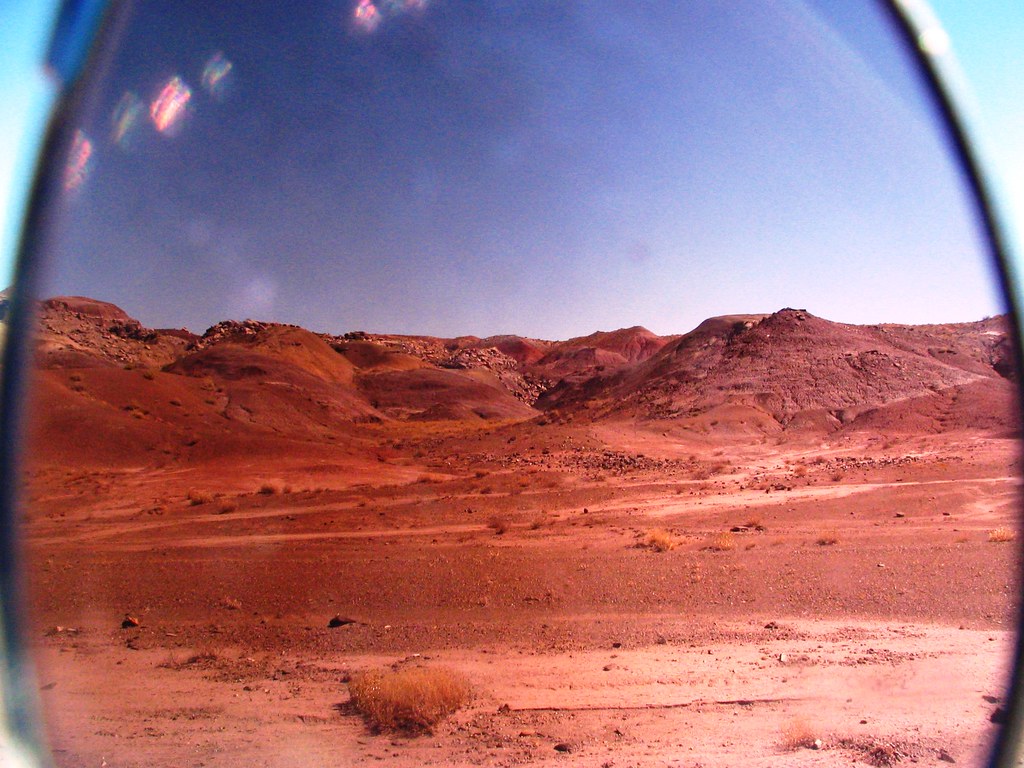
"In the not too distant past, lower Rincon Creek (a portion of a small stream in the Sonoran Desert) was dominated by a riparian forest that in some areas extended more than half a kilometer from each side of the stream channel. The predominant woody vegetation was Arizona walnut (Juglans major), with some of the larger individuals exceeding 5m in circumference and towering close to 20m above the floodplain...
This riparian ecosystem no longer exists. During the past 60 years, the combined impacts of groundwater pumping, stream channelization, agriculture, livestock grazing, and, currently, urbanization have almost completely destroyed this area. Today, streamflow occurs only following heavy rains, and scattered remnants are all that remain of the once immense riparian forest.
Unfortunately, the devastation that befell the riparian ecosystem of lower Rincon Creek is not unique. Riparian ecosystems have disappeared at an alarming rate all across northern Mexico and the southwestern United States. Although the extent of the damage is still not well understood, most observers will agreee that the deterioration of riparian ecosystems in this part of the world has reached significant proportions."
Riparian Ecosystem Recovery in Arid Lands. Mark K. Briggs. 1996 University of Arizona Press.
This riparian ecosystem no longer exists. During the past 60 years, the combined impacts of groundwater pumping, stream channelization, agriculture, livestock grazing, and, currently, urbanization have almost completely destroyed this area. Today, streamflow occurs only following heavy rains, and scattered remnants are all that remain of the once immense riparian forest.
Unfortunately, the devastation that befell the riparian ecosystem of lower Rincon Creek is not unique. Riparian ecosystems have disappeared at an alarming rate all across northern Mexico and the southwestern United States. Although the extent of the damage is still not well understood, most observers will agreee that the deterioration of riparian ecosystems in this part of the world has reached significant proportions."
Riparian Ecosystem Recovery in Arid Lands. Mark K. Briggs. 1996 University of Arizona Press.
This book is an introduction to restoration work in Arizona and New Mexico. The quote above, excerpted from the Preface, begins what could have been an authoritative account of the devastation of riparian ecosystems. Unfortunately the author proceeds to obfuscate his initially clarion message with euphemisms and understatements which could confuse anyone without field experience. For example, "improved grazing practices" almost invariably means 'get the cows outa there!' but you'd never know it from the text. While the true extent of riparian damage may be hard to describe in words, Briggs' buttoned-down rhetoric doesn't begin to do justice to the near-apocalyptic destruction common in the Southwest. The armchair reader would be hard-pressed to appreciate the scope and severity of the problem from this book.
That said, this book remains an impressive resource for the restoration professional, has an excellent bibliography, and marshals a considerable range of experience. Certainly not all of the language is obscure; the precise definitions develop a professional vocabulary. For example, the difference between rigorous terms like recovery, restoration, rehabiliation, and replacement vs. subjective terms like rewild, rebalance, regenerate, and revitalize will be important to improving communication in this field.
Also, while the text does feature a suite of case studies, it remains more theoretical than practical, advocating a philosophy of 'site-specific, whole watershed' analysis rather than listing specific techniques. (for specific evaluation techniques see "User's Guide for the Rapid Assessment of the Functional Condition of Stream-Riparian Ecosystems in the American Southwest." Stacey, Jones, Catlin, Duff, Stevens and Gourley. Wild Utah Project.
This is a conservative synopsis of where we find ourselves and perhaps implies something of the urgency of recovering what we have lost. For, as we transform this beautiful home into a wasteland, so too we transform the human heart. So little now remains of these shady glades and bubbling streams, the destruction is so complete and pervasive, that even the memory dries up and blows away, we forget that it was ever otherwise; general amnesia descends, fostering complacency and despair... The creek this author speaks about was one of many that once flowed into Tucson's perennial rivers. Tucson's rivers are dry and these ecosystems have evaporated and today it is a revolutionary act to demand that the rivers flow again. The work of restoration goes beyond ecosystems to involve the entire community. ...


Subscribe to:
Posts (Atom)